



From Mount Lebanon to Qurnat al Sawda, mountains define Lebanon’s ecology, history, and environmental challenges.
A country shaped by mountains

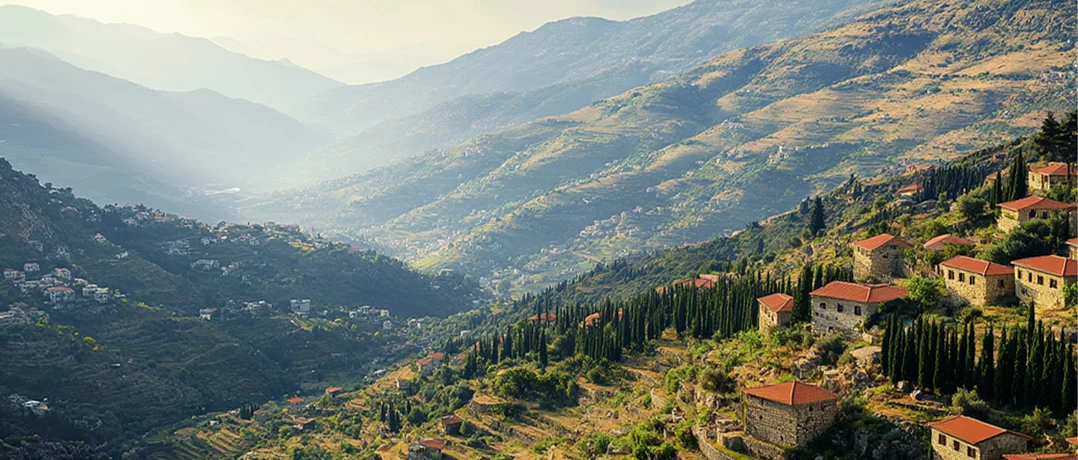
Lebanon ranks ninth globally among the most mountainous countries in the world, with mountains covering approximately 81.1 percent of its land area (World Atlas). Far from being a mere geographical statistic, this rugged topography has shaped the country’s climate, ecosystems, settlement patterns, and cultural identity for centuries.
At the heart of Lebanon’s landscape lies the Mount Lebanon mountain range, which runs parallel to the Mediterranean coast and stands as the highest mountain range in the Levant. Rising sharply from the sea, the range creates a dramatic natural divide between the coastal plain and the interior, influencing rainfall patterns, agriculture, and biodiversity across the country.
The range is home to Qurnat al Sawda, Lebanon’s highest peak, which reaches 3,088 meters above sea level. Snow-capped in winter and cooler than surrounding regions in summer, these high elevations have historically served as refuges, both ecological and human, sheltering rare plant species, forests, and communities adapting to harsh terrain.
A remarkable diversity
Lebanon’s mountainous geography has also produced an unusually diverse environment within a small territory. Coastal plains, deep valleys, high plateaus, and alpine zones exist within short distances of one another, creating varied microclimates and ecosystems. This diversity has supported agriculture ranging from olives and citrus along the coast to apples, cherries, and vineyards at higher elevations.
Beyond ecology, the mountains have shaped Lebanon’s social and cultural history. They offered protection during periods of conflict, influenced patterns of migration and settlement, and played a central role in forming local identities tied closely to land and village life.
A fragile heritage
Today, however, this mountainous heritage faces growing environmental pressure. Deforestation, unregulated urban expansion, quarrying, and climate change threaten fragile ecosystems and water sources rooted in the highlands. As temperatures rise and snowfall patterns shift, the mountains that once sustained life are becoming increasingly vulnerable.
Understanding Lebanon as a mountainous country is essential to understanding its environmental challenges and responsibilities. Protecting these landscapes is a matter of conservation and of preserving the natural backbone that has shaped Lebanon’s climate, culture, and survival for generations.
-
-

-
The Beiruter
-
