



SSPX consecration of 4 bishops without papal approval signals deepening rift and renewed schism concerns within Catholic Church under Pope Leo XIV.
A delicate moment for the Catholic Church

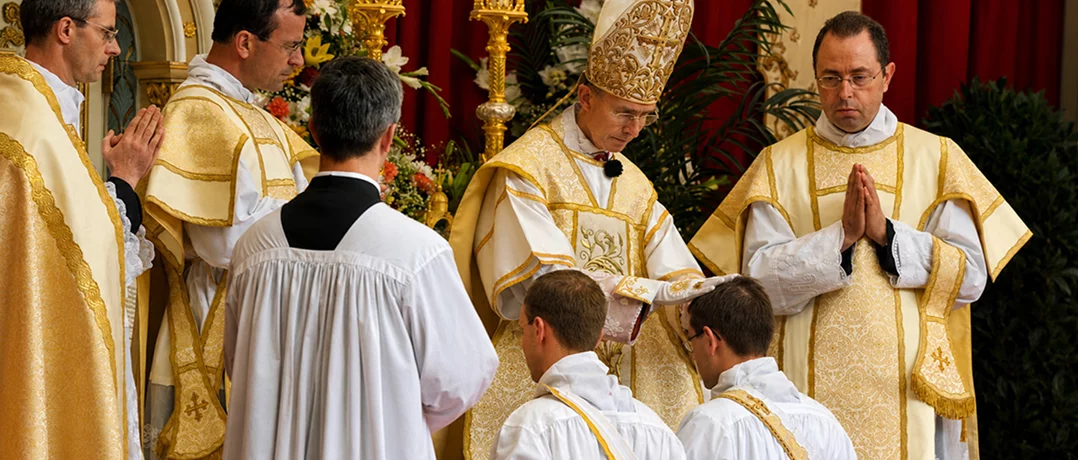
The decision by the traditionalist Society of St. Pius X (SSPX) to consecrate 4 new bishops without papal approval has plunged the Catholic Church into its most significant internal crisis since the election of Pope Leo XIV. The ceremony held at the society’s seminary in Écône, Switzerland, directly challenged the authority of the pope and revived a decades-old dispute over the direction of the Catholic Church following the reforms of the Second Vatican Council.
For the Vatican, the consecrations constitute a “schismatic act” that carries automatic excommunication under canon law. For the SSPX, however, the ceremony was presented as a necessary measure to preserve what it considers the authentic Catholic faith and safeguard its future leadership. The confrontation illustrates a profound theological, liturgical, and ecclesiastical divide that has persisted for more than half a century and now presents the first major challenge of Pope Leo XIV’s pontificate.
The origins of the society of St. Pius X
The Society of St. Pius X was founded in 1970 by French Archbishop Marcel Lefebvre in response to the sweeping reforms introduced by the Second Vatican Council (1962-1965). Vatican II transformed many aspects of Catholic life, encouraging greater engagement with the modern world, improving relations with other Christian denominations and non-Christian religions, and allowing Mass to be celebrated in local languages instead of exclusively in Latin.
Lefebvre viewed many of these reforms as dangerous departures from centuries of Catholic tradition. He argued that the Church had compromised its doctrinal integrity by embracing modern theological developments, religious liberty, and ecumenical dialogue. His movement sought to preserve pre-Vatican II liturgy, theology, and ecclesiastical discipline.
Tensions between Lefebvre and the Vatican escalated rapidly. In 1975, the Holy See suppressed the SSPX and suspended Lefebvre from exercising his episcopal ministry. Nevertheless, the society continued expanding internationally, establishing seminaries, schools, and chapels throughout Europe, North America, Latin America, Africa, and Asia.
The 1988 schism and its lasting legacy
The decisive rupture occurred in 1988 when Archbishop Lefebvre consecrated 4 bishops without the authorization of Pope John Paul II. According to Catholic canon law, such an act automatically leads to the excommunication for both the consecrating bishop and those being consecrated.
The Vatican immediately declared the action a schismatic act, stressing that episcopal consecrations without papal approval threaten the Church’s hierarchical unity. Since bishops exercise apostolic authority in communion with the pope, bypassing papal authorization is regarded as one of the gravest violations of ecclesiastical discipline.
Although the SSPX continued operating, it remained without official canonical status within the Catholic Church. Over the following decades, it developed into a parallel religious structure, complete with its own bishops, seminaries, clergy, schools, and religious communities serving hundreds of thousands of faithful worldwide.
Defying pope Leo XIV
The latest crisis unfolded despite repeated efforts by Pope Leo XIV to prevent the consecrations. Just days before the ceremony, the pope personally appealed to SSPX leaders, warning that proceeding without papal approval would constitute a “sin of extreme gravity” and further damage Church unity.
The Vatican also issued formal warnings through senior officials, including Cardinal Victor Manuel Fernández and Cardinal Pietro Parolin, reiterating that the planned ordinations would amount to a schismatic act under canon law.
Nevertheless, before approximately 15,000 faithful gathered in Écône, Bishops Alfonso de Galarreta and Bernard Fellay consecrated 4 new bishops: Pascal Schreiber of Switzerland, Michael Goldade of the United States, Michel Poinsinet de Sivry of France, and Marc Hanappier of France.
Why the consecrations matter
In Catholic theology, bishops are successors of the apostles, and their communion with the pope is considered essential to maintaining the unity of the universal Church. Consequently, consecrating bishops without papal approval is not viewed merely as an administrative violation but as a direct challenge to the Church’s constitutional structure.
Canon law imposes automatic (latae sententiae) excommunication on both the bishops performing unauthorized consecrations and those receiving them. Unlike other penalties, these excommunications take effect immediately without requiring a formal Vatican decree.
However, while the ordinations are considered illicit, performed contrary to Church law, they are still regarded as sacramentally valid because the bishops possess valid apostolic succession.
Most canon law experts believe Pope Leo is unlikely to extend penalties to ordinary Catholics attending SSPX liturgies, although the Holy See may announce additional disciplinary measures against the society itself.
Attempts at reconciliation under previous popes
Despite the long-standing conflict, successive popes have repeatedly sought reconciliation with the SSPX.
Pope Benedict XVI made the most significant efforts to restore relations. In 2007, he broadly liberalized the celebration of the traditional Latin Mass throughout the Catholic Church. 2 years later, he lifted the excommunications imposed on the 4 bishops consecrated in 1988 as a gesture of goodwill.
Pope Francis adopted a more complex approach. While restricting the wider use of the traditional Latin Mass among Catholics in communion with Rome, he simultaneously granted important pastoral concessions to the SSPX. He authorized Catholics to receive valid confession from SSPX priests and later permitted the society’s clergy to celebrate marriages under specific conditions.
A challenge to Church unity
Although the SSPX remains relatively small compared with the Catholic Church’s more than 1.4 billion faithful, its influence extends well beyond its numerical size. The society maintains a global network of seminaries, schools, religious houses, and chapels that attract Catholics committed to preserving pre-Vatican II traditions.
Importantly, not all Catholic traditionalists belong to the SSPX. Numerous communities dedicated to celebrating the traditional Latin Mass remain fully in communion with the Holy See. Pope Leo himself has demonstrated openness toward these groups while insisting that fidelity to Catholic tradition must always remain united with obedience to papal authority.
The Écône consecrations therefore represent not merely a dispute over liturgical preferences but a fundamental disagreement over ecclesiastical authority, the interpretation of Vatican II, and the limits of dissent within the Catholic Church.
-
-

-
The Beiruter
-
