



A turning point in Lebanese Christian politics
A turning point in Lebanese Christian politics
By Dr. Elie Elias | February 15, 2026

Reading time: 6 min
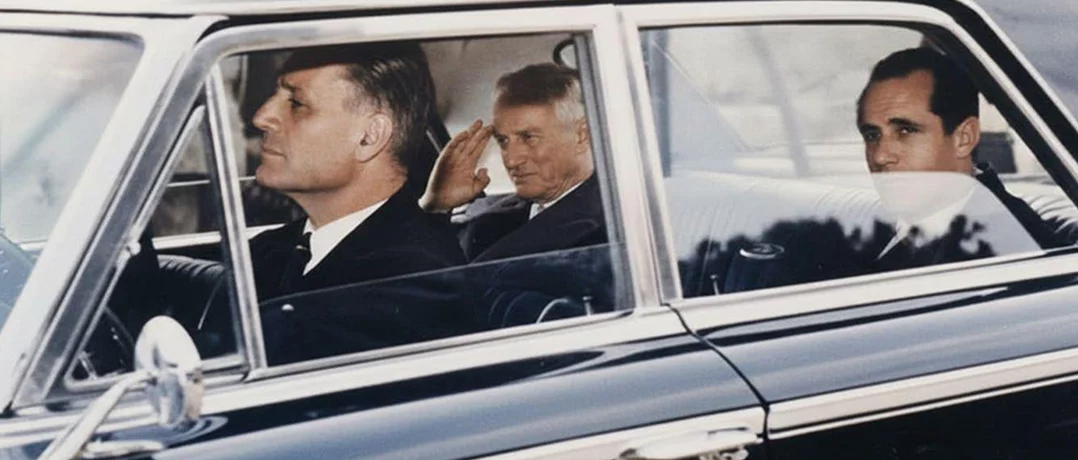
In the modern political history of Lebanon, the year 1967 stands as a pivotal moment for Christian political organization, not because it marked a retreat into communal fear, but because it embodied a conscious effort to reclaim political action, constitutional balance, and national sovereignty. The Tripartite Alliance (al-Hilf al-Thulathi), formed between the Kataeb Party, the National Liberal Party, and the National Bloc, represented one of the most coherent and constructive experiments in Lebanese Christian political cooperation prior to the so called civil war.
Far from being a mere electoral arrangement, the alliance was a strategic response to structural imbalances within the Lebanese state and to mounting regional pressures that threatened Lebanon’s fragile pluralism.
Political context: Between shihabism and regional upheaval
The alliance emerged in a complex domestic and regional environment.
Internally, Lebanon was still grappling with the legacy of the Shihabist era, which, while credited with institution-building and administrative reform, was also associated with the expansion of security agencies, particularly the Deuxième Bureau (al-Maktab al-Thani). This expansion was widely perceived as undermining political freedoms, manipulating electoral processes, and marginalizing traditional political actors. For many Christian leaders, Shihabism represented not reformist neutrality but a centralized technocratic system that diluted political pluralism.
Regionally, the aftermath of the 1967 Arab-Israeli War dramatically altered the balance of power. The defeat of Arab armies strengthened Palestinian armed movements and accelerated their militarization within Lebanon. Supported by segments of the Lebanese left and Islamic political forces, Palestinian armed presence increasingly challenged Lebanese sovereignty, especially in the South and in refugee camps. Christian political leadership interpreted these developments not as isolated security incidents but as indicators of a deeper erosion of state authority.
It was within this dual pressure internal political marginalization and external security destabilization that the Tripartite Alliance took shape.
The Palestinian factor and the ballot box (1967–1968)
By the late 1960s, the Palestinian presence in Lebanon had become a decisive factor in shaping electoral behavior, particularly within the Christian electorate. While the Deuxième Bureau exerted heavy influence over domestic political life, it proved unable to contain the regional dynamics that increasingly penetrated Lebanon’s political, economic, and security spheres. In the aftermath of the 1967 Arab-Israeli war, large segments of the Sunni political leadership openly called for deeper Lebanese engagement with the “Arab cause,” including tolerance of Palestinian armed activity. For the majority of Maronite voters, however, the issue was not ideological hostility to the Palestinian struggle, but a growing conviction that the transformation of the Palestinian presence into an armed, autonomous force threatened Lebanese sovereignty and the constitutional order.
These anxieties translated directly into electoral choices during the formation of the Tripartite Alliance and the 1968 parliamentary elections. Economic disruptions such as the 1966 collapse of Intra Bank, followed by Israeli retaliation against Beirut airport in 1968 after Palestinian cross-border attacks, reinforced perceptions that the state had lost control over its territory and decision-making. Voters increasingly rallied behind candidates who promised to resist both security interference in politics and the normalization of armed non-state actors. The Tripartite Alliance’s campaign thus resonated strongly among Christian constituencies by framing the ballot as a means to restore parliamentary authority, curb intelligence dominance, and reassert state sovereignty without resorting to militias.
The electoral outcome reflected this convergence of concerns. By winning thirty seats out of ninety-nine in the 1968 elections, the Tripartite Alliance secured a popular mandate that went beyond opposition to Shihabism. It represented a clear rejection, expressed through the ballot box, of Lebanon’s drift toward militarization and externalization of decision-making. In this sense, the Palestinian factor did not merely destabilize the Lebanese system; it reshaped electoral behavior, pushing a significant portion of the electorate to embrace institutional politics as a final attempt to contain a crisis that would soon escape constitutional control.
Objectives and nature of the tripartite alliance
The Tripartite Alliance was neither ideological nor doctrinal. It was political, pragmatic, and purpose-driven. Its primary objectives included opposing Shihabist dominance, contesting the 1968 parliamentary elections, counterbalancing the growing influence of armed Palestinian factions, and preparing for the presidential succession scheduled for 1970.
Crucially, the alliance preserved the autonomy of its constituent parties. Each retained its ideological identity, political discourse, and organizational structure. This flexibility distinguished the alliance from later wartime fronts and allowed it to function as a platform for coordination rather than uniformity. The unifying principle was not fear of the other but confidence in institutional politics as the legitimate arena of contestation.
Leadership, ethics, and political culture
One of the most significant elements of the Tripartite Alliance was the ethical and personal credibility of its leadership. The testimony of Edmond Rizk, who played a central role in facilitating rapprochement between Camille Chamoun and Pierre Gemayel, offers invaluable insight into this dimension.
Rizk’s recollections portray Chamoun not as a populist strongman, but as a principled statesman: financially modest, politically incorruptible, and deeply committed to Lebanon’s sovereignty within an Arab framework. Chamoun’s personal austerity and refusal to exploit power for material gain contrasted sharply with the image of political corruption that would later dominate Lebanese public life.
Equally important was the symbolic reconciliation between Chamoun and Gemayel. Their joint appearance at the Kataeb anniversary celebration in 1966, orchestrated with precision and political foresight, had a profound psychological impact on the Christian street. It signaled the end of factional rivalries and the beginning of a unified political direction. The spontaneous public reaction underscored a collective yearning for leadership capable of transcending personal grievances.
Inclusion of Raymond Eddé and the expansion of political legitimacy
The participation of Raymond Eddé, despite longstanding animosity with Pierre Gemayel, further strengthened the alliance’s legitimacy. Eddé brought constitutional rigor, anti-corruption credibility, and an uncompromising stance on sovereignty. His inclusion demonstrated that the alliance was not an exclusionary Christian bloc but a convergence of diverse political traditions united by a shared vision of the Lebanese state.
The Tripartite Alliance thus reflected a rare moment in which ideological diversity became an asset rather than a liability. Liberal constitutionalism, Lebanese nationalism, and structured party politics coexisted within a single political framework, reinforcing rather than diluting Christian political agency.
Electoral success and institutional impact
The 1968 parliamentary elections marked the alliance’s most tangible success. By disrupting Shihabist dominance and reshaping parliamentary representation, the Tripartite Alliance reasserted the primacy of electoral politics over security-driven governance. More importantly, it restored confidence among Christians that political engagement within state institutions remained both possible and effective.
This success was not merely numerical. It was symbolic. It reaffirmed the idea that Christian political power did not depend on militias, foreign patrons, or demographic anxiety, but on organized political action grounded in constitutional legitimacy.
From the tripartite alliance to the Lebanese front
While the Tripartite Alliance remained essentially political, its legacy extended into the formation of the Lebanese Front in 1975, at the onset of the civil war. The transition from alliance to front reflected a profound shift: from fear over political marginalization to fear over physical and existential survival. Yet this later development should not obscure the fundamentally constructive nature of the 1967 experience.
Unlike the wartime front, the Tripartite Alliance was born in peacetime, operated within institutions, and sought reform through elections rather than force. In this sense, it represents the last major attempt to recalibrate Lebanon’s political balance before the descent into violence.
A positive Christian historical experience
What makes the Tripartite Alliance a positive experience in Lebanese Christian history is not merely its electoral success or political coherence, but its underlying philosophy. It affirmed that Christian presence in Lebanon is not sustained by isolationism or fear, but by engagement, leadership, and responsibility within a pluralistic state.
The alliance embodied a confident Christianity rooted in national responsibility rather than communal defensiveness. It projected a vision of Lebanon as a sovereign, plural, and constitutional state – Arab in its environment, Lebanese in its identity, and diverse in its composition.
Conclusion: Lessons for the present
The memory of the 1967 Tripartite Alliance carries enduring relevance. It reminds us that political unity need not be ideological uniformity, that leadership credibility matters as much as electoral arithmetic, and that Christian political agency in Lebanon has historically been strongest when grounded in institutions rather than reactions.
In an era where fear once again threatens to dominate political discourse, the Tripartite Alliance stands as a historical reference point: a moment when Lebanese Christians chose political initiative over retreat, national responsibility over communal anxiety, and the state over fragmentation.
-
-

-
Dr. Elie EliasUniversity Lecturer & Political Historian
-
