



Ghassan al-Naassan’s killing in Keserwan has revived concerns over Syrian conflict spillover, blurring the line between criminal violence and regional security signals.
Al-Tarmah’s death: A killing that crossed borders
Al-Tarmah’s death: A killing that crossed borders
By The Beiruter | December 28, 2025

Reading time: 3 min
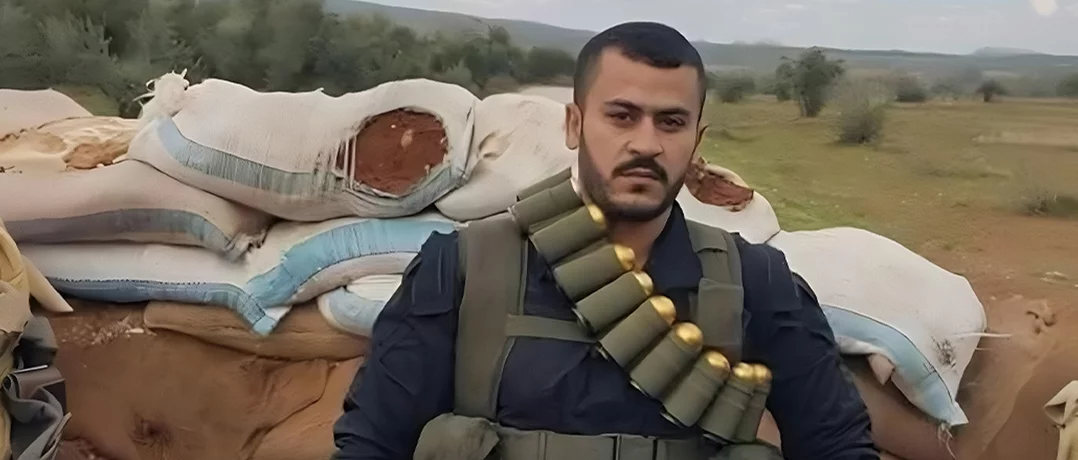
The killing of Ghassan al-Naassan, widely known by his nom de guerre “al-Tarmah,” has thrust Lebanon’s Keserwan district into the spotlight, reviving complex questions about security, regional entanglements, and the lingering fallout of the Syrian conflict.
Found dead from gunshot wounds in the hills between Adma and Safra, Naassan’s assassination has been interpreted not merely as a criminal act, but as a potentially loaded security message amid rising Lebanese-Syrian tensions.
Arrest and initial findings
Lebanese authorities moved swiftly following the discovery of the body. Army Intelligence announced the arrest of a suspect accused of killing Naassan over a financial dispute, following a tracking and surveillance operation.
Preliminary information suggests that Naassan was lured from his residence, placed in a vehicle driven by an unidentified individual, and later killed after what may have been a failed abduction attempt. While the arrest points to a criminal motive, investigators have not ruled out broader security dimensions.
Who was “al-Tarmah”?
Naassan was not an ordinary resident. A former field commander in the Syrian army during the Assad era, he played a prominent role within the elite “Taramih” units operating under the umbrella of the so-called “Tiger Forces,” led by Suheil al-Hassan. These units, later restructured as the 25th Special Missions Division, were heavily involved in some of the Syrian war’s most decisive and controversial battles, including Aleppo, Deir ez-Zor, Eastern Ghouta, and Idlib.
Syrian sources have accused Naassan of involvement in wartime atrocities and confirmed that he was wanted by the Syrian judiciary. After entering Lebanon illegally following the collapse of the Assad regime, he reportedly settled in the Keserwan area, maintaining contacts with remnants of the former regime and other armed actors across the region.
A crime with regional echoes
Naassan’s killing cannot be isolated from the broader Lebanese-Syrian security landscape. Lebanon currently hosts numerous former Syrian officers affiliated with the Assad regime, many of whom entered the country unlawfully. Damascus has repeatedly expressed concern over their presence, warning that Lebanese territory could be used as a base for destabilizing activities against Syria’s new authorities.
In recent months, Syrian officials have reportedly handed Lebanese counterparts lists of wanted former officers residing in Lebanon, accompanied by warnings of potential unilateral actions if perceived threats persist. Against this backdrop, Naassan’s assassination has fueled speculation that it may represent an indirect warning, or the opening chapter of a wider campaign of targeted eliminations on Lebanese soil.
Lebanese security agencies fear that such incidents could drag the country into dangerous territory, turning Lebanon into an arena for settling Syrian scores. While no evidence has yet confirmed an organized campaign, the combination of arrests, intelligence monitoring, and heightened coordination reflects growing anxiety over spillover risks.
In conclusion, the assassination of Ghassan al-Naassan sits at the intersection of crime, intelligence, and unresolved regional conflicts. Whether the motive proves to be personal, political, or strategic, the incident underscores Lebanon’s fragile position amid shifting Syrian dynamics. Until investigations reach definitive conclusions, one question will continue to loom large: was “al-Tarmah” silenced for who he was, what he knew, or the message his death was meant to send?
-
-

-
The Beiruter
-
