



Azerbaijan has leveraged the Baku Initiative Group to expand its influence over anti-French independence movements from the Pacific to the Sahel, creating a transnational network that pressures France at limited cost while reinforcing Baku’s geopolitical presence.
Azerbaijan’s anti-french front

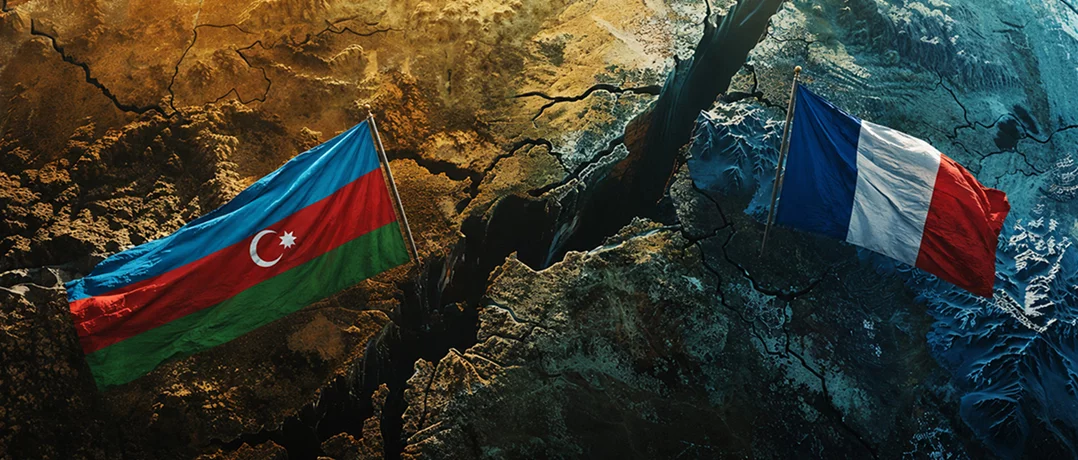
Nouméa, the capital of the French territory of New Caledonia, is no stranger to pro-independence rallies. Demonstrators regularly fill its streets beneath the flag of the Indigenous Kanak people, who form the core of the territory’s independence movement, alongside symbols of other anti-colonial causes from France’s overseas territories and the wider Pacific. Among the sea of flags, however, one appears far removed from the struggle unfolding in the French Pacific: the blue, red, and green tricolor of Azerbaijan.
Its presence offered an early glimpse of a much wider Azerbaijani campaign. As relations with Paris deteriorated, Baku began supporting and promoting independence movements challenging French rule, extending its confrontation with France from the South Caucasus to territories more than 13,000 kilometers away.
From Armenia to an anti-french campaign
The roots of this campaign lie in France’s growing support for Armenia. Relations between Paris and Baku had already deteriorated after the 2020 Nagorno-Karabakh war, as France criticized Azerbaijani military actions and backed Armenia’s territorial integrity. The Élysée also supported international discussions on the security of the region’s Armenian population.
The decisive shift came after Azerbaijan’s September 2023 offensive in Nagorno-Karabakh and the displacement of its Armenian population, prompting Paris to expand its defense relationship with Yerevan. During a meeting in Paris on 23 October 2023, France’s then minister of the Armed Forces, Sébastien Lecornu, and his Armenian counterpart agreed on the delivery of three air-surveillance radars, further cooperation on air defense and expanded military training and advisory support.
Paris described the cooperation as defensive, saying that it was intended to help Armenia protect its sovereign territory. Baku, however, argued that French weapons were altering the regional balance and encouraging Armenia to resist the terms Azerbaijan sought to impose.
Building Baku’s decolonization network
To turn its anti-French rhetoric into an organized campaign, Azerbaijan helped establish the Baku Initiative Group, known as BIG, in July 2023. The group presents itself as an international platform supporting peoples living under colonial rule and promoting decolonization, but its activities have focused overwhelmingly on France and its overseas territories.
Although formally described as a civil-society organization, BIG maintains close links with Azerbaijani political institutions, state-linked media, and diplomatic platforms. President Ilham Aliyev made that relationship explicit during the Shusha Global Media Forum in July 2024, when he pledged that Azerbaijan would support peoples suffering from colonialism “with all our resources” through BIG, while continuing to describe it as an NGO.
The Baku Initiative Group regularly hosts conferences in Baku and invites representatives of independence movements to meet Azerbaijani officials and foreign delegations. It has also organized events in New York, Geneva and Istanbul and used social media to circulate anti-colonial messages directed at France.
At an October 2023 conference in Baku, BIG brought together representatives from 14 countries, as well as Corsica and several French overseas territories. Delegates from Martinique and New Caledonia later met Azerbaijani parliamentarians, who said the issues raised at the conference would be taken to the United Nations and other international organizations. The event also served as a platform for signing cooperation agreements with political parties and NGOs, revealing a strategy based on establishing formal links with existing anti-colonial movements rather than simply issuing statements from Baku.
By providing activists with conference platforms, media exposure and access to international audiences, BIG incorporates local grievances into Azerbaijan’s broader confrontation with Paris. In return, Baku gains local partners capable of challenging France from within territories where disputes over sovereignty, identity and political representation already run deep. It can then present its confrontation with Paris as part of a wider global struggle against colonialism.
New Caledonia: The testing ground
New Caledonia became the most visible arena for Azerbaijan’s campaign. In October 2023, a delegation including New Caledonian independence activists travelled to Baku and met members of the Azerbaijani parliament. A month later, the Azerbaijani flag appeared prominently at a pro-independence demonstration in Nouméa, offering the first public sign that the relationship was beginning to extend beyond conference halls.
The links became more formal in April 2024, when a delegation from the New Caledonian Congress visited BIG’s headquarters and signed a cooperation memorandum with Azerbaijan’s parliament. The agreement envisaged reciprocal visits, permanent parliamentary contacts, and cooperation in international forums, giving Baku an institutional channel into the territory’s independence debate.
These connections attracted greater scrutiny when unrest erupted in May 2024 over a proposed electoral reform that independence supporters feared would weaken the political influence of the Indigenous Kanak population. France accused Azerbaijan of exploiting the crisis, while Baku denied any involvement in the violence.
France’s VIGINUM agency, the government body responsible for detecting foreign digital interference, nevertheless identified a coordinated online campaign involving Azerbaijani actors. In one operation, 1,686 users copied and reposted near-identical messages, generating more than 5,000 posts. Most of the accounts had been created after August 2023, including roughly a third in 2024, reinforcing suspicions that the network had been assembled specifically for the campaign.
New Caledonia therefore offered the clearest demonstration of Azerbaijan’s methods: cultivating ties with independence activists, formalizing political contacts, and amplifying their cause online.
In French Polynesia, representatives of the Tavini Huiraatira independence movement signed a memorandum with Azerbaijan’s parliament covering political contacts, media cooperation and capacity-building. BIG also backed the Comoros’ claim to Mayotte, while Azerbaijani parliamentarians formed a group supporting Corsican independence. Activists from Réunion, Martinique, Guadeloupe and French Guiana have meanwhile joined BIG-linked events, extending Baku’s network across France’s overseas territories.
The campaign did not remain confined to France’s overseas territories, however. BIG soon turned toward Africa, where existing anger over French political, economic, and military influence offered Baku a much broader audience.
From the Pacific to the Sahel
French military influence in the central Sahel had already contracted sharply after the governments of Mali, Burkina Faso and Niger ended defense cooperation with Paris and forced the withdrawal of French troops. Russia simultaneously expanded its security and political presence, presenting itself as an alternative partner to governments seeking to reduce Western influence.
Baku entered this environment after France’s retreat was already underway. Through BIG, it organized conferences on French “neocolonialism,” invited African politicians, diplomats, journalists, and activists to Azerbaijan, and portrayed the French withdrawals as evidence that Paris’s African policy was collapsing. BIG’s first Africa-focused conference, held in the Azerbaijani capital in October 2024, brought together political figures, diplomats, media representatives and civil-society actors from 11 African countries. Participants from Senegal, Burkina Faso and Niger were among those discussing economic dependence and French political and military pressure.
Aliyev reinforced the message through official diplomacy. While receiving Burkina Faso’s ambassador, he condemned French policy and presented Baku as a supporter of peoples seeking independence from French rule.
Azerbaijan did not force France out of the Sahel, and its role remains primarily political. Baku is reinforcing the anti-French environment that followed France’s military retreat while cultivating relationships with governments and movements that can support it in international institutions. This helps it counter French criticism, strengthen its standing among postcolonial states and project itself as an emerging middle power. Although Baku’s messaging often overlaps with Russian, Turkish and Chinese criticism of Western interference in Africa, the interests and methods of these actors remain distinct.
Influence at limited cost
The scale of Azerbaijan’s practical influence remains difficult to measure. BIG has created visible ties with independence movements and anti-French activists, but it is unclear how much financial or political support they receive, whether these relationships are sustained, or whether they shape local decisions. Conferences, flags, and declarations generate publicity, yet may reach little beyond audiences already hostile to France. Nor is there evidence that the campaign has altered French policy toward Armenia.
Its significance instead lies in the pressure it allows Baku to generate at relatively limited cost. Azerbaijan responded to France’s support for Armenia by widening the arena of confrontation and attaching itself to anti-French movements from the Pacific to the Sahel. Whether France confronts the network directly or reduces the grievances that give it influence will determine how far the campaign can expand. For now, the dispute between Paris and Baku shows no sign of returning to its original geographic limits.
-
-

-
Nami El KhazenJournalistFocusing on geopolitics and international affairs.
-
