



Netanyahu’s meeting with Trump comes amid fragile ceasefires in Gaza, rising tensions with Hezbollah, and renewed fears of regional escalation involving Iran.
Behind the anticipated Trump-Netanyahu meeting
Behind the anticipated Trump-Netanyahu meeting
By The Beiruter | December 29, 2025

Reading time: 3 min
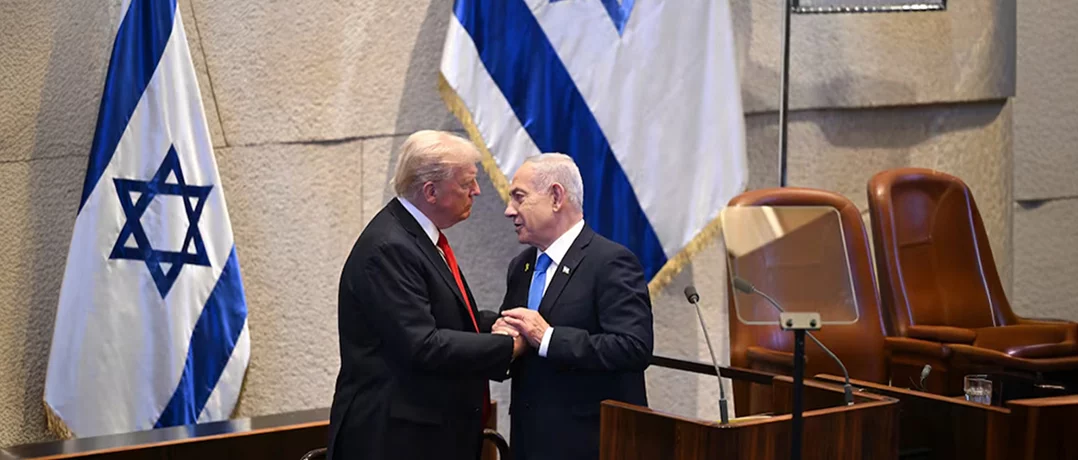
Israeli Prime Minister Benjamin Netanyahu’s visit to the United States for talks with President Donald Trump comes at a moment of heightened volatility in the Middle East.
Set against a fragile Gaza ceasefire, unresolved tensions with Hezbollah in Lebanon, and mounting concerns over Iran’s military capabilities, the meeting at Mar-a-Lago, Florida carries implications that extend well beyond bilateral relations. It is both a strategic consultation on regional security and a politically consequential encounter for two leaders navigating complex domestic and international pressures.
Gaza ceasefire at a critical juncture
At the center of discussions will be the Gaza ceasefire brokered in October 2025, which halted a devastating 2-year war.
While the initial phase has largely been implemented, marked by partial Israeli withdrawals and the release of most hostages, the second phase remains stalled. Mutual accusations of violations persist, and Israel’s reluctance to fully withdraw or ease aid access contrasts with Hamas’s refusal to commit to disarmament. With over 70,000 Palestinians killed during the war and widespread displacement and destruction, humanitarian conditions in Gaza remain dire, further complicating efforts to move the ceasefire forward.
From here, as American sources previously revealed Israeli resentment towards the ceasefire agreement, Netanyahu may well be hoping to achieve American approval for further escalation and for more favorable conditions (especially with regards to the Strip’s future governance).
Lebanon and the risk of a renewed armed conflict
Beyond Gaza, fears are growing that Israel may resume military action against Hezbollah, potentially shattering the ceasefire established in November 2024.
Israeli officials argue that Hezbollah’s continued military presence violates agreed terms, while Lebanon seeks reciprocal Israeli withdrawals and confidence-building steps before advancing disarmament efforts. Indeed, Israel and Hezbollah’s rhetoric have shifted drastically towards a more offensive and escalatory manner, issuing threats and outlining pretexts for a potential armed conflict.
Despite Lebanese President general Joseph Aoun’s latest reassurances that the ‘specter of war’ has been pushed back, anticipation remains as Netanyahu is reportedly seeking American green-light for escalatory operations on Hezbollah.
However, any escalation along the Lebanese front risks drawing the region into a broader confrontation, particularly given Hezbollah’s ties to Iran.
Targeting the “head of the octopus”: Iran
Iran is widely viewed by Israeli decision-makers as the core strategic challenge, encouraging and supporting its regional proxies to reject disarmament as well as bolstering their influence and survival.
Netanyahu is expected to press Trump for greater latitude, or explicit approval, to act against Tehran’s nuclear and ballistic missile programs, which Israel claims have been revitalized despite recent strikes.
While both leaders portray deterrence against Iran as essential to regional stability, Washington remains cautious about authorizing actions that could trigger a large-scale regional war. The balance between deterrence and escalation will be a defining issue in their talks.
Domestic politics and strategic calculations
The timing of the meeting is also shaped by domestic political considerations in Tel Aviv and Washington alike.
PM Netanyahu faces elections within a year amid declining poll numbers and public anger over security failures and internal controversies. A strong alliance with Trump bolsters his image as a seasoned statesman and security guarantor. Therefore, as election season nears, Netanyahu will most likely seek escalation and bolder policies to reassert himself and bolster his image and support, which relies heavily on American support and acquiescence.
For Trump, demonstrating leadership in Middle East diplomacy reinforces his global profile and domestic standing. This convergence makes public disagreement unlikely, even as private tensions over Gaza and regional strategy persist.
In conclusion, Netanyahu’s meeting with Trump unfolds at a crossroads for the Middle East, where fragile ceasefires, unresolved conflicts, and rival strategic visions intersect. While Gaza’s future and the risk of renewed fighting in Lebanon dominate immediate concerns, the deeper question centers on Iran and the limits of military solutions to regional instability. Whether the talks yield concrete breakthroughs or merely postpone hard decisions, they will shape the trajectory of regional security, and the political fortunes of both leaders, in the months ahead.
-
-

-
The Beiruter
-
