



For centuries, Beit Chabab’s stonemasons have carved Lebanon’s churches, monuments, and memory into enduring stone.
Beit Chabab crafting heritage by hand

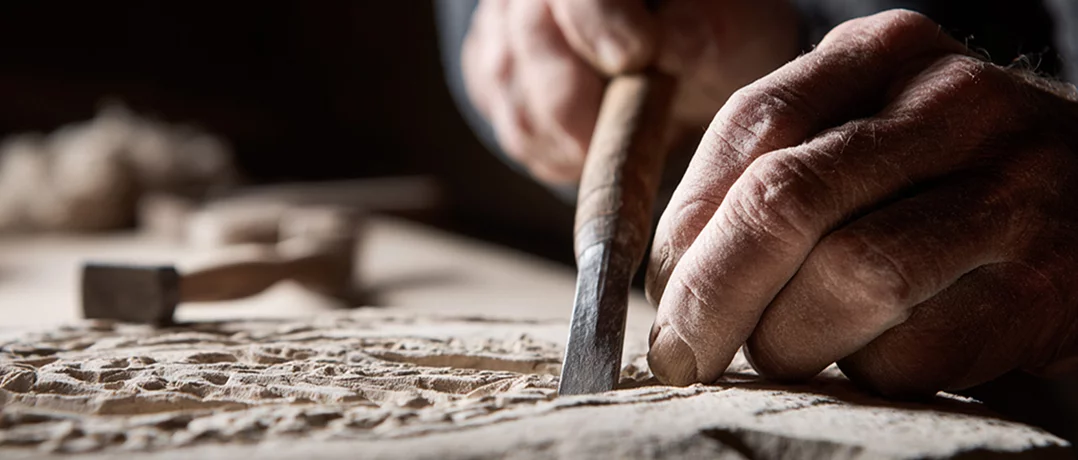
Perched in the mountains just north of Beirut, Beit Chabab has spent centuries shaping its identity in limestone and sandstone. During the Ottoman period, the village hosted dozens of family workshops, some producing stone elements for churches, mansions, and public buildings across Lebanon. The village’s stonemasons carved intricate cornices, statues, and façades that defined architectural style and carried cultural and religious symbolism, embedding Beit Chabab’s craftsmanship into Lebanon’s national heritage.
Shaping national landmarks
Beit Chabab’s influence stretches far beyond its narrow streets. Monuments in Beirut, Jounieh, Tripoli, and Zahlé showcase its artisans’ work. For example, the Saint Joseph Church in Beirut features cornices carved by Beit Chabab stonemasons. In addition, the restoration of Ottoman-era buildings continues to rely on local Beit Chabab workshops for authentic techniques. Despite the rise of modern construction and imported materials, many workshops remain committed to hand-carving techniques, asserting that true artistry cannot be mechanized.
Economic and cultural impact
The craft sustains a local economy that encompasses artisans, apprentices, quarry workers, transporters, and contractors. Some workshops supply regional restoration projects, while others create custom pieces for new construction, blending heritage with contemporary design. The village also attracts students, architects, and tourists, contributing to heritage tourism.
Today, approximately 10–15 active workshops remain in Beit Chabab, with dozens of artisans and apprentices maintaining the craft. These numbers are modest compared to the village’s historical peak, but they represent a concentrated hub of skills that are rare in Lebanon.
Preserving a living legacy
By keeping centuries-old techniques alive, Beit Chabab ensures that Lebanon’s architectural and cultural identity continues to bear the mark of its stonemasons. Apprenticeships preserve centuries-old techniques and the symbolism embedded in designs, ensuring that knowledge is passed on rather than confined to history books. As Lebanon grapples with urbanization and economic flux, the artisans of Beit Chabab stand as a reminder that traditional skills, rooted in patience, precision, and pride can anchor both cultural identity and livelihoods. Every stone carved is a story of continuity and resilience, a village that has etched its artistry into the heart of Lebanon for generations.
-
-

-
The Beiruter
-
