



Druze Nexus is a US-based nonprofit working to protect vulnerable minorities by combining advocacy, documentation, and economic empowerment to build long-term resilience.
Druze Nexus: A new voice for vulnerable minorities
Druze Nexus: A new voice for vulnerable minorities
By The Beiruter | December 26, 2025

Reading time: 3 min
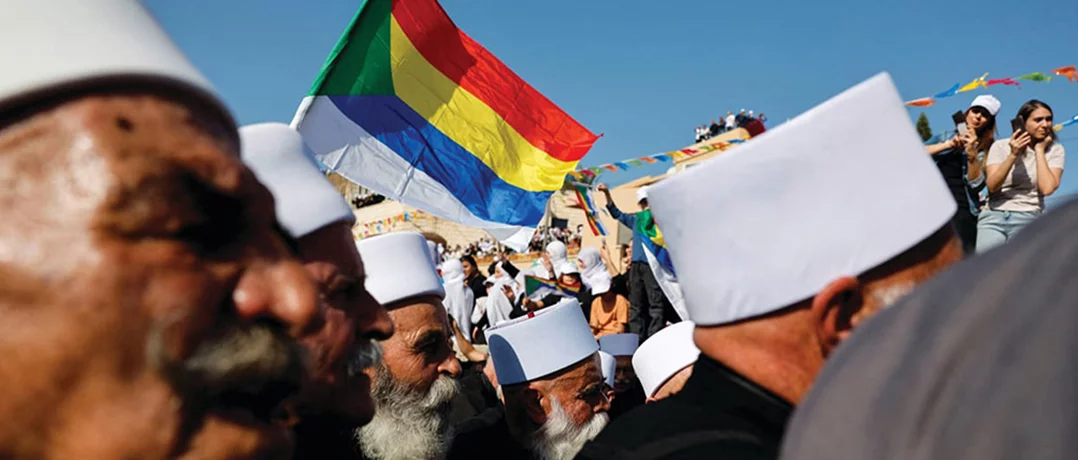
Amid growing instability in the Levant and the increasing marginalization of minority communities, the launch of Druze Nexus (DN) comes at a critical moment.
Established as a United States-based, non-political, nonprofit organization, Druze Nexus was born with a simple, unwavering purpose: to uphold and protect the dignity of our Druze people wherever they are, especially in Sweida, where families are enduring difficult circumstances this festive season. That is why DN are stepping forward as a true nexus: a meeting point for all those who value peace, justice, and the sanctity of life.
At the heart of its mission lies a clear conviction: that protecting lives and preserving identity must go hand in hand with economic empowerment to secure a sustainable future. DN strives to build social sustainability for very vulnerable minorities in our region by investing in education and supporting economic initiatives.
From here, an exclusive interview to The Beiruter was conducted with Rami El-Khalil (one of the Nexus leaderships championing the Economic Empowerment Initiative Lead).
Why now?
El-Khalil asserted that the organization was launched now “because the pressures on the people of Sweida have grown faster than our ability to respond in an organized way. More families are becoming vulnerable, youth are facing blocked education and limited job prospects, and emigration is draining talent.
He added that “aid is scattered across individuals and small groups, which wastes effort and makes trust and vetting harder when times are tough. Druze Nexus creates one credible hub to coordinate support, connect the diaspora’s skills and resources to real needs, and build practical pathways, from scholarships, training, jobs, and entrepreneurship. The community can move from short-term aid to long-term dignity and stability.”
It is worth mentioning that when El-Khalil addresses the difficulties and needs of the people of Sweida, for instance, he is not merely referring to Druze but other minorities as well, such as Christians.
How does the NGO engage US policymakers on issues affecting Druze and other minority communities?
El-Khalil notes that, given the nature of the organization as an American-based NGO that is registered in the US, we do not lobby but rather are an advocacy group.”
Additionally, he revealed that the NGO has 3 main pillars regarding their working scope:
- Creating awareness and documentation as well as verifying updates.
- Working via diaspora chapters and trusted partners to build resilience through economic empowerment.
- Preserving the history, culture and identity continuity.
Indeed, El-Khalil stated that the organization’s aim is “to link capabilities and cross-border solutions, given the need for cross-border capabilities for the economic empowerment.”
In addition, he outlined DN’s main points:
- Engaging US policymakers by turning verified on-the-ground information (through its field partners and medical/community committees) into clear policy briefs, situation updates, and recommendations, then delivering them through direct briefings and meetings with Congressional offices and relevant US agencies.
- Hosting (universities / think tanks / NGO coalitions) roundtables, coordinate advocacy messages, and keeping decision-makers consistently informed about Druze and other minority community needs.
- Utilizing a professional network of Druze Professionals in the diaspora to help establish economic empowerment initiatives.
An NGO for Druze and all minorities across the world
El-Khalil asserted that the NGO is not confined by the Druze community, as it is concerned with all minorities, especially in the Levant (including Ismailis, Christians, Alawites and Assyrians), since all minorities are facing the same problem. He added that “now, coincidently in Sweida, it is the Druze and Christians, especially with the extremism that has risen and building up.”
Moreover, El-Khalil noted that “minorities are minorities. But coincidentally, it all started due to the atrocities that have occurred in Sweida where Christians and Druze live together, side by side;” a case which differs from the situations in neighboring regions.
What is the organization’s position on regional security issues impacting minorities?
El-Khalil pointed out that “we are voicing these concerns internationally, especially with the US government, as well as engaging with them and supplying the necessary facts and figures.”
However, he noted that “we are not a political arm. We just want to make sure we create awareness about what is happening, so that we have the required members (be it in the Congress or high network individuals or influencers) to be able to achieve the intended outcomes.”
El-Khalil added that “we are not just talking about the events that have unfolded only, but the economic situation, corridors for supply, human rights, keeping the dignity of those minorities as well.”
What are your top priorities and aspired legislations and commitments for the upcoming year?
El-Khalil revealed that the NGO’s main priority is economic empowerment because of the situation. He claimed that “since we believe that through economic empowerment, we preserve the dignities create some sort of economic cycle that people can actually live in peace.” Therefore, the first thing is for the organization to be a global voice for minorities, inclusion and tolerance.”
From here, the NGO has lined up a couple of initiatives. For instance, El-Khalil stated that “we now have 6,000 students who cannot leave that area (for security reasons) to finish university. So, we are arranging for a university to supply, open up virtually and give them credits to be able to finish their degrees.” Additionally, “we are promoting economic empowerment whereby we see businesses, startups, SMEs who need support so that they can help and enhance the economy and employment; especially using technology to cross borders.
In terms of how the organization is aiming to achieve this goal, it is “through advocacy as well as humanitarian aid and rights protection. We are linking up globally with philanthropists and relevant experts by creating a think tank so that we will be able to push forward.”
-
-

-
The Beiruter
-
