

Residents and farmers welcome international attention but demand concrete action, safety and accountability after years of destruction.
Exclusive to The Beiruter: Dutch minister pledges millions as southern Lebanon struggles to recover
Exclusive to The Beiruter: Dutch minister pledges millions as southern Lebanon struggles to recover
By Angie Mrad | September 05, 2026

Reading time: 4 min
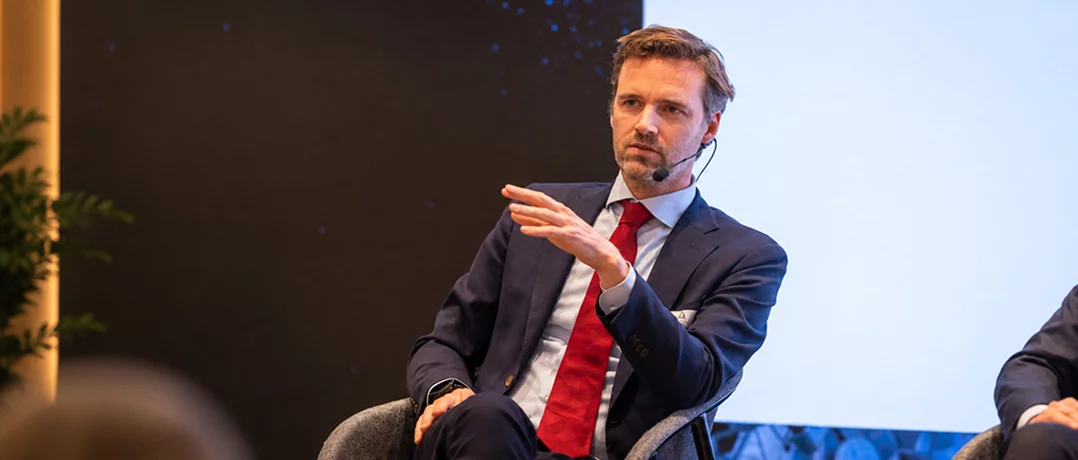
Residents of the southern Lebanese city said explosions continued throughout the night as the Israeli military blew up houses in nearby villages. But by Wednesday morning, Dutch Minister for Foreign Trade and Development Cooperation Sjoerd Sjoerdsma had arrived in the city to witness the consequences of the war and meet residents, farmers, local officials, journalists and rescue workers.
His visit came as communities across southern Lebanon struggle with displacement, destroyed livelihoods, damaged infrastructure and continuing insecurity.
Sjoerdsma announced new Dutch funding for humanitarian relief, water infrastructure, agricultural recovery and investigations into alleged violations of international law.
The Netherlands is providing €13.5m in humanitarian assistance, including €7m through the PROSPECTS program, with support focused on cash assistance, shelter and emergency education for displaced people through UNICEF and UNHCR. It is also providing €11m for water management over the next four years, part of which will go towards rebuilding water infrastructure damaged in southern Lebanon.
But for residents who have lived through years of violence and repeated promises of assistance, the central question was not how much money had been announced, but when they would see tangible results.
“This situation is unacceptable,” Mohamad Fakih, the mayor of Kfar Tebnit, told the minister. “People have been left on the streets, asking for just $10 or $15 simply to survive.”
With the school year approaching, Fakih said municipalities were speaking with organisations about possible online classes and other alternatives for children unable to attend school safely.
“We constantly hear that efforts will be made and action will be taken,” he said. “We have had enough promises. We need to see concrete action on the ground.”
Farmers left with nothing
The destruction has been particularly severe in Lebanon’s agricultural south, where many families depend on farming for their income.
Ahlam Sabah, a farmer from Zebdine, said the war destroyed an agricultural project that had supported her and 11 other women.
“Our agricultural project had 10 greenhouses, four cows, chickens and a kitchen,” she said.
“Then the war came and destroyed everything.”
Sabah appealed for practical assistance that could allow the women to resume working, including greenhouses, solar panels and agricultural equipment.
“We have been left with nothing,” she said. “We need any kind of support that can help us get back on our feet.”
Agricultural recovery is also part of the Dutch support. The Netherlands is contributing €1.3m to a European Union project aimed at helping farmers restore their livelihoods. For farmers in the south, however, the immediate concern is whether such funding will translate into the equipment and resources they need to start working again.
34-year-old Imane Mislem, said the minister’s visit was the first time she felt that the officials had shown an interest in their situation.
“At the very least, we hope they can provide us with our basic needs, including equipment and everything necessary to restart our work,” she said.
But restoring livelihoods is only part of her concern. Imane also told the minister that she was afraid to send her children to school because southern Lebanon remained unsafe.
“We need to make sure people can go back home,” Sjoerdsma said during the visit.
But for families still facing insecurity in the south, returning home is not only a question of reconstruction or financial support, but whether they can do so safely.
For Ahlam and Imane, recovery begins with practical support: the equipment and materials needed to rebuild their livelihoods, alongside the security needed to remain in their communities.
Documenting possible violations
Accountability was another focus of Sjoerdsma’s visit.
The Netherlands has allocated €1.2m over four years to support a documentation centre run by Lebanon’s National Committee on International Humanitarian Law. A further €500,000 is being provided to the UN human rights office for work related to international humanitarian law.
“Aid workers, rescue workers and journalists operate under incredibly difficult and dangerous conditions,” Sjoerdsma said.
“Every incident in which they are harmed deserves a thorough investigation. Violations of international humanitarian law must be documented.”
Journalists and rescue workers in Lebanon have repeatedly reported operating under dangerous conditions, with several killed in attacks during the war.
But documentation does not automatically produce accountability. Numerous investigations into attacks in Lebanon have previously failed to result in prosecutions or sanctions.
When asked what alternatives existed if Lebanon did not recognise the ICC’s jurisdiction, Sjoerdsma pointed to the European Union’s Magnitsky-style sanctions regime.
The framework allows the EU to impose measures such as asset freezes and travel bans on individuals and entities accused of serious human rights violations.
However, questions remain over whether the mechanism would be used against those found responsible for unlawful attacks on journalists, medical workers, or civilians in Lebanon.
Dutch support also extends to Lebanon’s military, with an additional €7.5m allocated to the Lebanese Armed Forces this year. The funding will cover areas including soldiers’ equipment and support for a new land border regiment along the Syrian border.
For people in the south, investigations and international funding are welcome, but they do not resolve the immediate danger or guarantee that displaced families will be able to return home.
As the minister continued his visit, residents repeatedly returned to the same demand: assistance must move beyond announcements and reach the communities that have lost their homes, livelihoods and sense of safety.
