Nearly a century before solar panels transformed Lebanon's energy landscape, Lebanese engineer Hassan Kamel Al-Sabbah envisioned harnessing the sun as the Middle East's greatest source of power.




Nearly a century before solar panels transformed Lebanon's energy landscape, Lebanese engineer Hassan Kamel Al-Sabbah envisioned harnessing the sun as the Middle East's greatest source of power.

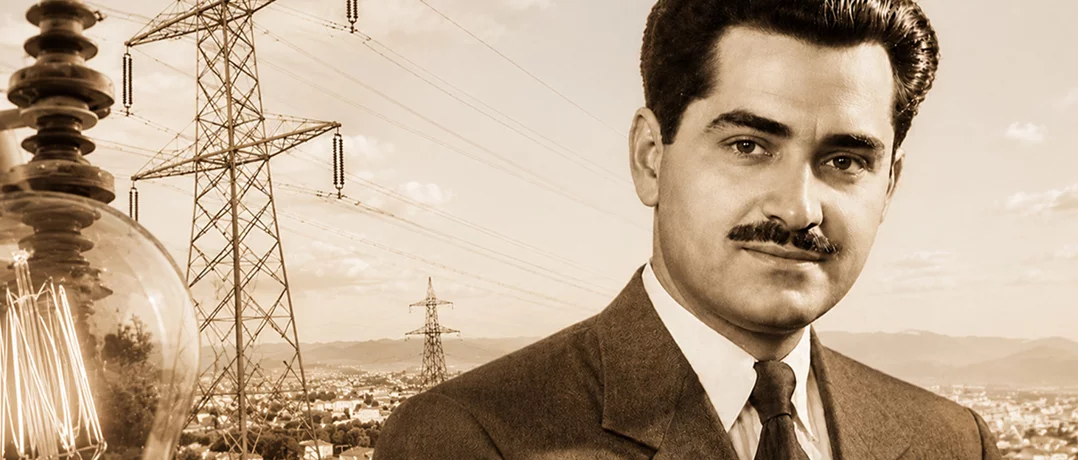
Across Lebanon, solar panels have become part of the landscape. They line the rooftops of apartment buildings in Beirut, stretch across homes in the Bekaa, and power businesses from the mountains to the coast. For many Lebanese, renewable energy was never an environmental choice. It became a necessity after years of electricity shortages and soaring fuel costs. Yet decades before solar panels appeared on Lebanese rooftops, one engineer had already recognised the region's greatest untapped resource. His name was Hassan Kamel Al-Sabbah; while much of the world focused on expanding coal-fired power plants and building electrical grids around fossil fuels, Al-Sabbah was thinking differently. He believed the Middle East's greatest source of energy was not hidden underground in oil fields, but shining overhead every day.
Born in Nabatieh in 1895, Al-Sabbah excelled in mathematics from an early age. After studying at the American University of Beirut, he travelled to the United States, where he joined General Electric's research laboratories in Schenectady, New York, then one of the world's leading centres for electrical innovation. His work quickly earned him a reputation as one of the company's most talented engineers. During his career, he received 43 U.S. patents covering electrical conversion systems, vacuum tubes, power electronics and communication technologies. These inventions were more than isolated breakthroughs. Together, they addressed a larger challenge: how electricity could be generated, converted and transmitted more efficiently. That broad understanding of electrical systems would eventually shape the way he thought about energy itself.
Looking at the desert and seeing a power plant
In the 1920s, almost no one was talking about renewable energy. Oil was transforming economies, coal remained the backbone of industry, and electricity networks were expanding around fossil fuels. Al-Sabbah, however, looked at the geography of the Middle East differently; where others saw endless deserts and unbearable heat, he saw an almost limitless supply of energy waiting to be captured. He believed that the region's abundant sunlight could eventually be harnessed to produce electricity on a massive scale. Although the technology needed to achieve that vision did not yet exist, the idea itself was extraordinary. Al-Sabbah was not proposing a single invention. He was imagining an entirely different way of thinking about energy, one based on renewable natural resources rather than fuels that would eventually run out. Many of the questions he explored nearly a century ago continue to shape energy policy today. How can countries reduce their dependence on imported fuels? How can local natural resources become reliable sources of electricity? And how should electrical systems evolve to meet future demands rather than present ones?
Al-Sabbah never lived to see solar energy become practical, yet Lebanon's electricity crisis has unintentionally demonstrated just how relevant his thinking was. As the national grid deteriorated, households and businesses could no longer depend on state electricity alone. Diesel generators became increasingly expensive, forcing thousands of families to search for alternatives. The answer was quite literally above their heads. Today, rooftop solar systems power homes, schools, farms and businesses across the country. What began as an emergency response has become one of Lebanon's fastest-growing sources of electricity. The transformation was not driven by climate policy or government planning. It was driven by necessity. But in many ways, it reflects the same principle Al-Sabbah recognized decades earlier: countries blessed with abundant sunshine should not overlook one of their most valuable natural resources.
Despite his achievements, Hassan Kamel Al-Sabbah remains surprisingly unknown outside engineering circles. Part of the reason lies in the nature of industrial research. Like many scientists working for large corporations, the inventions he developed became the property of General Electric. His work helped advance technologies that would shape modern electrical engineering, but the company often received greater recognition than the individuals behind the research. His life was also cut tragically short. In 1935, at just 39 years old, Al-Sabbah died in a car accident in New York.
Hassan Kamel Al-Sabbah's story is not simply about an engineer with an impressive collection of patents. It is about the value of looking beyond the immediate problems of the present. Rather than asking how to improve existing systems, he asked what entirely new systems might one day replace them. That mindset allowed him to imagine possibilities that would only become technologically achievable decades later. At a time when discussions about clean energy dominate international politics, his work serves as a reminder that transformative ideas often begin long before the technology exists to realise them.
For Lebanon, his legacy carries an additional message. The country has long been known for its writers, artists and entrepreneurs, yet it has also produced scientists whose ideas reached far beyond its borders. Hassan Kamel Al-Sabbah was one of them. Nearly a century after he first imagined harnessing the sun's energy, the rooftops of Lebanon stand as an unexpected reminder that some of his boldest ideas were not unrealistic. They were simply waiting for the rest of the world to catch up.
