As Arabic typography experiences a creative revival in Lebanon, designers and calligraphers are blending centuries-old artistic traditions with modern design to redefine cultural identity for a new generation.




As Arabic typography experiences a creative revival in Lebanon, designers and calligraphers are blending centuries-old artistic traditions with modern design to redefine cultural identity for a new generation.

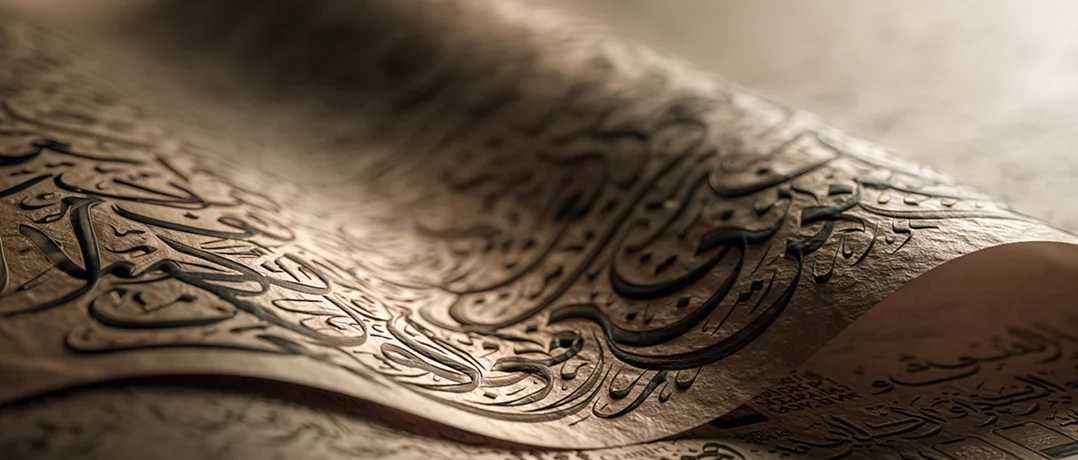
Arabic lettering is increasingly visible across Lebanon, from café façades and album covers to clothing brands and social media. For many young creatives, Arabic has evolved beyond a written language into a powerful visual identity that expresses culture, creativity and belonging. This transformation reflects a broader shift within Lebanon’s creative industries. Designers are reinterpreting Arabic script in ways that feel modern and relevant, moving it beyond traditional or religious contexts into everyday design. What was once seen as traditional is now embraced as contemporary and expressive.
Behind today’s Arabic typography lies a centuries-old calligraphic tradition. While calligraphy is often associated with manuscripts and religious texts, many Lebanese designers see it as an evolving art form rather than a relic of the past. Historically, calligraphy preserved knowledge and conveyed spirituality. Today, it serves as a bridge between heritage and innovation, allowing designers to reinterpret classical forms for modern audiences. Graphic designer Robin Khalil emphasises the importance of understanding traditional calligraphy before creating modern typography. For him, classical scripts form the foundation of all contemporary work. "You need to understand what came before," he says. "You're not creating letters from scratch. You're building on the Arabic script and adapting it for a new audience." Khalil views studying calligraphy not as nostalgia, but as a necessary step toward meaningful innovation.
His journey into Arabic typography began during an artist residency organised by Ain Design’s Arabic Letter Lab in Jordan. The initiative encouraged designers to experiment with Arabic letters and challenge the idea that the script belongs only in religious contexts. "The goal was to make Arabic script more approachable for younger generations," he explains. "It helped break the fear around using it creatively." This shift has allowed designers to explore Arabic lettering more freely, producing work that feels both authentic and contemporary.Khalil also distinguishes between lettering and typography, two often-confused concepts. Lettering involves drawing individual words or compositions, while typography is based on systems that allow letters to function together as a complete typeface. "Lettering is something you draw," he says. "A typeface is built so you can actually type with it." Both practices, however, are rooted in the principles of calligraphy.
The rise of Arabic typography reflects a wider cultural movement. Khalil sees it as part of a broader resurgence in which younger generations are embracing their identity across music, fashion and design. "It’s part of a bigger narrative," he says. "We’re seeing a new era of celebrating where we come from." Arabic is being reclaimed not just as a language, but as a symbol of pride.
Beyond design studios, efforts to preserve calligraphy continue in places like the Aytat Cultural Centre in the Chouf. The centre houses the work of renowned calligrapher Sheikh Nassib Makarem, with his grandson Samir Makarem continuing the legacy. "Arabic calligraphy is one of the most admired arts," Makarem says. "But it hasn’t always received the appreciation it deserves." He notes a growing interest among younger generations, which he sees as a positive sign. The centre hosts workshops introducing participants to traditional calligraphy, offering more than technical instruction. These sessions provide a space for people to reconnect with their heritage and experience the discipline and creativity involved in hand-drawn lettering. Makarem distinguishes between calligraphers, who master traditional rules, and calligraphy artists, who build upon them to create new forms. "There’s a difference between following the rules and transforming them," he explains. He cites his father, Sami Makarem, who mastered classical techniques before experimenting with them, allowing the letters to take on new expressive forms.
Contemporary typography mirrors this balance between tradition and innovation. Designers often begin with classical scripts before adapting them for digital and commercial use. Rather than replacing calligraphy, typography extends it, making Arabic script more accessible across modern platforms. As technology evolves, artificial intelligence raises questions about authenticity. Khalil sees AI as useful for experimentation but limited in its understanding of Arabic script. "I haven’t seen AI generated Arabic done right," he says, noting that it lacks the depth of knowledge required for meaningful design. Makarem shares similar concerns, emphasising the irreplaceable value of human expression. "Nothing replaces the personal touch," he says. "Machines can create, but they lack feeling." Interestingly, the rise of digital typography is leading many designers back to traditional calligraphy. Experimentation often sparks a deeper interest in understanding the structure and history of Arabic letters. What begins as a modern exploration frequently becomes a journey into heritage.
For both Khalil and Makarem, the future of Arabic lettering lies in balancing tradition with innovation. As typography continues to evolve, calligraphy remains a vital foundation. Far from fading, Arabic calligraphy is proving to be a living tradition; one that continues to shape how a new generation sees and expresses its language.
