Iran’s internal unrest, Israeli preemption, and U.S. deterrence failures heighten risks of a wider regional war.




Iran’s internal unrest, Israeli preemption, and U.S. deterrence failures heighten risks of a wider regional war.

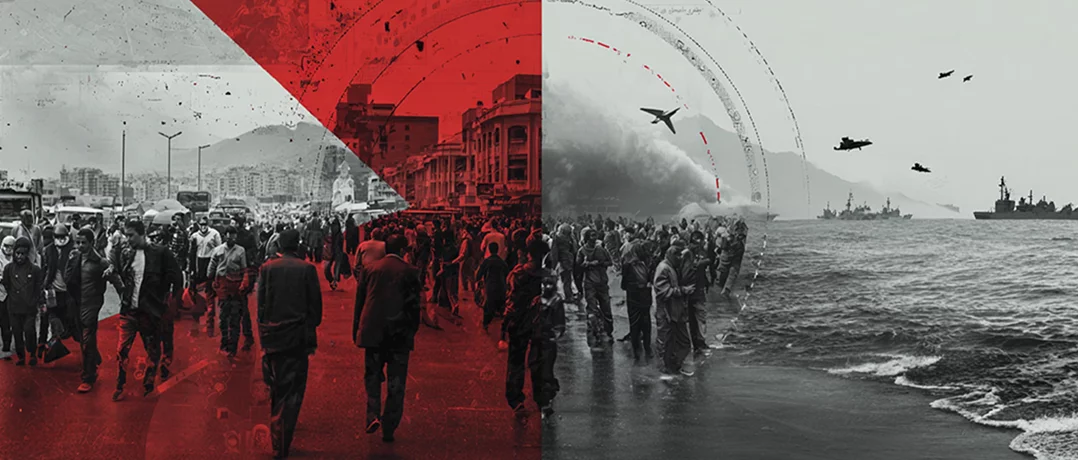
In the Middle East, when fleets amass, diplomacy grinds to a halt, and flights are cancelled in the small hours, the question is no longer if a confrontation will occur, but when, to what scale, and to what end. That is the assessment from a Washington source familiar with the Iranian–Israeli situation.
For weeks, Iran has been enduring its most perilous moment since Hamas’s assault on Israeli territory on 7 October 2023, a day that plunged the region into hell, a turmoil Tehran itself has never before experienced on this scale since the founding of the Islamic Republic in 1979. A state that long presented itself as a resilient regional power, adept at absorbing pressure through its network of militia proxies and skilful diplomacy that promises resolution only to retreat at the last minute, now faces circumstances unlike any prior crisis. Today’s reality appears markedly different: Tehran finds itself squeezed between a broad domestic uprising that shows no sign of swift suppression and an external escalation driven by the United States and Israel.
From Tehran to Washington, from Jerusalem to Beirut, the issues intertwine street protests met with live fire, American aircraft carriers converging on the region in what some describe as hesitant deterrence, and Israeli strategic calculations increasingly leaning towards pre‑emptive action.
Iran’s protests, which erupted in late December, began amid stark economic grievances: rampant inflation squeezing traders, a collapse in citizens’ purchasing power, and widespread hardship. Yet this economic discontent rapidly evolved into a direct political challenge to the regime, striking at the core of its authority and mechanisms of governance.
The response by security forces, the Revolutionary Guard, and the Basij militia was swift and brutal. They spread into key protest areas -particularly Kurdish regions- pursued demonstrators into their homes, used live ammunition against passers‑by and those returning from work, denied medical care to the wounded, and even killed or injured people within hospitals. According to the United Nations, this campaign has resulted in thousands of deaths, representing the highest levels of lethal force and detentions Iran has seen in decades, with human rights groups reporting around thirty‑thousand arrests. With broad internet shutdowns in place, independent verification has become nearly impossible, granting security agencies wide latitude to operate without international scrutiny.
What distinguishes this round of protests is not merely the scale of repression, but the tenor of public discourse accompanying it. Leaks circulating on social media have revealed a shift in language: demands no longer focus solely on toppling the regime or holding its leaders to account, but extend to explicit threats against security personnel, the naming of individuals firing on protesters, and vows of vengeance and personal justice. This reflects a breakdown of the fear barrier among large swathes of the population, making this crisis more complex than its predecessors.
From the regime’s perspective, retreat is no longer an option. Any sign of softness would be interpreted as weakness and could open the floodgates to further unrest. Consequently, Tehran appears resolved to pursue repression to its furthest extent, even at the cost of deeper international isolation and additional sanctions.
Faced with the internal bloodshed in Iran, the United States has acted on two fronts to pressure Tehran. Militarily, Washington has dispatched the USS Abraham Lincoln carrier strike group to the region, bolstering its naval and air presence with F‑15E fighters, aerial refuelling aircraft, and an intensified flow of military cargo flights. The build‑up, reminiscent of the run‑up to last June’s conflict, is clearly intended to send a deterrent message: the United States is capable and ready to intervene.
Yet politically, the messaging has been far less clear. President Donald Trump, who threatened to “crush Iran” if it resumed executions or pursued its nuclear or ballistic programmes, has since suggested that Tehran “wants to negotiate”. He hinted at strikes and then pulled back, justifying his stance by claiming that Iran had halted executions — a claim flatly denied by Iranian authorities themselves. Such mixed signals have weakened deterrence credibility and sown confusion among allies and adversaries alike.
Sources in Washington argue that deterrence cannot be achieved through military posturing alone but requires consistency between words and actions. From their perspective, previous sanctions and strikes have dealt tactical blows to Tehran, but they have not altered the regime’s behaviour and may even have reinforced its belief that internal repression does not invite decisive external intervention.
Trump continues his game of brinkmanship with Iran, but the contradictions in his remarks have led many observers to conclude that a strike is all but inevitable, based on the scale of the American deployment. At the same time, these muddled messages have left Iranians clinging to the hope of immediate U.S. action to halt the killing of civilians.
On the other side of the equation, Israel appears less inclined towards hesitation. For Prime Minister Benjamin Netanyahu, Iran is not merely a regional adversary but an existential threat, a constant threat in his foreign policy for decades, reinforced by last June’s twelve‑day war.
When Iran encountered domestic turmoil, Netanyahu pulled back, with reports claiming that Israel reached an understanding with Tehran, mediated by Russia, agreeing not to attack one another, and with assistance from Gulf states in convincing Trump to forego air strikes this time.
Yet Netanyahu’s truce with Tehran was tactical rather than a strategic turning point in the conflict, and the lull is unlikely to last. There are strong reasons to believe the next round of Iranian–Israeli hostilities will dwarf earlier confrontations.
Israel had practical reasons to delay another direct confrontation: last summer’s twelve‑day war saw Iranian missiles launched directly at Israel, inflicting considerable economic damage despite the success of its air defences in limiting physical destruction. More importantly, it revealed the limits of containment and underscored that direct conflict is no longer hypothetical.
Since then, Israel’s strategic outlook has shifted. Deterrence is no longer sufficient; preemption has become a serious option. This is reflected in remarks by the Israeli Chief of General Staff and in Netanyahu’s political manoeuvring, suggesting that a new strike against Iran cannot be discounted — especially if Tehran’s window for military action narrows as it rebuilds its defensive capabilities.
However, 2026 is an election year in Israel, a factor that looms over every security and military decision, particularly on the Iranian dossier. Netanyahu is banking on such issues to bolster his political survival amid ongoing legal challenges, and he faces pressure from the hard right, which views any compromise or delay as unacceptable weakness. Even if his government falls, there is little sign that a successor administration would adopt a softer stance on Iran; Israeli consensus increasingly holds that the Iranian threat cannot be indefinitely managed.
Alongside Iran, Hezbollah remains central to Israeli calculations. Despite the blows it has suffered since joining the October 2023 war, the group still possesses a formidable rocket arsenal, a large cadre of fighters, and continued Iranian funding. Any confrontation with Tehran carries the risk of automatically opening the Lebanese front, whether by Iranian directive or due to on‑the‑ground dynamics spiralling out of control. This raises the prospect that any future war could be genuinely regional, not confined to two states. Militarily, Israeli defence officials have promised a significant acceleration in production of the Arrow interceptor missiles and recently tested the new Arrow 4 air‑defence system aimed at protecting borders from rocket attack.
Despite U.S. and Israeli strikes, reports indicate Iran’s nuclear programme has not shut down but is being reorganised and intensified. An Italian institute for international political studies reported that Supreme Leader Ali Khamenei approved the development of miniaturised nuclear warheads. A study by the Institute for Science and International Security in late November concluded that key nuclear sites at Fordow, Natanz, and Isfahan had been substantially damaged and showed only limited activity since the war, while identifying a new underground site known as Picaxe Mountain, buried far deeper than other facilities. From an Israeli perspective, satellite imagery‑based signs of these developments suggest that waiting will make any future strike even more complex and costly, strengthening calls for pre‑emptive action.
No military escalation can be divorced from its economic repercussions. Iran is a major oil producer and exporter, and disruption to its exports would immediately affect prices. Likewise, any escalation threatens vital waterways under its sway, such as the Strait of Hormuz or the Bab al‑Mandab, through which Houthi missiles already traverse from Yemen. The rise in oil prices after Trump’s recent statements underscored the market’s fragility. China, which imports hundreds of thousands of Iranian barrels daily, is watching the situation anxiously, as are Europe and Gulf states, while commodity prices for metals have surged amid investor demand for safe havens.
The economic factor serves as an important brake on escalation, yet it alone may not prevent war if strategic and security calculations converge on confrontation.
In light of all this, the region faces three possible trajectories: a limited strike targeting nuclear or missile facilities; a broader regional war involving multiple parties; or the continuation of an eroding deterrence, defined by neither full‑scale war nor genuine reconciliation, but by internal repression and gradual political and military escalation.
Today, Iran cannot afford to step back domestically in the face of a street‑led existential threat, nor does it wish for an uncontrollable full‑scale war. The United States brandishes military might but hesitates to use it or attempts to project uncertainty, while Israel believes time is not on its side as Iran advances its weapons programmes. The question is no longer whether confrontation is possible, but how long it can be deferred before it becomes reality.
