



We Run Colors brought runners, families, friends and couples together in Jbeil-Byblos on Sunday morning, turning a three-kilometer run into a celebration of movement, music and Lebanese pride.
Jbeil runs in the colors of Lebanon

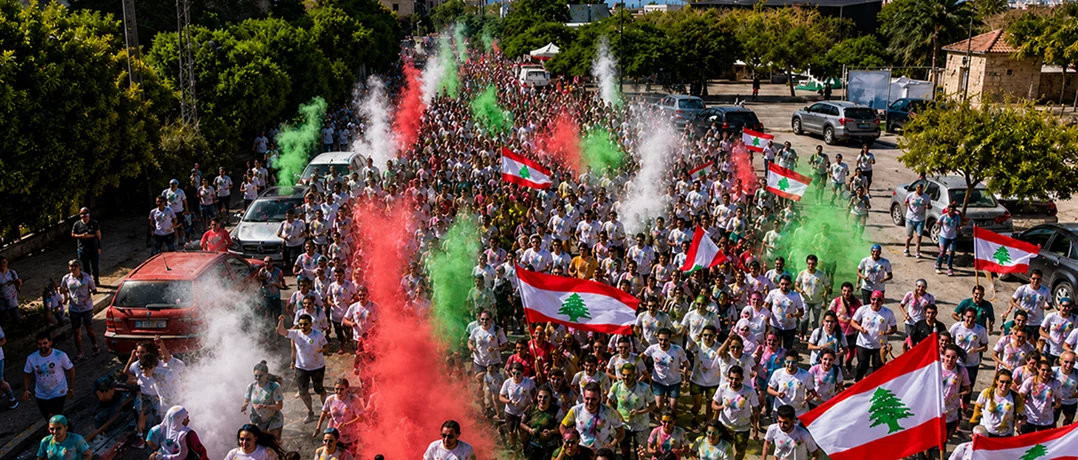
At 9 a.m. on Sunday, July 26, Jbeil filled with runners covered in red, white and green as We Run Colors brought its vibrant race to the city for the first time. Volunteers stood along the three-kilometer route, throwing clouds of powder over participants as they made their way through the streets, turning the run into a moving Lebanese flag.
It felt like the whole scene was about the people more than the race itself. Children ran beside their parents, teenagers showed up with their little crews of friends and couples came in together, having all those runners of different ages move through the course at their own rhythm.
Some ran, others walked, while plenty stopped to dance, take photos or enjoy the moment.
That morning there was this real sense of movement across Jbeil; you could hear the music, people were cheering and these bursts of color kept popping up along the streets.
A run through red, white and green
For Bilal Jamal, the founder and organizer of We Run Colors, the event has always been about bringing sport and enjoyment into the same space. A Lebanese marathon runner who has represented the country internationally, Jamal said the idea came from his own experience with running and color festivals.
“I was like, why don't we make people enjoy sports? I don't want people to just think that it's fun. I needed to put fun with sports,” he tells The Beiruter. “I am a sportsman, I am training to run, I want people to run, I want people to do sports because art and sports are a perfect combination.”
That idea was visible throughout the Jbeil event. The three-kilometer route was accessible to runners and walkers alike, with volunteers adding to the experience by throwing the powder colors as participants passed. The colors were chosen specifically for this edition, with Jamal wanting the event to carry a distinctly Lebanese identity.
“Fun is a part of sports, and sports is a part of fun. All of this is under the Lebanese flag,” he explained. “This is the message I want to deliver: We can have fun doing sports.”
A new life in Jbeil
The move to Jbeil marked a new chapter for We Run Colors, which had previously taken place in Tripoli and abroad. According to Jamal, the idea came after Abed Toshie, his partner in the organization, approached him about bringing the event to Jbeil. After speaking with the municipality, the team decided to go ahead. “I was like, yes! Let's do it,” Jamal said with a laugh.
The event was meant for everyone, from seasoned runners to people looking for a reason to exercise. That mix showed up all morning long. Kids running alongside their parents, teenagers coming in with friends and couples jumping into the race together.
Among them was a mother who came along with her two children. Covered in red and green powder, the family posed side by side after the race. Their bibs were still pinned on their shirts and there was a little scooter tucked between them. For the kids, the morning turned into a family outing, full of running color and fun.
For Jamal, that is exactly the kind of participation he hopes to encourage. “I want all people to participate in this race,” he said, emphasizing that the event welcomes adults and children, athletes and non-athletes alike.
The message is personal for Jamal, who already ran marathons before and even won the Lebanese championship in his age group. After a serious accident left him in a coma, he had to relearn the most basic movements.
“I couldn't walk, I couldn't talk, I couldn't even swallow,” he recalled. “Little by little, I learned how to move, and how to stand.”
He eventually started running again, slowly rebuilding his distance and rhythm. That whole experience really shaped his wish to motivate people, of all ages and abilities, to move no matter how or where. “I want people to stand, walk and run,” Jamal said with a smile.
A Lebanese ending
The race eventually gave way to the kind of celebration that needed no instructions. As the crowd gathered, the Lebanese flag was raised above the event, with participants waving smaller flags around it.
Music took over, and people were dancing as groups started holding hands for dabke, bringing that familiar Lebanese rhythm to the very end of the morning. Then came the last scene, which somehow captured the mood of the day: folks covered in the colors of the flag, moving together in the streets of Jbeil, with children, families and friends all sharing the same place.
Jamal sees that togetherness as one of the things that keeps him going with these events, especially after the hard years Lebanon has had lately.
“100 percent this event is to bring people together. To bring people together under the Lebanese flag,” he said. “Because we are proud of being Lebanese.”
-
-
-
Rayanne TawilCultural writer
-
