



In an interview with The Beiruter, Dr. Saeed Sadek examines Lebanese-Egyptian ties, highlighting historic bonds, strategic cooperation, and future opportunities.
Lebanon and Egypt’s enduring bond

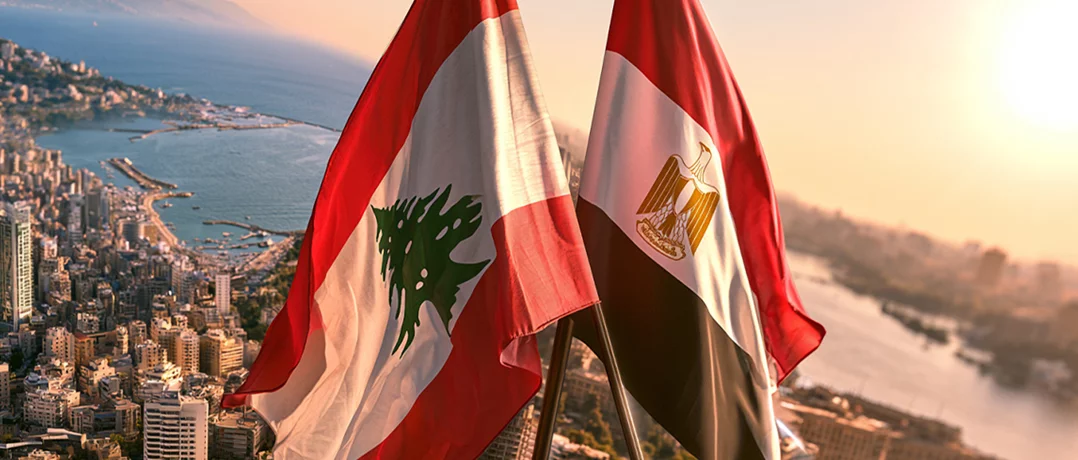
Lebanon and Egypt share one of the oldest and most enduring bilateral relationships in the Arab world. Built upon centuries of civilizational exchange, cultural interaction, commercial cooperation, and political coordination, their ties have consistently transcended the fluctuations of regional politics. While periods of tension have occasionally interrupted official relations, particularly during moments of major geopolitical transformation, the underlying connection between the two societies has remained remarkably resilient.
In an interview with The Beiruter, Dr. Saeed Sadek, Professor of Political Sociology at the American University in Cairo, asserted that the relationship represents “one of the deepest Arab partnerships,” rooted in history while offering significant opportunities for future cooperation.
From ancient civilizations to the Arab renaissance
The foundations of Lebanese-Egyptian relations date back more than three millennia. According to Dr. Sadek, historical records describe regular trade between ancient Egypt and the Phoenician cities along Lebanon’s coast, particularly Byblos, where Egyptian expeditions acquired the famous Lebanese cedar used in constructing ships, temples, and monuments. In return, Egyptian goods flowed into the Levant, creating one of the earliest examples of sustained regional commerce.
These interactions continued throughout the Islamic and Ottoman periods through migration, trade, and intellectual exchange. However, Dr. Sadek noted that the 19th century marked a particularly significant turning point. Following sectarian conflicts in the Levant, thousands of Lebanese emigrated to Egypt, where they became influential figures in journalism, publishing, literature, commerce, and theatre.
Their contributions, he believed, helped shape Egypt’s modern cultural renaissance. Salim and Beshara Takla founded Al-Ahram newspaper in 1876, while Jurji Zaydan established Dar Al-Hilal, one of the Arab world’s most influential publishing houses. Numerous Lebanese entrepreneurs, writers, and artists became integral participants in Egypt’s intellectual and economic development, creating a legacy that continues to define relations between the two peoples.
This presence made Lebanese culture an integral part of Egypt’s renaissance, while the reverse was also true, through the influence of Egyptian literature and arts on Lebanon.
Political relations: Cooperation through changing regional dynamics
Dr. Sadek stated that modern diplomatic relations gained momentum following Lebanon’s independence in 1943. Egypt became the first Arab country to recognize the newly independent Lebanese state and played an important diplomatic role during negotiations that eventually produced Lebanon’s National Pact, the constitutional understanding that defined the country’s political system.
Relations, he added, reached their closest point during the presidency of Gamal Abdel Nasser. Although Lebanon experienced significant internal divisions during the 1958 crisis between supporters of President Camille Chamoun and advocates of Arab nationalism, Dr. Sadek believed that Egypt ultimately contributed to a political settlement through the election of President Fouad Chehab. The subsequent understanding between Chehab and Nasser helped reaffirm Lebanon’s Arab identity while preserving its political independence.
Not all periods were equally harmonious. Dr. Sadek mentioned that relations deteriorated following Egypt’s signing of the Camp David Accords and peace treaty with Israel in 1979, prompting Lebanon, alongside many Arab states, to suspend diplomatic relations with Cairo. Normalization gradually resumed after the 1987 Arab Summit, with full diplomatic representation restored two years later.
Since the end of the Lebanese War, Dr. Sadek noted that Egypt has consistently supported Lebanon during major national crises, including the assassination of former Prime Minister (PM) Rafik Hariri, the 2006 war, the country’s prolonged economic collapse, the 2020 Beirut Port explosion, and the COVID-19 pandemic. Cairo has also participated in regional diplomatic initiatives aimed at preserving Lebanese stability and encouraging political consensus.
Economic cooperation: Untapped potential
Economic relations between the two countries possess deep historical roots but continue to offer considerable room for expansion, according to Dr. Sadek.
He stressed that commercial cooperation formally began with a bilateral trade agreement signed in 1951 and later expanded through Arab free trade arrangements. Bilateral trade has surpassed $1 billion in recent years, with Egyptian exports (including agricultural products, fuel, construction materials, and industrial goods) exceeding Lebanon’s exports, which primarily consist of jewelry, plastics, and agricultural products.
Lebanese investments in Egypt remain substantial, spanning sectors such as banking, manufacturing, transportation, and food production. Nevertheless, Lebanon’s prolonged financial crisis has limited the full realization of bilateral economic opportunities.
There is considerable untapped potential due to Lebanon’s crises, but recent agreements seek to activate transit trade, energy cooperation, and food security.
Recognizing this potential, Dr. Sadek stated that both governments reactivated the Joint Higher Committee in late 2025 after a 6-year hiatus. The committee signed approximately 15 agreements and memoranda of understanding (MoU) covering energy, trade, investment, agriculture, healthcare, education, food security, and technology, signaling renewed political commitment to expanding economic cooperation.
Energy cooperation at the center of the partnership
Among all areas of cooperation, Dr. Sadek highlighted that energy has emerged as the most practical and strategically significant.
This represents one of the most important practical opportunities.
Recent agreements seek to export Egyptian natural gas to Lebanon through the Arab Gas Pipeline (AGP) via Jordan and Syria, while Egyptian technical expertise is expected to assist in rehabilitating Lebanon’s gas infrastructure and supporting electricity generation at the Deir Ammar power plant.
For Lebanon, and based on Dr. Sadek’s assessment, these initiatives could help alleviate one of its most severe structural challenges: chronic electricity shortages that have undermined economic recovery for years. For Egypt, they reinforce its growing role as a regional energy hub while strengthening economic integration across the Eastern Mediterranean.
Although implementation remains dependent upon political stability, financing, and regional coordination, particularly regarding transit through Syria, the projects demonstrate how practical cooperation can produce mutual benefits.
Enduring cultural and human connections
Perhaps no aspect of Lebanese-Egyptian relations are stronger than the cultural bond between their societies.
For generations, literature, journalism, music, cinema, and theatre have reflected continuous interaction. Dr. Sadek said that Egyptian culture has profoundly influenced Lebanon, while Lebanese artists have left an equally lasting imprint on Egyptian cultural life. Legendary performers such as Fairuz, Sabah, and Wadih El Safi enjoyed immense popularity in Egypt, while Egyptian singers, actors, and filmmakers have long maintained close ties with Lebanese audiences.
Migration has further reinforced these connections, producing mixed families and sustained people-to-people relationships that have endured regardless of political disagreements. Educational cooperation, academic exchanges, and media collaboration continue to strengthen this social dimension, ensuring that bilateral relations extend well beyond government diplomacy.
The cultural and historical depth provides a solid foundation for exchanging expertise in economic planning and development, as well as in higher education and healthcare.
Opportunities and challenges ahead
Despite renewed momentum, significant challenges remain.
Continued tensions along Lebanon’s southern border, uncertainty surrounding regional negotiations, and broader geopolitical competition all complicate bilateral cooperation, based on Dr. Sadek’s viewpoint. Lebanon’s domestic political fragmentation, deteriorating infrastructure, financial crisis, and administrative obstacles further limit its capacity to implement newly signed agreements.
Another long-standing challenge, Dr. Sadek observed, lies in translating diplomatic commitments into concrete results. Previous agreements often remained only partially implemented due to successive regional crises and domestic instability.
There is therefore a need for effective follow-up mechanisms and clearly defined timelines.
Nevertheless, important opportunities remain available. Dr. Sadek believed that expanding cooperation in energy, trade, agriculture, labor market regulation, higher education, and technological development could produce tangible benefits for both countries. Establishing permanent technical committees, accelerating implementation mechanisms, encouraging private-sector partnerships, and maintaining regular political consultations could transform existing agreements into long-term strategic cooperation.
Today, as Lebanon confronts unprecedented economic and political challenges and the Middle East continues to evolve, Egypt remains an important regional partner capable of supporting Lebanon through political coordination, economic cooperation, and practical development initiatives. If both countries succeed in translating shared ambitions into concrete projects (particularly in energy, trade, and institutional cooperation) the Lebanese-Egyptian relationship will continue to serve as a model of enduring Arab partnership built on mutual respect, common interests, and a shared vision for regional stability.
.-
-

-
The Beiruter
-
