



Lebanon’s education system struggles to endure as war, displacement, and years of crisis push schools to their breaking point.
Lebanon's schools are fighting to stay open

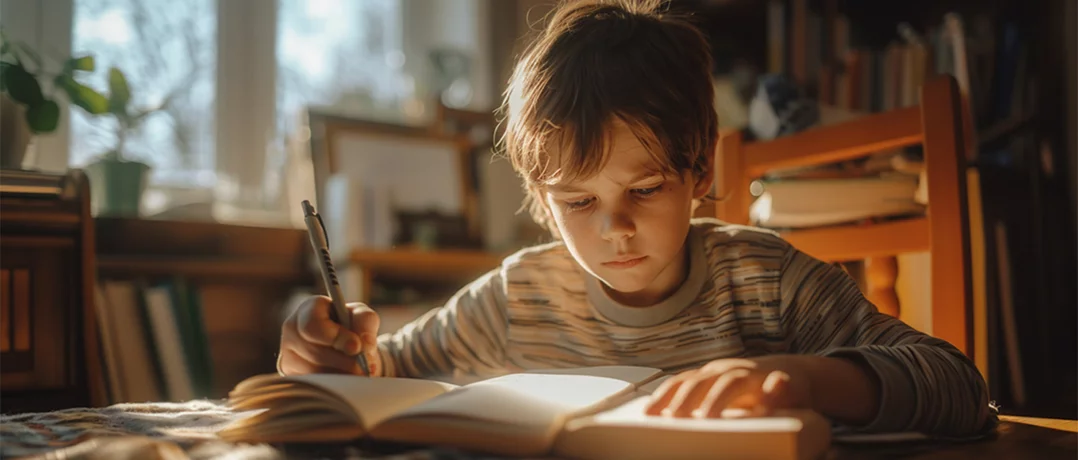
The reality of education in Lebanon has been shaped by years of compounded crises, placing immense strain on an already fragile system. Today, public schools are serving a dual role, with over 62,000 displaced individuals taking shelter inside them, adding further pressure to the learning environment. Despite these challenges, the system continues to operate under difficult conditions, sustained largely by the efforts of teachers and students.
The Ministry of Education’s figures tell a story of stubborn institutional will. Around 50% of public schools in safer areas have managed to continue in-person learning. Another significant portion has shifted to remote education. 15% have been completely unable to operate, those in the hardest-hit zones where the situation on the ground has made any form of schooling impossible.
The ministry has activated Microsoft Teams accounts for students, provided free internet packages, launched a "Call and Learn" service connecting students directly with teachers, and rolled out digital learning materials through the "Madrasati" platform in cooperation with the Centre for Educational Research and Development (CERD). It has also established Teaching and Learning Hubs, clusters of nearby schools within a five-kilometer radius, to create physical spaces for learning and collaboration, including for students with special needs, and to serve as distribution points for donated devices and supplies.
A system already on the edge
Lebanon's children have already lost up to 60% of school time over the past six years, according to the University of Cambridge. That staggering figure predates the current escalation. It encompasses the economic collapse, the Beirut port explosion, COVID-19, teacher strikes, and years of chronic underfunding. Lebanon was once an educational beacon in the region, its international schools and prestigious universities drawing students from across the Arab world. Now it ranks last among Arab countries in international assessments.
The war has hit public schools hardest, which matters enormously because public schools are where the most vulnerable students are. According to the United Nations Development Programme By October 2024, 769 educational facilities had been repurposed into shelters, including 523 public schools, 84 vocational training centres, and several branches of the Lebanese University. Nearly 400 schools closed completely due to sustained bombardment. Around 500,000 students were displaced, along with nearly 19,000 public school teachers and almost 17,000 private school teachers. With learning spaces repurposed as shelters, school attendance plummeted, with 69% of children missing significant portions of the academic year.
The inequity embedded in the Lebanese education system has only deepened. Around 60% of students attend private schools, and these institutions have traditionally benefited from more government support. A 2023 report by the Centre for Lebanese Studies found state funding to the private educational sector was around $900 million annually, with high-income groups benefiting from 64% of this aid, while poorer groups received only 16% of school allowances. The families who can least afford disruption are the ones experiencing the most of it.
Between survival and irreversible loss
What is unfolding is not just an education crisis, but a test of endurance for an entire generation. The system is still standing, but it is doing so under conditions that make real recovery increasingly difficult. For now, classrooms, whether physical, digital, or improvised, remain one of the last lines of continuity in a country defined by disruption. The question is no longer whether education can keep going, but how much more it can absorb before the cost becomes irreversible.
-
-

-
The Beiruter
-
