



At 19, Lebanese photographer Sami Lakis is turning his camera toward the country’s overlooked wildlife, documenting animals in their natural habitats while using social media to challenge misconceptions and push for greater awareness.
Lebanon's wildlife through Sami Lakis' lens

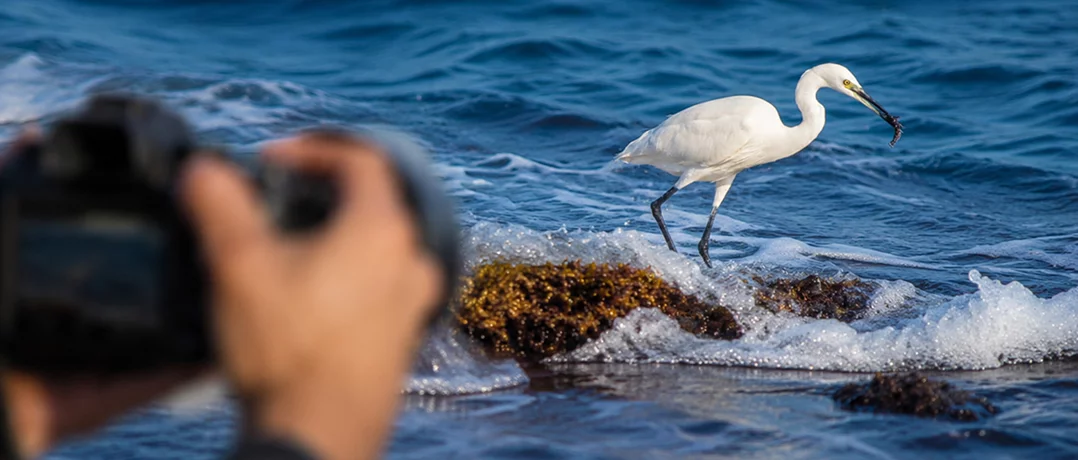
For 19-year-old Sami Lakis, photography started with a question: what did he actually want to do with his future?
As a computer science student at the American University of Beirut, Lakis spends much of his free time doing something that has little to do with code. He wakes before sunrise, disappears into Lebanon’s mountains and forests, hides behind rocks or inside his car, and waits.
Sometimes, he comes home with nothing.
Other times, he captures a fox emerging from its den, a snake moving through the landscape or an animal that most people would never expect to find in Lebanon.
Lakis’s interest in wildlife started when he was a kid, and later on he kept asking himself if that same fascination could become a real career path. In 2021, after watching a bunch of videos about wildlife filmmakers, he went ahead and picked up his uncle’s wife’s camera and started messing around with it, just experimenting really
“At some point, I thought about making it my career,” he tells The Beiruter. “So, I picked up a camera the first time.”
The equipment was far from ideal. Wildlife photography usually needs long lenses and Lakis was working with a 200mm lens. He kept on practicing, shooting whatever he ran into until he actually got his first camera in June 2022, giving him an escape from a difficult reality.
“Since I started, it hasn't been the best years in Lebanon,” he says. “It has always been an outlet for me. I go out and focus on nature. You kind of forget everything when you're in nature.”
Discovering what lives around us
Through his lens, Lakis wants people to see a Lebanon that is often overlooked. His photographs bring attention to animals that exist in the country's forests, mountains and rural areas, while challenging the idea that wildlife is something found only in faraway destinations.
For him, the biggest obstacle is awareness. “Unfortunately, there's zero awareness about wildlife,” he says. “No one knows what the native species are. No one understands our ecosystems, everything we have in Lebanon.”
That is where his Instagram page comes in. When he posts a new species, he often receives messages from people surprised to learn that the animal lives here. Those reactions have become part of his motivation.
“I feel like I'm making people around me discover our native and endemic species,” he says.
Lakis says he can spend days hunting for one animal, especially since urban expansion keeps growing and shrinking the natural habitats. A good portion of his work also takes place on private property, so he needs to speak with locals and earn their trust over time, not just once and done.
Sometimes, he’s not alone. “A lot of times, almost every trip I go to any place in the area, I will always encounter hunters,” he says.
Still, many of his interactions with landowners end positively. Once people understand what he is doing, some become curious and even help him search for wildlife on their property.
The 80 percent nobody sees
The photographs may look effortless, but Lakis says the reality behind them is mostly patience. “It's like 80 percent of the time, is just waiting,” he says. “A lot of times, most of my trips, I come back with nothing.”
His most memorable Lebanese encounter came after years of searching for a fox den. Eventually he found one with two pups inside it. The young foxes were a bit less cautious than the adults, giving him the chance to watch them from way out and catch the moment he had been waiting for.
His approach: stay out of the animal's way.
Using a 600mm lens, Lakis can photograph from far enough away, so he does not disturb his subjects. He might tuck himself behind a rock, or stay inside his car, almost not moving at all while he waits. Then once the animal shows up, he can get his shot.
That can mean arriving at 5 a.m. “You have to be there before the fox wakes up,” he says. “So they think that you're part of the landscape.”
More than a photograph
Lakis sees his work as a combination of photography, documentation and activism. “I always try to find a new way for people to look at this animal,” he says. “I try to do wider compositions, creative framing, behavior, everything. To show the environment as well.”
He is also careful about how he edits his images. Self-taught through YouTube and trial and error, Lakis uses editing software mainly for color correction and minor adjustments, keeping the animals as close to reality as possible.
“I want to put fidelity to reality,” he says.
That sense of responsibility also affects what he shares. Lakis tends to avoid showing the exact coordinates of rare animals, since that can make them easier for certain people to find and harm them.
For him, wildlife photography should never come at the expense of wildlife itself.
Changing the story
Many of Lebanon's wild animals are misunderstood. Snakes are too often killed out of fear, while owls get tied to superstition and creatures like hyenas and wolves are usually seen as dangerous.
Lakis believes education can change that.
He explains that Lebanon has many snake species, while only three are considered venomous and dangerous to people. The rest are generally harmless and play an important role in ecosystems, including controlling rodent populations. “It all comes back to awareness,” he says.
His growing social media presence has opened a door for him to start those conversations. Lakis knows that a lot of followers come for the photography, so he brings conservation topics in slowly rather than throwing them at people with nonstop activism, like all at once.
At the same time, he sees social media as a strong instrument for his generation.
“Especially with everything from the environmental and ecological side, it's really helpful,” he says. “It's such a powerful tool to raise awareness about wildlife.”
The next frame
Lakis is still figuring out where photography fits into his future. For now, computer science is his university path, while wildlife remains his passion and his outlet.
“Currently, I plan to document all the wildlife in Lebanon,” he says. “There are still a lot of species missing that I haven't had the chance to document.”
He also hopes to reach as many people as possible, whether through social media or traditional media, and show them the richness of Lebanon's biodiversity.
For Lakis, reframing Lebanon means looking closer. Sometimes, it means waking up before dawn, sitting perfectly still and waiting for something wild to step into view.
-
-
-
Rayanne TawilCultural writer
-
