

Lebanon’s differing official birth and death counts complicate efforts to track demographic change amid declining births and an ageing population.
Lebanon’s demographic puzzle: When official numbers collide
Lebanon’s demographic puzzle: When official numbers collide
By Chelsea Al Arif | September 06, 2026

Reading time: 6 min
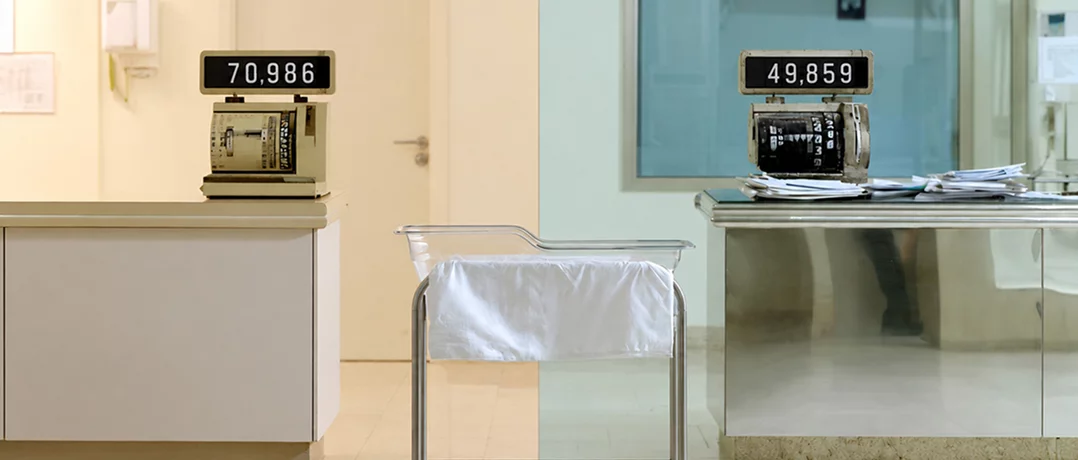
Lebanon recorded 70,986 registered births in 2025. In the same year, hospitals reported 49,859 Lebanese live births to the Ministry of Public Health (MoPH).
The difference is 21,127.
Deaths produce a similar discrepancy. Civil-status records counted 33,952 deaths in 2025, while hospitals reported 17,679 deaths of Lebanese patients, a difference of 16,273.
Neither gap can simply be read as an error or evidence that thousands of events went unrecorded. The systems have different coverage and timing: civil registration follows Lebanese citizens, while hospital data record events reported through health facilities.
The question is what each number is actually counting.
21,127 births between two official counts
The 70,986 figure comes from Lebanon’s civil-status records, which include births involving Lebanese citizens that occur abroad and are later entered into Lebanese records.
The hospital figure is narrower. The MoPH’s Vital Data Observatory collects live birth notifications from hospitals and publishes them by nationality. In 2025, hospitals reported 77,958 live births across all nationalities, of which 49,859 were Lebanese.
Births reported by midwifery clinics are recorded separately. Including them raises total reported live births to 80,750, but the published table does not provide a Lebanese-only breakdown for midwives, so they cannot simply be added to the 49,859 Lebanese hospital births.
Civil registration can also capture births outside hospitals. A 2025 UNFPA assessment identified another factor: delays between a birth and its final registration can distort annual figures.
The public data do not show how births abroad, non-hospital births, delayed registrations or other differences contributed to the 21,127 gap. The figures are therefore not directly comparable.
90,647 births became 70,986 in eight years
Where the two datasets become more useful is over time. In 2017, Lebanon registered 90,647 Lebanese births. By 2025, that number had fallen to 70,986, a decline of about 22 per cent.
The hospital series shows an even steeper fall, from 69,380 Lebanese live births in 2017 to 49,859 in 2025, a decline of about 28 per cent. The absolute numbers differ, but the direction does not. Both official series record substantially fewer Lebanese births than they did in 2017.
Across all nationalities, hospital births fell from 125,089 in 2017 to 77,958 in 2025, almost 38 per cent, although that cannot be treated as a Lebanese fertility measure. An equally current fertility measure is harder to find. The MoPH’s table reports 1.8 children per Lebanese woman aged 15 to 49 in 2017, with subsequent years blank.
The birth series reaches 2025. The accompanying national fertility series does not.
Up 8.9% in one system, down 1.5% in the other
The latest year makes the difference between the two systems particularly visible. Registered Lebanese births rose from 65,209 in 2024 to 70,986 in 2025, an increase of about 8.9 per cent. Hospital-recorded Lebanese births moved in the opposite direction, falling from 50,600 to 49,859, a decline of about 1.5 per cent.
Deaths diverged more sharply. Registered deaths rose from 26,715 to 33,952, an increase of 27.1 per cent, while Lebanese hospital deaths fell from 19,801 to 17,679, a decline of 10.7 per cent. The definitions explain why the totals do not have to match, but not why the two series moved in opposite directions in the same year.
The MoPH’s mortality system covers deaths occurring in or received by hospitals, while civil registration is broader and can include deaths abroad. UNFPA’s 2025 assessment says differences between Lebanon’s death datasets still require investigation. There is no public breakdown of where the additional registered deaths occurred or when they entered the register.
The rise in registered births therefore cannot automatically be interpreted as a recovery in fertility, nor the jump in registered deaths as a comparable increase in mortality among people living inside Lebanon.
37,034 more births than deaths, but not 37,034 more residents
Subtracting 33,952 registered deaths from 70,986 registered births gives a difference of 37,034. In 2017, the same calculation produced 64,800. The difference between registered births and deaths has therefore narrowed by almost 43 per cent in eight years.
But 37,034 is not Lebanon’s population growth. Civil-status records concern Lebanese citizens and can include births and deaths abroad. They also do not capture people entering or leaving the country.
Because births occurring abroad can later enter Lebanon’s civil register, the difference between registered births and deaths cannot be treated as the natural increase of the resident population. Migration adds another layer. Arab Barometer’s 2024 survey found that 38 per cent of Lebanese respondents were considering emigration, rising to 58 per cent among those aged 18 to 29.
Those figures represent intentions rather than departures, but they show why births and deaths alone cannot describe Lebanon’s demographic trajectory.
4.07 million residents, based on a 2018 benchmark
Establishing the denominator is also difficult. The MoPH lists Lebanon’s resident Lebanese population at approximately 4.07 million in 2025, but the source note points back to the Central Administration of Statistics’ 2018 Labour Force and Household Living Conditions Survey.
That survey covered more than 39,000 households. A 2022 follow-up Labour Force Survey later covered 5,444 households and 22,046 household members.
The 2023 Multiple Indicator Cluster Survey was designed to provide national estimates, but security conditions prevented fieldwork in Nabatieh, South Lebanon and Baalbek-Hermel. CAS therefore published results only for areas where data collection was completed.
Lebanon consequently relies on civil-status records, hospital records, household surveys and international demographic projections. These sources do not necessarily refer to the same population, geography, definition or year.
Around 11% older today, more than 20% by 2050
The distinction matters because the population these datasets are trying to describe is ageing.
UNFPA reported in 2026 that older persons account for around 11 per cent of Lebanon’s population and projected that the share will exceed 20 per cent by 2050.
Against that backdrop, the decline in births becomes more consequential. Fewer births can eventually affect school enrolment, the labour force and the number of working-age people supporting an older population. Emigration can intensify the same pressure if younger adults leave faster than older residents.
Planning for those changes requires more than knowing that 70,986 births were registered or that hospitals recorded 49,859 Lebanese live births. It requires knowing where those births occurred, whether those children live in Lebanon, how fertility is changing, how many people are leaving and how many remain.
A 2025 UNFPA assessment found that birth registration among Lebanese nationals is relatively comprehensive, but highlighted registration delays, differences between administrative sources and the need for stronger coordination. For deaths, it found reliable current information on registration completeness remains unavailable.
The weakness is therefore not simply that Lebanon lacks records. It is that its records answer different questions. Lebanon registered 70,986 births in 2025. Its hospitals recorded 49,859 Lebanese live births. Neither number can substitute for the other. The clearest conclusion survives both datasets: both official series record substantially fewer Lebanese births than in 2017.
Beyond that, the numbers become harder to combine. The demographic question is no longer only how many Lebanese are being born or dying. It is which population each number is actually counting.
