As Lebanon prepares to beatify Patriarch Elias Hoyek, it becomes essential to revisit and explore the spiritual leader whose vision helped shape Greater Lebanon.




As Lebanon prepares to beatify Patriarch Elias Hoyek, it becomes essential to revisit and explore the spiritual leader whose vision helped shape Greater Lebanon.

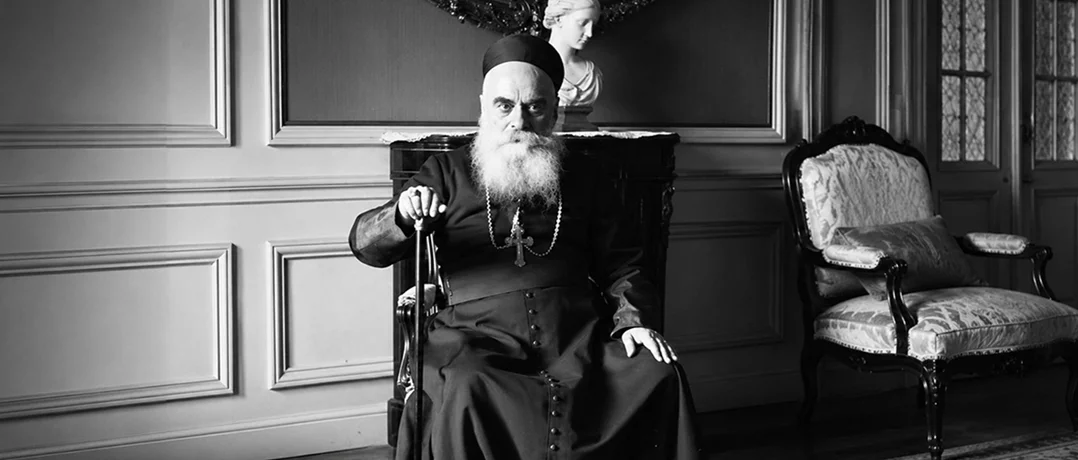
Lebanon is preparing for one of the most significant religious and national events in its modern history as the Maronite Church celebrates the beatification of Patriarch Elias Peter Hoyek, the 72nd Maronite Patriarch and one of the principal architects of Greater Lebanon.
Scheduled for 25 July 2026 at the Patriarchal Summer See in Dimane, overlooking the sacred Qadisha Valley, extensive preparations have transformed the grounds of the Patriarchal See into a venue capable of hosting one of the largest religious gatherings in northern Lebanon. A specially constructed altar has been designed to accommodate approximately 250 priests, in addition to bishops, the Maronite Patriarch, and the Vatican’s representative, expected to be Cardinal Marcello Semeraro, Prefect of the Dicastery for the Causes of Saints. The main courtyard has been equipped with 5,000 seats, while an additional 500 seats have been installed outside the Patriarchal compound, where giant screens will allow pilgrims unable to enter the main venue to participate in the celebration.
Nevertheless, the ceremony represents far more than a liturgical celebration. It is both a recognition of Hoyek’s exemplary Christian virtues and a tribute to a figure whose spiritual leadership became inseparable from Lebanon’s political and humanitarian history, being widely regarded as the principal architect of Greater Lebanon.
Born in Helta, Batroun District in 1843, Elias Hoyek received his theological education in Kfarhay, Ghazir in Lebanon before continuing his studies at the Maronite College in Rome, where he was ordained a priest in 1870.
After serving as secretary to the Maronite Patriarchate and representing the Church in numerous diplomatic missions throughout Europe and the Ottoman Empire, he was elected the 72nd Maronite Patriarch in January 1899 after the death of Patriarch John Hajj.
His patriarchate, which lasted until his death in 1931, coincided with one of the most turbulent periods in Middle Eastern history. The collapse of the Ottoman Empire (1299-1922), World War I (1914-1918), the Great Famine of Mount Lebanon (1915-1918), the Paris Peace Conference of 1919, and the birth of Greater Lebanon in 1920 all unfolded during his tenure.
While Hoyek strengthened seminaries, expanded schools, restored churches, and established new dioceses across the Middle East and the diaspora, history remembers him above all as a churchman who became one of the principal political actors in determining Lebanon’s future.
Understanding Hoyek’s political project requires revisiting the catastrophe that profoundly influenced his thinking: the Great Famine of Mount Lebanon between 1915 and 1918.
The famine, caused by wartime land and maritime blockades, Ottoman policies, locust invasions, and economic collapse, claimed the lives of nearly one-third of Mount Lebanon’s population. Throughout the crisis, Hoyek transformed Bkerke into a humanitarian center, directing church institutions to provide food, shelter, and assistance without regard to religious affiliation. He sold church assets, include his own patriarchate cross, and encouraged monasteries to mortgage or sell their properties to finance aid for the starving population.
“The Patriarchate is a loving mother to all her children, without distinction between Christian and Muslim.”
The famine convinced Hoyek that Mount Lebanon, despite enjoying administrative autonomy under the Mutasarrifate, lacked the economic foundations necessary for long-term survival. A mountain territory deprived of fertile plains, ports, and strategic resources would remain vulnerable to future catastrophes; key characteristics governing the 4 regions later incorporated into historical Moun Lebanon, which collectively gave birth to the modern Lebanese state.
Thus, this humanitarian tragedy became the cornerstone of his political vision. For Hoyek, statehood was a matter of ensuring the material survival of the population as much as it is a question of historical identity or religious autonomy.
Following World War I, Hoyek emerged as the foremost Lebanese representative before the victorious Allied powers, as the region’s peoples sought to determine their political future after the collapse of the Ottoman Empire.
In 1919, the Administrative Council of Mount Lebanon formally declared Lebanon’s independence within its 1860 borders. Shortly afterward, Emir Faisal publicly declared in Damascus that Lebanon formed an integral part of Syria. In response, delegations representing Lebanese communities from across Mount Lebanon, the territories of Greater Lebanon, and the Lebanese diaspora converged on the Patriarchate in Bkerke, entrusting Hoyek with official mandates authorizing him to speak on their behalf and pursue their national aspirations.
Departing from the port of Jounieh, Hoyek led a Lebanese delegation to the Paris Peace Conference in 1919, carrying the hopes of his people and petitions signed by representatives from multiple Lebanese communities demanding an independent Lebanese state with expanded borders capable of sustaining itself politically and economically.
At the time, competing regional and international visions sought to shape the post-Ottoman Middle East. Emir Faisal championed the Arab nationalist project of a unified Greater Syria that would incorporate Lebanon as a step toward broader Arab unity. Meanwhile, France and Britain competed to consolidate their influence across the region. Although France had long maintained close ties with Lebanon’s Maronite community, French officials initially viewed either maintaining Mount Lebanon in its original form or a Syrian federation or confederation, in which Lebanon would constitute one autonomous entity, as the most suitable political arrangements.
Nevertheless, Hoyek firmly rejected both projects, maintaining that Lebanon possessed its own historical identity and deserved full political independence, in accordance with United States (U.S.) President Woodrow Wilson’s principle of national self-determination. He thus consistently defended what became known as the “Lebanese Cause.”
Hoyek further argued that Mount Lebanon alone lacked the agricultural land, ports, and economic resources necessary for survival. His vision therefore extended to incorporating Beirut, the Bekaa Valley, and coastal territories of Tyre, Sidon, and Tripoli into the future Lebanese state. Beirut was indispensable as Lebanon’s commercial gateway, while the Bekaa Valley would provide the agricultural resources necessary to ensure food security. Access to coastal cities and fertile plains, in his view, transformed Lebanon from a geographically isolated mountain enclave into a viable state.
Hoyek’s diplomatic efforts culminated in the French declaration of the State of Greater Lebanon on 1 September 1920, at the Pine Residence in Beirut, where he stood alongside religious and political leaders during the historic proclamation; marking the realization of the central objective he had defended throughout the Paris Peace Conference and that of many Lebanese for centuries.
Although often remembered as the “Father of Greater Lebanon,” Hoyek consistently presented his political project as one intended for all Lebanese rather than for one religious community; referring to Maronite Christians.
The delegations supporting his mission to Paris and the signatories to the aforementioned petitions included representatives from Lebanon’s diverse religious communities, reflecting his conviction that the future Lebanese state should be built upon coexistence rather than sectarian exclusivity.
At the same time, Hoyek firmly defended Lebanon’s unique and distinct socio-political landscape and history. He viewed independence as a viable framework through which different communities could preserve their identities (as the country was long referred to as the safe haven of minorities in the region) while participating in a common national project; later solidified in the 1943 National Pact.
In this regard, one of the most striking elements of today’s celebration is the monumental altar designed specifically for the occasion. Rather than creating a conventional liturgical setting, the altar is centered on the image of an open ship supported by 18 ribs, each representing one of Lebanon’s officially recognized religious communities. The ship remains deliberately open rather than enclosed, expressing an invitation for continued unity, coexistence, and participation. The design echoes Hoyek’s historical commitment to building a country capable of embracing religious plurality while also serving as a reminder that the Lebanese experiment remains a continuous journey rather than a completed destination.
The beatification of Patriarch Elias Hoyek is ultimately a recognition of a life dedicated to faith, service, sacrifice, and the common good; not for a specific community but in favor of Lebanon as a whole and its diverse and vibrant communities.
His canonization process inevitably revives the memory of a patriarch whose spiritual authority extended into statecraft during one of the Middle East’s most consequential periods. He was not merely the head of the Maronite Church, as he became the international voice of a people seeking recognition, security, and prosperity.
Hence, his beatification serves as an opportunity to revisit the ideals that inspired one of the principal and most influential fathers of the Lebanese state; a shepherd whose enduring legacy helped shape a nation while remaining devoted to the Gospel values of charity, hope, and unity.

