



Marking International Physiotherapy Day, this feature looks at how the profession is changing in Lebanon, drawing on interviews with people who have worked within it to explore recovery, specialization and the challenges shaping its future.
Physiotherapy and the science of recovery

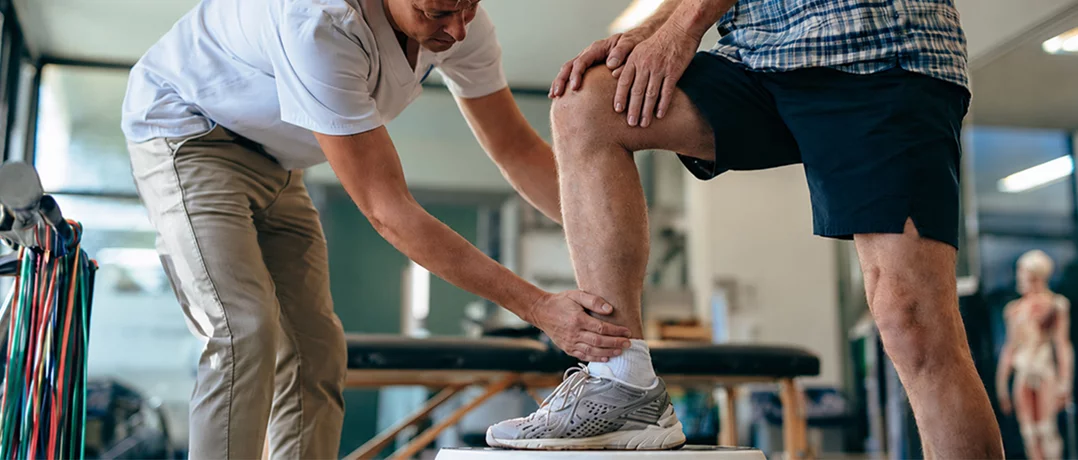
For many people in Lebanon, physiotherapy enters the picture only after something has gone wrong: a sports injury, an operation, persistent back pain, a stroke, or the gradual loss of mobility that can come with age. That image, however, reflects only part of what the profession has become.
Today, physiotherapists work across hospitals, rehabilitation centers, private clinics, sports settings, schools and homes, treating injuries while helping patients recover function, manage chronic conditions, preserve mobility and remain independent. At the center of that work is a simple question: not only whether a patient is medically stable, but what that patient is still able to do.
That emphasis on function reflects a broader shift in global health. In a July 2026 brief, the World Health Organization argued that health is too often measured through mortality and morbidity, while giving less attention to whether people can function and participate in daily life.
WHO has called for functioning to be recognized as a third major dimension of population health. Around one in three people globally lives with a health condition that could benefit from rehabilitation, with demand expected to grow as populations age and chronic conditions become more common.
From rehabilitation to healthcare
Physiotherapy has been formally regulated in Lebanon since 1978, when Law No. 8/78 established the profession’s first legal framework. In 1986, it became a four-year university major at the Lebanese University, followed by the establishment of a professional syndicate in 1987. A 1999 law later regulated physiotherapy education within higher education institutions.
In 2001, the Syndicate for Lebanese Physiotherapists became the Lebanese Order of Physiotherapists, with membership becoming mandatory. A national institute for continuing education followed in 2004, research initiatives began in 2010, and by 2016 Lebanese universities were graduating their first Doctor of Physiotherapy cohorts.
To better understand where the profession stands today, The Beiruter reached out to the Lebanese Order of Physiotherapists (LOPT), which says approximately 4,000 physiotherapists are currently licensed and registered with the Order. According to LOPT, practicing legally requires an entry-level physiotherapy degree, a license from the Ministry of Public Health and membership in the Order. Graduates of private or non-Lebanese universities must also pass the colloquium examination.
The profession has also become increasingly specialized. LOPT lists fields ranging from geriatrics, pediatrics and neurological rehabilitation to women’s health, occupational health, oncology, palliative care, sports and musculoskeletal physiotherapy. Prevention has also become a larger part of the profession, particularly in reducing falls and frailty among older adults and maintaining function in chronic and neurological conditions.
Dr. Charbel Rizk, manager of the Physical Therapy Department at the American University of Beirut Medical Center (AUBMC), says physiotherapy is now firmly integrated into multidisciplinary medical care.
Physiotherapy has become a cornerstone of the medical approach to the patient.
In hospitals, physiotherapists are part of treatment rather than an afterthought, working alongside surgeons and nurses to restore mobility and function. That can mean rebuilding strength after surgery, improving breathing and movement after prolonged illness, or restoring balance after neurological injury.
“We promote movement, and when you promote movement, you promote healing,” Dr. Rizk says.
For older patients in particular, even a relatively short period of inactivity can lead to weakness, loss of balance and other complications.
“Regular physical therapy for an older patient can be like medication,” he says.
That broader role challenges one of the profession’s most persistent misconceptions: that physiotherapy consists mainly of massage, machines or a fixed series of exercises.
LOPT says some patients still expect physiotherapy to be passive, while others believe treatment must hurt to be effective or stop attending once their pain improves, even though the underlying condition has not been fully addressed.
Dr. Rizk stresses instead the clinical judgment involved in adapting rehabilitation to each patient.
“I am not a technician,” he says. If a patient cannot perform a particular movement, the physiotherapist must reassess, modify the exercise and find another way to work toward the same goal.
That adaptability also requires continuous learning. Physiotherapy is increasingly evidence-based, with treatment evolving as research changes clinical understanding.
The evidence changes as new research comes out. Physiotherapists have to keep up.
When rehabilitation became impossible to ignore
Some of the clearest examples of physiotherapy’s role in Lebanon emerged during moments of national crisis.
Dr. Rizk points to the COVID-19 pandemic, when patients recovering from severe illness often faced respiratory difficulties, muscle loss and profound physical weakness after long hospital stays.
“We worked on strengthening them, improving their breathing and rebuilding their function,” he says. “Many had lost significant muscle mass from prolonged hospitalization and infection.”
The Beirut port explosion offered another stark example of how quickly rehabilitation can become essential. Physiotherapists worked with patients recovering from fractures, burns, surgery and other serious injuries, while similar needs have continued to emerge during periods of conflict.
With every war injury or bombing, the physiotherapist becomes an important part of rehabilitation.
That role is also reflected in recent World Health Organization guidance. In a July 2026 brief, WHO emphasized the importance of rehabilitation during conflict for patients with serious injuries and for people whose existing disabilities or chronic conditions are disrupted by war. Early rehabilitation, it noted, can reduce complications, shorten hospital stays and improve long-term recovery.

LOPT says recent conflicts have further increased demand for long-term rehabilitation while some physiotherapy centers have been lost and experienced practitioners have left the country. The Order also says physiotherapy has been incorporated into the Ministry of Public Health’s national emergency planning.
More graduates, fewer opportunities
Both Dr. Rizk and the Lebanese Order of Physiotherapists say the number of graduates entering the profession has outpaced available opportunities.
“The demand is much lower than the number of people graduating,” Dr. Rizk says.
That imbalance has intensified competition and pushed some young physiotherapists to specialize or look abroad for better prospects. LOPT says the economic crisis has also driven experienced practitioners to emigrate, with shortages felt more sharply in some areas outside Beirut.
For patients, access presents a different problem. The Order says treatment costs remain high relative to household incomes, while insurance coverage is inconsistent, leaving some dependent on the public sector, NGOs and international organizations.
The result is a striking mismatch: rehabilitation needs are rising, yet many physiotherapists struggle to secure sustainable work while many patients struggle to afford care.
Dr. Rizk says another challenge is preserving the human relationship at the core of the profession.
“The biggest challenge is that the physiotherapist can become overwhelmed and forget the human side of the profession,” he says. “Patients begin to be treated like machines or numbers.”
Physiotherapy is not just hands-on work. It is a profession in which you have to be human and you have to have empathy toward the people around you.
LOPT also warns of unlicensed practice and advises patients to verify a therapist’s professional registration before beginning treatment.
A profession that stays with you
For physiotherapist Rita Pia Antoun, the profession is about much more than treating the body. It is also about learning how to read people, understand what they need and build trust over time.
Physiotherapy taught me something bigger: how important it is to understand people, not just their symptoms.
“Everyone responds differently, and that taught me patience, empathy and how to really listen.”
Antoun, who also works as a news anchor at MTV Lebanon, says those same skills continue to shape her work in journalism.
“You listen to the words, but you also pay attention to the person, the context and what may be left unsaid,” she says. “My first career still follows me into the studio.”

For her, the link between both professions is simple. “At first glance, absolutely nothing. But in reality, both are about people,” she says. “In both, trust is everything.”
She also points to the pressures facing young physiotherapists in Lebanon, where limited opportunities and difficult financial conditions can make it harder to build a future.
The real challenge isn’t just convincing young people that physiotherapy is a great profession. It is giving them a reason to truly believe they can build a future with it here in Lebanon.
For Antoun, physiotherapy remains more than a qualification. “Physiotherapy gave me knowledge, discipline and a way of understanding people,” she says.
That understanding may ultimately say as much about the profession as any definition.
Physiotherapy deals with muscles, joints, breathing, balance and movement, but its outcome is measured in something more ordinary and more human: whether a person can return to work, walk without fear, live independently, care for themselves or regain a part of life that illness or injury had taken away.
It is in those small returns to everyday life that the profession’s impact is often felt most clearly.
-
-
-
Michella RizkContent Manager/WriterFocusing on social affairs.
-
