



How antisemitism in Australia escalated from rhetoric to deadly violence, culminating in the Bondi Beach Hanukkah attack.
Rising antisemitism in Australia

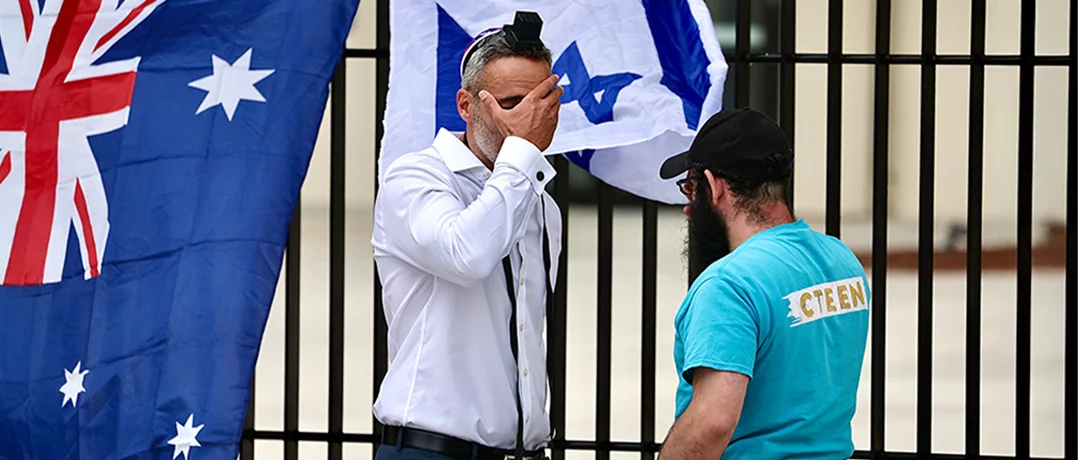
Australia has long prided itself on social cohesion, multiculturalism, and the principle of giving everyone “a fair go.”
Yet since 7 October 2023, the country has witnessed a sharp and sustained rise in antisemitic incidents that has deeply unsettled its Jewish community, numbering roughly 117,000 people.
From hateful speech and vandalism to arson and, ultimately, mass-casualty terrorism, the trajectory has revealed a pattern of normalization, escalation, and delayed intervention. The deadly attack on a Hanukkah gathering at Sydney’s Bondi Beach on 14 December 2025 marked a grim culmination of this trend.
Who are the Semitic peoples?
The Semitic peoples, in the biblical narrative, trace their origins to Shem (one of the 3 sons of Noah). While the other two sons, Japheth and Ham, are said to have migrated towards Europe and Africa respectively following the great flood, Shem and his descendants (the Semites, derived from his name) had resided in most of what is today known as the Middle East. Therefore, ethnically, the Semitic people are descendants of Shem in the Middle East region (Mesopotamia, the Levant, and parts of the Arabian Peninsula emerged as centers of Semitic development).
The term “Semitic” later came to apply more broadly to a group of languages that had proliferated in the region, including Phoenician, Aramaic, Syriac, Hebrew and Arabic.
From here, Christians, Muslims and Jews in the Middle East are all considered Semites, due to ethnic, linguistic and biblical considerations.
What is antisemitism?
Antisemitism is a certain perception of Semites, which may be expressed as hostility, hatred or prejudice toward Semites. However, the term was soon referred to such sentiments against Jews.
While antisemitism dates back to thousands of years, the term was first popularized and coined by German journalist Wilhelm Marr in 1879 to describe hatred or hostility toward Jews. It can be traced back to Medieval Europe, the Russian Pogroms throughout the 1800s and early 1900s, the Dreyfus affair in 1894 in France, culminating with the rise of Nazism (through the Nuremberg Laws of 1935, Kristallnacht and the “Final Solution,” which was translated into the Holocaust that systematically killed roughly 6 million European Jews).
From hostility to harassment: Late 2023
The immediate aftermath of Hamas’ 7 October attack on Israel reverberated across Australia.
Within days, demonstrations in major cities crossed from political protest into overt antisemitism, with Jewish Australians reporting intimidation near synagogues, schools, and cultural landmarks.
These early incidents, while often dismissed as fringe behavior, set a troubling tone by blurring the line between criticism of Israeli policy and hostility toward Jews as a community.
Normalization and targeting: 2024
By 2024, antisemitism had become more organized and personal.
A mass doxxing incident exposed the private details of hundreds of Jewish academics and creatives, leading to threats and workplace harassment and prompting legislative changes to privacy law. Physical vandalism followed as Jewish schools were defaced with threatening graffiti, elected officials were targeted, and Jewish-owned businesses in Sydney and Melbourne were marked, vandalized, or threatened.
The year also saw a dangerous shift toward arson. Kosher eateries and synagogues were set alight in Sydney and Melbourne, including the firebombing of the Adass Israel Synagogue in December 2024. These attacks triggered the creation of a federal counterterrorism task force and raised alarms about foreign influence, later linked by authorities to the Iranian regime. Despite condemnations and investigations, the frequency of incidents continued to rise.
Escalation to violence: 2025
In 2025, antisemitism moved further into everyday spaces.
Synagogues, childcare centers, homes, and cars were vandalized, while Nazi symbols reappeared with alarming regularity. Threats extended into hospitals, where health professionals were suspended and charged after publicly expressing violent intent toward Jewish patients. Even children were not spared, as Jewish students were verbally abused during school outings.
Authorities responded with arrests, tougher hate-crime laws in some states, and increased security funding for Jewish institutions. Australia also designated Iran’s Islamic Revolutionary Guard Corps (IRGC) as a terrorist organization, acknowledging the international dimensions of some attacks. Yet key policy recommendations by the government’s own antisemitism envoy remained largely unimplemented by late 2025.
Bondi Beach and the national reckoning: 14 December 2025
The 14 December 2025 terrorist attack at Bondi Beach, targeting a Hanukkah celebration and killing at least 15 people, shocked the nation.
Australian leaders described it as an attack not only on Jewish Australians but on the country’s core values. Intelligence officials confirmed that antisemitism had become the most serious threat to life from politically motivated violence in Australia.
The scale of the casualties made the Bondi attack the deadliest mass shooting in Australia since the 1996 Port Arthur massacre; the latter was a mass shooting carried out by Martin Bryant, who killed 35 individuals and injured 23 others at the historic Port Arthur site (a popular tourist destination), leading to significant changes in Australian gun laws.
To conclude, the Bondi Beach Hanukkah shooting has left deep scars on a nation unaccustomed to mass gun violence. Beyond the immediate grief, the timeline of antisemitism in Australia since October 2023 reveals a clear progression; from rhetoric to harassment, from vandalism to arson, and finally to mass-casualty terror. It underscores the cost of delayed action and the danger of allowing hatred to fester unchecked.
As Australia reflects on the Bondi Beach Hanukkah shooting, the challenge ahead is not only to prosecute perpetrators, but to confront extremism decisively through education, law enforcement, and political leadership before further lives are lost.
-
-

-
The Beiruter
-
