



After months of anticipation and a release delayed by war, Charbel was officially unveiled on October 9, ahead of its theatrical release on October 22.
Saint Charbel returns to the big screen

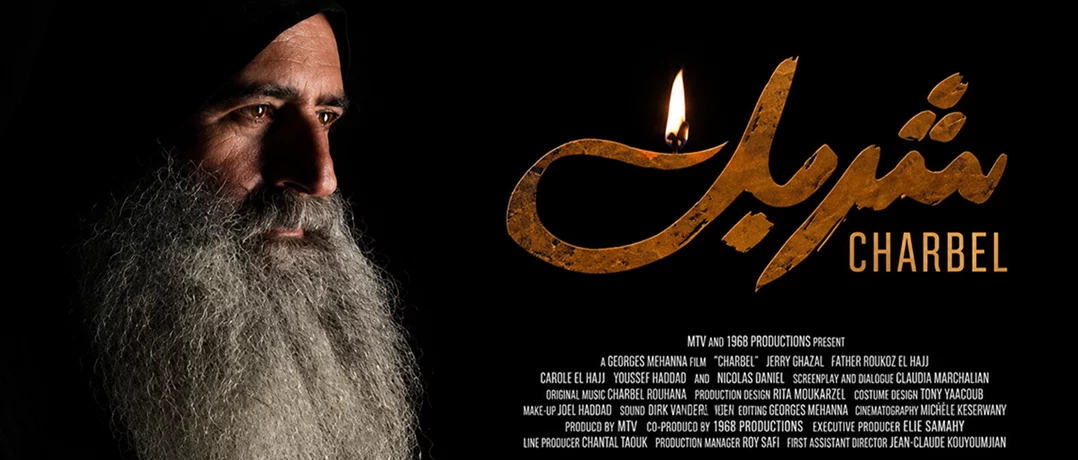
For nearly two centuries, the story of Saint Charbel Makhlouf has travelled far beyond the small Lebanese village where he was born. His name has become associated with faith, healing and devotion, drawing believers from different religions and nationalities. Now, his life is being brought to the big screen in “Charbel”, a new Lebanese film directed by Nadim Mehanna and produced by MTV and NMPRO, set to open in cinemas on October 22, 2026.
The film was officially launched at Beirut Media Zone under the patronage and in the presence of President Joseph Aoun. The date carried particular significance, marking the anniversary of Saint Charbel’s canonization in 1977 and adding a symbolic dimension to the occasion.
A premiere shaped by Saint Charbel’s legacy
The evening reflected the saint’s spiritual legacy. More than 1,000 guests gathered in a setting framed by olive and oak trees, while incense and hymns filled the reception area. Images of Saint Charbel appeared throughout the venue, alongside the prayer, “Saint Charbel, pray for us.”
The launch brought together a broad cross-section of Lebanon’s public and religious life, including First Lady Neemat Aoun, ministers, MPs and religious figures, as well as Army Commander General Rodolphe Haykal and his wife, Jeanette Haykal, US Ambassador Michel Issa and France's Ambassador to Lebanon Patrick Durel. Haykal spoke of the “greatness of faith in the land of Saint Charbel,” while Issa described the Lebanese gathering around the saint as a “miracle” and a “message of hope.”
MTV Chairman Michel Murr also addressed the audience, describing Saint Charbel as a figure who best represents the Lebanon the group believes in.
“No one represents Lebanon better than Saint Charbel, and for us he is a picture of the Lebanon we love,” Murr said, adding that patriotism and faith form the “essence and foundation” of MTV’s mission.
He also highlighted the significance of launching the film from Studio 16 at Beirut Media Zone, which hosted its first official celebration with the event. Murr described Saint Charbel as a unifying Lebanese figure whose spiritual influence transcends borders and sectarian affiliations, making him an ambassador for Lebanon to the world.
The spiritual atmosphere was reinforced by the choir of Notre Dame University–Louaize, led by conductor Father Khalil Rahme, which performed during the reception before being joined by singer Rafca Fares.
The evening began in the Gethsemane garden at Beirut Media Zone before guests moved to the BlackBox for the film’s official presentation. The multi-purpose studio was transformed into a cinema for the occasion, providing the setting for the first official presentation of Charbel.
Reimagining a familiar story
For director Nadim Mehanna, the film is an attempt to revisit a figure whose story has long been familiar to Lebanese audiences while presenting him through a contemporary cinematic lens.
“As a filmmaker, I always look for heroes. I consider Charbel Lebanon’s superhero,” Mehanna told The Beiruter.
Rather than treating the film solely as a religious biography, the director wanted to approach Saint Charbel as a cinematic protagonist whose story could resonate beyond a specifically religious audience.
“I wanted to tell his story without confining it to a specific religious context,” he explained. “I approached him as a hero, as a character, just as we would approach any protagonist in a film.”
Born Youssef Makhlouf in Bekaa Kafra, northern Lebanon, in 1828, Charbel became one of the country’s most widely venerated religious figures. His reputation eventually extended well beyond Lebanon, with devotees around the world turning to him in prayer and attributing miracles to his intercession.
“He was born in Bekaa Kafra, a small village, but he reached the entire world. He transcended religions, languages and seas,” Mehanna said.
Saint Charbel has already been portrayed in previous films and productions, but Mehanna argues that historical figures can be revisited as cinema evolves.
“The works produced at the time belonged to their era,” he said, pointing to changes in cinematography, image quality, music, set design, locations and casting.
The film’s cast includes Jerry Ghazal, Father Roukoz El Hajj, Carole El Hajj, Youssef Haddad and Nicolas Daniel. The film was written by Claudia Marchalian, with an original score by Charbel Rouhana. The production brought together around 100 actors and more than 100 crew members, following over a year of preparation and filming.
But the challenge was not simply one of scale. Much of Saint Charbel’s later life was spent in solitude, leaving limited historical material about his daily existence as a hermit.
“He lived in the hermitage for 23 years. Who knows what he did there?” Mehanna told The Beiruter. “So we imagined what he might have done.”
That required the filmmakers to navigate the space between historical record and artistic interpretation.
“There are historical facts that we are obliged to document and include,” Mehanna explained. “But we also added dramatic, emotional and spiritual elements.”
The result is intended to offer audiences a portrayal of Saint Charbel grounded in his documented life while leaving room for cinematic interpretation.
“Charbel is such a great figure that you cannot capture him in a single work,” Mehanna said.
A release delayed by war
The film was initially scheduled for release in March 2026 but was postponed following the outbreak of war.
It will now reach cinemas on October 22, a date that carries particular significance for Saint Charbel’s devotees. The 22nd of each month is associated with the monthly pilgrimage to his shrine in Annaya.
For Mehanna, the timing also makes practical sense, as families and students have returned to their routines and cinema audiences typically pick up after the summer season.
The October 9 launch marked the beginning of the film’s final journey towards its theatrical release, taking the story from a premiere shaped by Saint Charbel’s spiritual legacy to cinemas where it will reach a wider audience.
Beyond Lebanon
The filmmakers are looking beyond the Lebanese scene as well.
Earlier production announcements outlined plans to dub the film into five foreign languages, reflecting an ambition to introduce Saint Charbel’s story to international audiences while offering Lebanese viewers and longtime devotees a new interpretation of a figure they already know.
Mehanna is equally ambitious about the film’s reception.
“The film will surprise people, and the box office numbers will surprise you,” he said.
That ambition was reflected in the launch itself, which brought together religious, political and cultural figures around a saint whose influence extends well beyond Lebanon’s borders.
With its theatrical release approaching, Charbel is set to bring the life of one of Lebanon’s most recognized saints to a new generation of audiences, both at home and abroad.
-
-

-
Michella RizkContent Manager/WriterFocusing on social affairs.
-
