Lebanon's cherished mouneh tradition is facing one of its greatest challenges as war, displacement, inflation, and rising production costs threaten a centuries-old practice rooted in resilience, family, and cultural identity.




Lebanon's cherished mouneh tradition is facing one of its greatest challenges as war, displacement, inflation, and rising production costs threaten a centuries-old practice rooted in resilience, family, and cultural identity.

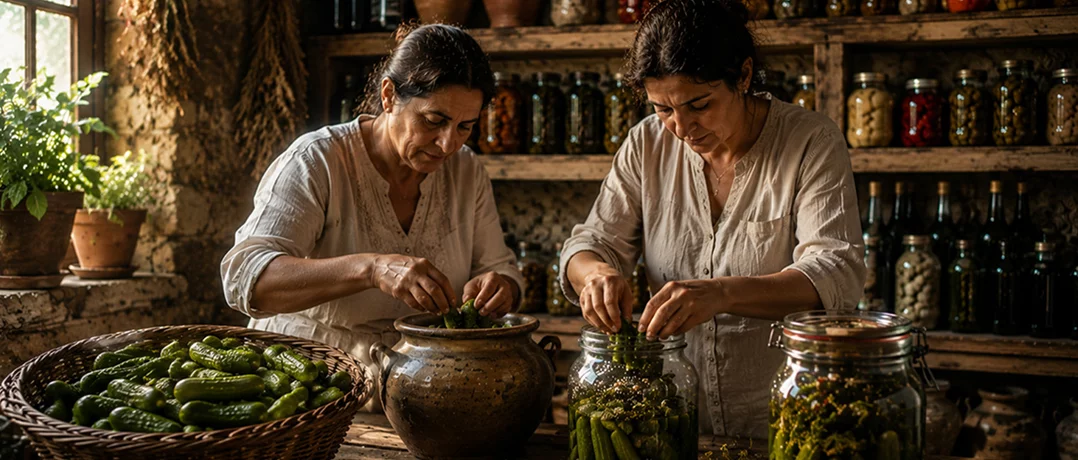
Circumstances and policies change, people and their concerns evolve, but some traditions remain deeply rooted, drawing their strength from authenticity, love, and attachment to homeland and identity. Lebanese mouneh is more than just food stored in kitchens; it is a safety net during times of crisis, a source of pride during prosperous years, and a vessel of heritage and authenticity throughout generations. Mouneh is the collective memory of a country, an unbroken connection with the past, regardless of how lifestyles change or how difficult economic and living conditions become.
This year’s mouneh season arrives weighed down by economic burdens and harsh living conditions. Villages have been displaced, people have left their land, homes and crops behind, and rising prices have reached every ingredient that makes up the traditional pantry. Housewives, women’s associations and agricultural cooperatives are all struggling. Inflation is forcing difficult choices, while the suffering of villages is changing priorities.
This year’s mouneh, most of which is prepared during the summer, does not appear likely to proudly fill shelves, clay jars and hidden storage spaces as it once did. Jars of jam, makdous, kishk, rose water and tomato paste appear with hesitation, accompanied by a cry that reflects the scale of the crisis that has reached the heart of traditions and affected both mouneh itself and the people who produce it.
At this time every summer, women usually become busy preparing the various varieties of Lebanese mouneh. Fatima used to prepare more than 200 kilograms of pomegranate molasses every year with her family. They would boil the juice over the fire for hours, using more than five gas cylinders until it transformed into thick, concentrated molasses.
Today, everything has changed.
The pomegranate season in southern villages has been left without anyone to harvest it. Much of the fruit fell to the ground or the trees were burned, while gas prices have repeatedly fluctuated.
Fatima and her family, who were displaced from their village and first sought refuge in a school in Sidon before moving to Beirut, are no longer thinking about making pomegranate molasses. They are searching for a roof over their heads and mourning the loss of their village and orchards.
Fatima estimates, based on what she has observed around her, that only around 20% of those who used to prepare mouneh are continuing the tradition this year. The rest feel unable to do so financially, emotionally or practically.
“Mouneh first requires capital, then patience and hard work,” she says. “Most importantly, the villages need to remain accessible so we can return and harvest our crops.”
The damage that affected pomegranates also reached orange blossoms and damask roses, which are used to produce orange blossom water and rose water.
Large quantities of bitter orange blossoms were left unpicked on trees or fell to the ground in Tyre, Zahrani, and parts of Bint Jbeil and Marjayoun. Even what remained was difficult to harvest because finding workers became increasingly challenging.
According to one orchard owner in Marjayoun, workers who were willing to harvest raised their daily wages from $10 to between $15 and $18.
In Qasr Naba, in the Bekaa Valley, bombing also affected delicate rose crops, resulting in a weak harvest and a limited rose-water season.
The problem was not only the reduced harvest. The rising price of glass bottles added further pressure, reaching 30,000 Lebanese pounds per bottle after manufacturing costs increased due to higher electricity expenses in local factories using thermal ovens.
Diana Chebl, owner of a small mouneh shop in Deir al-Qamar, confirms that packaging costs have increased significantly, from cardboard and plastic to glass, paper, nylon bags and packaging materials.
All of these costs rose alongside oil prices, forcing small and large mouneh producers alike to increase their prices even before calculating the cost of the products themselves.
While this increase may not represent a major burden for some households, one producer points out that the cost of soap, cleaning materials and garbage bags needed after preparing mouneh has also risen significantly.
Some ingredients have remained relatively stable, such as sugar, vinegar and sesame, Chebl explains. Others, however, have experienced sharp price increases, including cow and goat milk used to produce kishk.
The price of a liter of milk increased by around 30% to 50% between 2025 and 2026 due to higher production costs caused by expensive animal feed, diesel, veterinary medicine and transportation.
The Ministry of Agriculture set a recommended purchase price for cow’s milk at around $0.70 last year, which increased to $0.74 this year. This has contributed to the rising cost of kishk, with a kilogram now reaching between $35 and $40.
The same applies to labneh mkaazaleh, a traditional dried labneh product. A five-kilogram container of yogurt produces no more than one and a half jars of mkaazaleh. When olive oil and glass jar costs are added, a food that was once considered a staple of rural communities has become a luxury product that fewer people can afford to store in large quantities, especially when flavored with zaatar, sumac or herbs.

