



Lebanon’s emerging gin industry is transforming native juniper, local botanicals and entrepreneurial spirit into a growing homegrown category with international ambitions.
The making of Lebanese gin

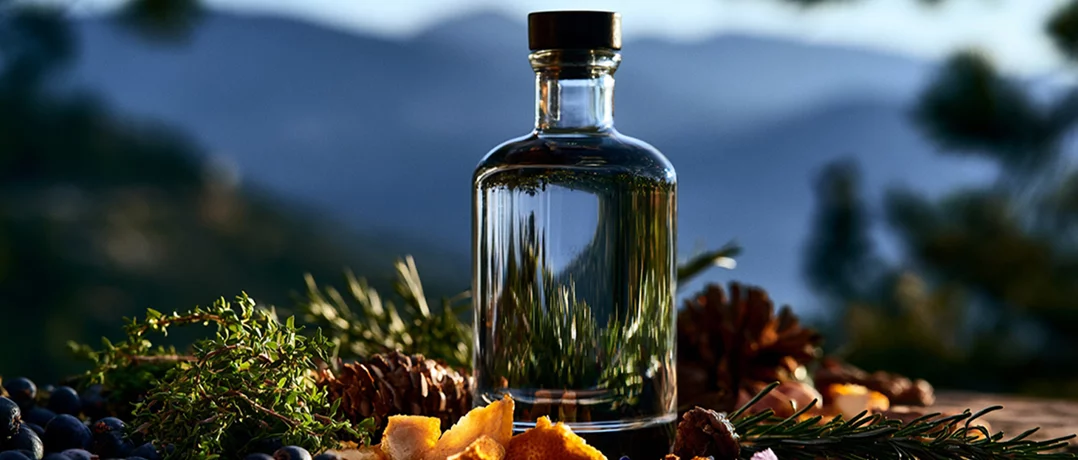
Lebanon has long been associated with arak, wine and a resilient nightlife culture, however the country’s emergence as a gin-producing nation is a relatively recent and remarkable story. It began with a discovery the country's mountains are home to their own native juniper, the essential botanical without which no spirit can rightly be called gin.
That single fact set off a wave of experimentation that would produce internationally awarded bottles and a genuine local industry. To understand how it happened, and where it may be heading, The Beiruter spoke with three people who have watched and shaped the story from very different vantage points.
André Malak: Three Brothers gin
André Malak and his brothers built their name behind the bar, running Hamra's Rabbit Hole from 2009 until regulars simply started calling it "Three Brothers." The idea of distilling something distinctly Lebanese had been on their minds for years, but the breakthrough came by chance. "One time, we were camping in the Harde area and saw people cutting trees," Malak recalled. "We asked what kind of trees they were, and they told us they were juniper... the key ingredient needed to create our own gin.” Early experiments produced an adequate gin but Malak and his brothers recognized they couldn't yet compete with established international names, and shelved the project.
Then, in 2012, their younger brother passed away at twenty-two. "Losing him made us want to put his spirit inside a bottle," Malak said, "and carry his memory with us." That loss reshaped the entire venture. Inspired by an American customer's stories of Prohibition-era "bathtub gin," the brothers built a recipe around twenty-two botanicals, one for each year of their brother's life, and all but the Indian cinnamon sourced from Lebanon. "Our dream was bigger than simply creating a Lebanese gin," Malak said. "We wanted our brother's image, his memory and his spirit to be present on shelves around the world."
Launched in 2018 as Lebanon's first gin, the brand went on to win World's Best Compound Gin in 2022, a coincidence of numerology, Malak notes, that the brothers have never quite been able to shake. "Every year that passed, we kept asking ourselves, why did this happen in 2022?" The company is now expanding into a new large-scale distillery in Karantina, which Malak says will be Beirut's first of its kind.
Maya Khattar: Jun Gin
Jun gin began in the garden. Maya Khattar and her husband and business partner, Chady Naccour, were living in Dubai, she in advertising, he as a chef and graphic designer, when they decided to leave corporate life behind and return to her home village of Rechmaya. "We wanted to create something there," she explained, ruling out a restaurant or winery in favor of something more distinctive. That distinctiveness arrived through a hiking connection to a juniper reserve in Hermel. "We discovered that Lebanon has its own kind of juniper berries," she said. "Mediterranean juniper is very unique... that's when we realized we had something special in Lebanon and decided to make gin."
The couple renovated her family's old agricultural silk factory into a distillery, with Naccour training in fermentation and distillation in South Africa while Khattar handled branding and naming. The result, Jun, a nod both to their June 2018 launch and to the juniper at its heart, is built from nine botanicals, most pulled straight from their garden. "That was always the goal," she said, "to use what we grow in our garden, almost like the way wine reflects its terroir." The brand has since expanded into a full portfolio, including Jun Dry for bartenders and seasonal expressions like Jun Bouquet and a mandarin-and-saffron winter edition, all while exporting to the United States, the UK and Germany and collecting Double Gold honors along the way.
Khattar is candid, too, about the industry's growing pains. As Lebanon's economic crisis pushed consumers toward local products, the market filled quickly with new entrants, some, she says, without the standards her team maintains. "What wasn't right was that suddenly anyone could make gin at home," she said, noting attempts to push for regulation resembling wine's appellation contrôlée system. "Too many brands damaged the image of what good gin should be... but thankfully, our image remains one of the strongest in the market."
Selim Yesmin: A market view
Selim Yesmin, managing director of 209 Lebanese Wine and Levain Wine Bar, offered The Beiruter a more clinical read on the category's trajectory. He traced the local gin boom directly to circumstance. "During COVID and the financial crisis, many local brands had the opportunity to penetrate the market," he said. "Gin is relatively easy to make. During those years, we had very good-quality locally made gin available in Lebanon at acceptable prices."
That window, he argued, is now closing as imports normalize and dollarization returns purchasing power to foreign labels. "For local gins to be able to compete and continue building a market... they need to make sure they meet certain criteria," he said, naming brand strength, product consistency and scalability as the decisive factors. His outlook is measured, “ I believe only a few local gins will remain, and the ones that do will be those that have created a strong brand, a consistent product and a scalable one." For Yesmin, the current thinning of the market is a natural correction. "The market has essentially filtered out those that did not meet these criteria."
A spirit rooted in place
Taken together, these three accounts describe an industry born from opportunity but sustained, increasingly, by discipline. What unites Three Brothers and Jun, despite their very different origins, one forged in grief, the other in a return to family land, is a shared insistence on using what Lebanon actually has, its own juniper, its own botanicals, its own story. Yesmin's outside perspective suggests that this authenticity will ultimately determine which brands endure. Lebanese gin, in other words, was born of circumstance, but its future depends on craft.
-
-

-
Jenna GeageaReporter/Writer
-
