



Known as the architect of Greater Lebanon, Patriarch Elias Hoyek is remembered for shaping a nation. But his beatification tells a deeper story, one of faith, charity, and pastoral leadership.
The Shepherd behind the Statesman

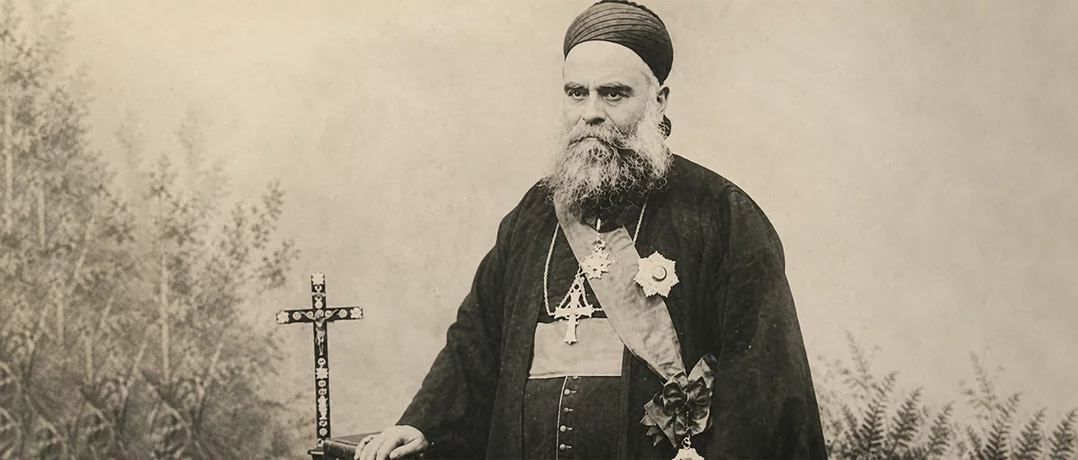
"The proclamation of Greater Lebanon does not make someone a saint. Otherwise, every person involved in politics would be beatified,” states Dalida El Houweik, a Maronite Sister of the Holy Family.
Ask most Lebanese about Patriarch Elias Hoyek and they will likely tell you about Paris.
They will remember the elderly Maronite patriarch standing before the victorious powers of the First World War, defending Lebanon's right to exist as an independent entity. They will speak of the Paris Peace Conference, of the proclamation of Greater Lebanon in 1920, and of the borders that still define the country today.
It is the image history has preserved: Hoyek the diplomat, the statesman, the founding father.
Yet that is not the man the Catholic Church beatified.
When Pope Leo XIV authorized the decree recognizing a miracle attributed to Patriarch Hoyek, paving the way for his beatification, the Church was not celebrating a political achievement. It was recognizing a life of heroic Christian virtue.
That distinction changes everything.
Elias Hoyek was simply a young man searching for God. Like every believer, he wrestled with fundamental questions: Who is God? Where is God? And what is God's will for me? The answers he found would shape not only his priesthood, but every decision he later made as a shepherd, humanitarian and leader.
A faith forged in poverty
Elias Hoyek was born in Helta on December 4, 1843, into a family rich in faith but poor in material wealth. According to traditions preserved by the congregation he later founded, the young seminarian once wrote home from Ghazir explaining that the other students wore proper shoes while his own pair had become worn beyond repair. Another story recounts that he sometimes carried his shoes under his arm to preserve them during the long walk to the seminary.
Whether every detail belongs to documented history or cherished memory, they reflect how those closest to his legacy understood him. By the end of his life, Hoyek had become one of the Middle East's most respected religious leaders, yet he never accumulated personal wealth.
For Sister Dalida, three words summarize Hoyek's entire spirituality: blessing, providence and God's approval.
He saw blessing not in possessions but in God's presence.
He believed true blessing went far beyond material things.
Providence was equally central to his faith. Even during the darkest moments of famine and political uncertainty, Hoyek remained convinced that God never abandoned His people.
"Lord, I want nothing from this life except Your approval," Sister Dalida says, describing what she believes was the prayer that guided his heart.
Those convictions would become the foundation of his ministry.
Building souls before building a nation
Long before he defended Lebanon's future on the international stage, Hoyek devoted himself to strengthening the Church through education.
As Patriarchal Secretary and later Patriarchal Vicar under Patriarch John Hadj, he helped revive Maronite education, playing a key role in re-establishing the Maronite College in Rome in 1891 and expanding Maronite institutions in Paris and Jerusalem. After becoming Maronite Patriarch in 1899, he continued investing in seminaries and priestly formation, convinced that the future of the Church depended on people rather than buildings.
His vision extended beyond the clergy. In 1895, together with Mother Rosalie Nasr, he founded the Congregation of the Maronite Sisters of the Holy Family, the first female apostolic religious institute in the Maronite Church. The sisters opened schools in villages across Lebanon, giving girls access to education and practical skills at a time when such opportunities were rare.
Hoyek believed that educating one generation would shape the next. That same vision inspired the establishment of the Marian pilgrimage site at Harissa in 1905 and his promotion of devotion to the Sacred Heart of Jesus, reflecting his belief that faith should transform society, not remain confined within church walls.
The famine that revealed the shepherd
If Paris made Hoyek famous, the Great Famine revealed who he truly was.
Between 1915 and 1918, Mount Lebanon endured one of the darkest chapters in its history. Hunger spread across villages. Families buried loved ones. Entire communities faced starvation. Hoyek responded not as a politician but as a shepherd.
As famine spread across Mount Lebanon, Bkerke became more than the seat of the Maronite Patriarch. It became a refuge. Hoyek ordered monasteries and convents to receive the hungry, organized relief efforts, secured food shipments from Syria and transformed Church institutions into centers of survival.
One instruction captures his ministry more than any other.
Never ask anyone what sect they belong to. Whoever comes to you hungry, give them a plate of food.
The miracle that led to Beatification
The miracle that paved the way for Patriarch Elias Hoyek's beatification is, in many ways, a reflection of the life he lived.
The healing recognized by the Vatican did not involve a Maronite cleric or a Catholic religious. It involved Nayef Abou Assi, a Druze officer in the Lebanese Army who suffered from chronic bilateral spondylolysis. After praying for Hoyek's intercession, he reportedly dreamed of the patriarch and awoke healed.
The symbolism is striking. The Church's recognition of a miracle involving a Druze officer echoes the values that defined Hoyek's ministry: a commitment to human dignity that transcended religious affiliation and a belief that compassion should know no sectarian boundaries.
That same spirit would become evident throughout his life, from his humanitarian work during the Great Famine to his vision of a Lebanon where different communities could live together in dignity and freedom.
From the Gospel to Greater Lebanon
By the time Hoyek arrived at the Paris Peace Conference in 1919, he was already seventy-six years old. To many observers, he appeared as a political negotiator.
In reality, he arrived carrying decades of pastoral experience.
Hoyek's vision for Lebanon did not emerge from diplomacy alone. It was rooted in the values he had spent decades living as a pastor: human dignity, dialogue, education, charity and coexistence. His political vision was, in many ways, an extension of his spiritual one.
Rather than imagining a homeland that served a single community, Hoyek envisioned a Lebanon where people of different faiths could preserve their identities while living together with equal dignity and freedom. It was a vision shaped not by political ideology, but by a belief that every person deserved to live in security, justice and mutual respect.
More than a century later, that message remains strikingly relevant. Hoyek believed in a Lebanon worth investing in, worth protecting and worth serving. He championed strong families, vibrant communities and a Church close to its people, while encouraging Lebanese abroad to pursue knowledge and success without severing their ties to their homeland.
These were never political slogans. They were the convictions of a shepherd who believed that building a nation began with caring for its people.
Beyond Greater Lebanon
For many, Patriarch Elias Hoyek will always be remembered as the man who helped shape modern Lebanon.
But the Church saw something deeper.
It saw a man whose faith inspired his leadership, whose charity transcended sectarian divisions, and whose life reflected the Gospel he preached.
The architect of Greater Lebanon became Blessed not because he built a nation.
He became Blessed because, long before that, he learned how to shepherd one.
-
-

-
Michella RizkContent Manager/WriterFocusing on social affairs.
-
