Discover how Deir el Qamar, Lebanon's former capital, evolved from the seat of powerful emirs into a symbol of coexistence, heritage, and intellectual life that helped shape the country's history.




Discover how Deir el Qamar, Lebanon's former capital, evolved from the seat of powerful emirs into a symbol of coexistence, heritage, and intellectual life that helped shape the country's history.

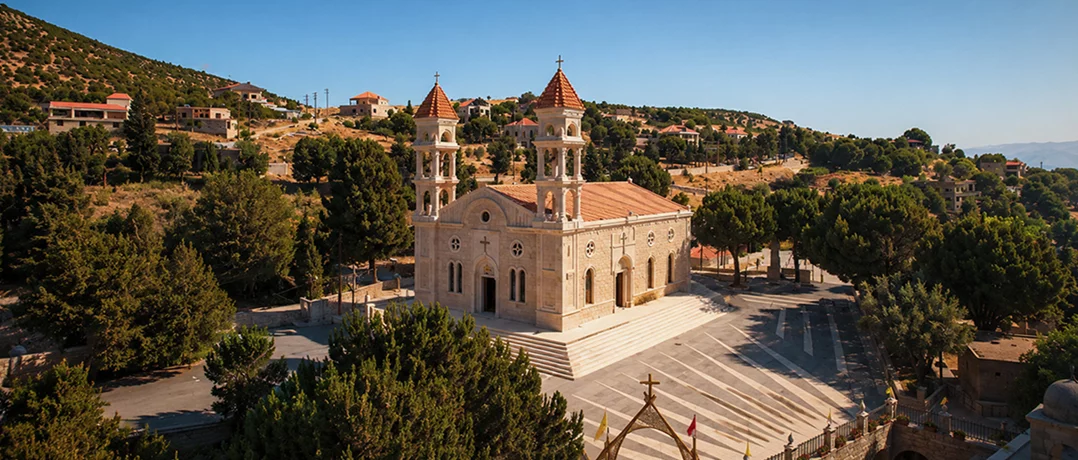
Deir el Qamar, "the Monastery of the Moon", was once the capital of Lebanon, and its narrow alleys still hold stories that rarely make it into the guidebooks. Nestled in the Chouf mountains, this stone village was once the political heart of Mount Lebanon, the seat of powerful emirs, a crossroads of faiths, and a cradle of scholarship. Behind its red-tiled roofs and winding cobblestone streets lies a history that stretches from the Bronze Age to the birth of modern Lebanon, revealing a place that helped shape the country's history.
Long before Beirut became Lebanon's political center, Deir el Qamar held that role. From the late fifteenth century until 1840, it served as the seat of the Emirate of Mount Lebanon, ruled successively by the Ma'an and Shihab dynasties. The village's documented history stretches back further still. A land sale recorded in 1257 shows local lords transferring villages of the Chouf to the Teutonic Order, one of the oldest written references to the town by name. Archaeological traces suggest settlement on the site as far back as the Bronze Age, making Deir el Qamar far older than its glory days would suggest.
Its golden era arrived under Emir Fakhr al-Din II in the early seventeenth century. Exiled to Tuscany in 1613 after falling out with Ottoman authorities, the emir spent five years in Florence, absorbing Medici court life and Italian design. When he returned to Lebanon in 1618, he brought Tuscan architects and craftsmen with him, and their influence is still visible in the arched courtyards and stone facades that give Deir el Qamar its distinctive character, a rare fusion of Levantine vernacular building and Italian Renaissance sensibility.
What set Deir el Qamar apart historically besides political power was religious plurality. Its central square remains framed, within a few hundred meters of one another, by a mosque, a church, and a former synagogue, a physical arrangement that speaks to a period when Druze emirs, Maronite Christians, and a sizable Jewish community shared civic life. The Fakhreddine Mosque, built in 1493 and restored in the sixteenth century, is considered the oldest mosque in Mount Lebanon.
Less commonly discussed is the town's Jewish history. A synagogue completed around 1638 served a community of merchants and artisans, silk producers, soap makers, and iron workers, who lived under the protection of the Ma'anid and Shihab emirs and consisted of several dozen families by the early nineteenth century. That community unraveled during the sectarian violence of 1860, when Deir el Qamar's Christian population suffered heavy losses and its Jewish residents, like the Druze, largely departed, selling their properties before leaving. Remarkably, the synagogue building itself remained under Jewish ownership for decades afterward, sealed with stones by its former congregants to prevent its desecration, before finally being sold in 1893 against the counsel of rabbinical authorities in Jerusalem. Its walls still stand today, now under the stewardship of the French Cultural Center, a monument to a vanished chapter of Lebanese pluralism.
Deir el Qamar carries a lesser-known civic distinction: in 1864 it became the first village in Lebanon to establish a municipal council, decades ahead of most of the country. It later became something of a presidential retreat, in 1943, newly independent Lebanon's first president, Bechara El Khoury, designated the town's palace as an official summer residence, cementing its symbolic status even after political power had long since shifted to Beirut. The village square today still bears a statue of President Camille Chamoun, one of several statesmen the town produced.
That density of notable figures is no accident. For much of the eighteenth and nineteenth centuries, Deir el Qamar functioned as a center of Lebanese letters, drawing writers, jurists, and intellectuals whose influence radiated well beyond the mountain. That intellectual tradition would find its most consequential expression in the twentieth century.
Among Deir el Qamar's native sons, few left as lasting an institutional legacy as Fouad Ephrem el Boustany, born in the village on August 15, 1906, into the storied Boustany family, descendants of scholars who settled in the Chouf in the sixteenth century.
Boustany became one of Lebanon's foremost intellectuals of the century: a historian, encyclopedist, linguist, and literary critic whose work on Arabic literature and the era of Emir Bashir Shihab II drew on his own family's deep roots in Deir el Qamar's Ottoman-era political life. But his most enduring contribution was institutional rather than literary. He was instrumental in establishing the Lebanese University in 1951, the country's first and, to this day, only public university, and served as its founding president from 1953 to 1970, shaping it from its earliest years into a national institution open to students regardless of class or sect. He also founded the university's publishing house, which went on to produce a substantial catalogue of scholarly works.
Honored with honorary doctorates from universities in France, the United States, and beyond, Boustany remained tied to his native village throughout his life, dividing his time between Beirut and Deir el Qamar. His son, Hareth Boustany, followed him into academia as an archaeologist at the Lebanese University, later writing his own tribute to their hometown, underscoring how thoroughly the Boustany name and Deir el Qamar's identity remain intertwined.
Today, Deir el Qamar's old quarter is protected as a UNESCO-listed historic center, its cobblestone streets, Ottoman-era khans, and the Marie Baz Wax Museum, housed in the Fakhreddine II Palace, drawing visitors seeking a version of Lebanon that has not been smoothed over for tourists. But beneath the postcard views lies a more complicated inheritance, a town that governed a nation, welcomed three faiths into one square, weathered civil bloodshed, and quietly produced the architect of Lebanon's public higher education system. To walk through Deir el Qamar is to walk through the foundations of Lebanon itself, where politics, culture, faith, and education once converged in a single mountain village.