



Lebanon’s olive-oil soap industry is quietly reviving through craftsmanship, tourism, and local production.
The timeless craft of Lebanese soap

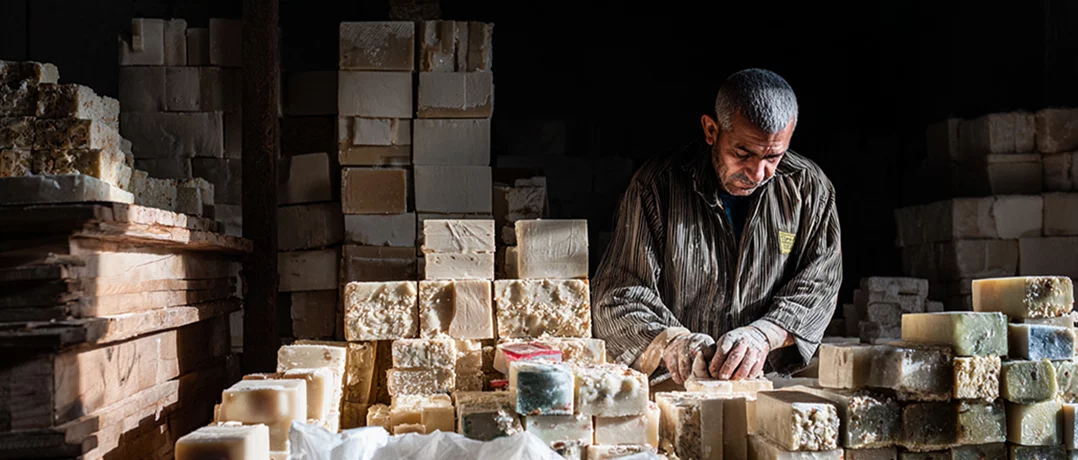
Lebanon has nurtured a centuries-old tradition of olive-oil soapmaking, known locally as “Saboun Baladi” with Tripoli and Sidon at the heart of its production. During the 18th and 19th centuries, Tripoli alone was home to hundreds of workshops, with some historical records citing as many as 400 massabna (soap factories). Each family ran its own operation, stamping bars with unique marks, and the city’s soaps were traded across the Mediterranean, even inspiring the famed Savon de Marseille. By the early 20th century, most workshops had closed, and today only a handful of artisanal producers carry the tradition forward.
Tripoli: From historic hub to modern revival
Tripoli’s old city was once a bustling export center. Today, just 2–3 traditional workshops remain including the renowned Sharkas factory, whose soaps blends heritage with contemporary production. A 2018 UNCTAD report identified about 40 formal SMEs engaged in olive-oil soap production nationwide, with five large producers, many of which support women’s employment. Some rural widows, for example, rely entirely on soapmaking, selling individual “tanks” for around $10 each.
Sidon: Heritage preserved in a museum
Sidon, another historic soap center, once hosted multiple workshops. Today, the craft survives mainly through their Museum, housed in a 17th-century factory. Artisans handcraft around 100 bars of olive-oil and laurel soap per day, keeping centuries-old techniques alive. Outside the museum, industrial soapmaking in Sidon has largely disappeared, making the craft a living piece of heritage.
Soap on the world stage
Lebanese olive soaps still reach international markets, although in modest quantities. Lebanon exported 7,703 tonnes of olive oil in 2017 (worth $24.3 million), much of it used domestically in soap. Formal soap exports in 2021 totaled 23.7 tonnes (valued at ~$81,000), shipped to destinations including the UAE, Liberia, Iraq, Ivory Coast, Romania, and smaller amounts to Australia, Saudi Arabia, and Kuwait.
High-end niche markets exist as well. Some Tripoli firms, including Bader Hassoun, claim virtually 100% export of their output, supplying upscale retailers in Europe, North America, and the Gulf. A 2023 olive-oil sector report estimates around 700 tonnes of Lebanese soap are exported annually, which, at roughly €3-4 per bar, represents several million dollars in trade.
Economic and social impact
Beyond exports, soapmaking sustains livelihoods in both urban and rural Lebanon. It provides work for Lebanese and Syrian laborers, supports olive farmers, and benefits women in small-scale production. Training initiatives by the Ministry of Social Affairs have reached around 1,000 producers since 2014, demonstrating the craft’s role in local development. One modern facility, Bader Hassoun’s factory, employs about 100 permanent workers along with hundreds of seasonal harvesters and contractors.
Demand, challenges, and revival efforts
Global interest in natural, artisanal products has bolstered niche markets for Saboun Baladi. Tourism, heritage initiatives, and diaspora demand support the sale of handcrafted soap through souks, museums, and online platforms. However, the industry faces challenges: competition from cheap industrial detergents, loss of skilled artisans, younger generations moving to urban jobs, and economic crises affecting costs and raw materials.
Revival efforts are underway. UNIDO and local NGOs have supported training and quality improvements, while the Audi Foundation and family firms in Tripoli have created eco-tourism experiences, “soap villages,” and ISO-certified production. Some workshops now experiment with hundreds of scents and formulas. In 2024, Tripoli was named a UNESCO “City of Culture”, in part recognizing its soap heritage, highlighting the craft’s enduring cultural and economic potential.
-
-

-
The Beiruter
-
