



Lebanon’s Higher Council for the Trial of Presidents and Ministers remains unable to deliver accountability amid political obstacles and institutional paralysis.
Why Lebanon’s “highest” accountability body remains paralyzed
Why Lebanon’s “highest” accountability body remains paralyzed
By The Beiruter | September 06, 2026

Reading time: 6 min
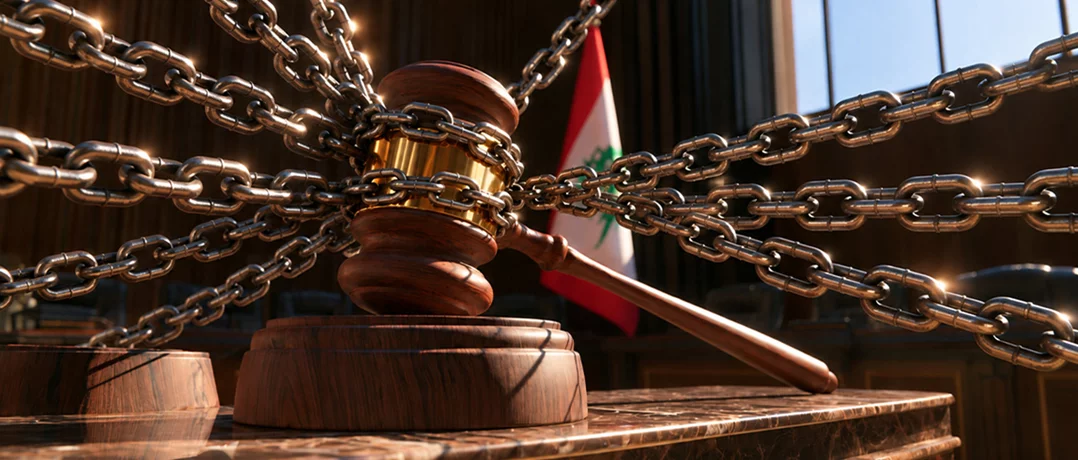
Accountability has long been one of the central challenges facing the Lebanese state. Despite repeated calls for judicial reform and stronger anti-corruption measures, mechanisms intended to hold senior public officials responsible have rarely functioned as originally intended. At the heart of this debate lies the Higher Council for the Trial of Presidents and Ministers, a constitutional body established after the Taif Agreement to prosecute the country’s highest-ranking political officials for constitutional and ministerial violations.
More than 30 years after its creation, however, the council remains one of Lebanon’s least effective constitutional institutions. In an interview with The Beiruter, legal researcher Amin Mohamad Bashir believed that the problem extends beyond the existence of laws or constitutional bodies. The real challenge lies in the interaction between complex institutional mechanisms and the absence of sustained political will to apply them independently.
Accountability requires more than constitutional texts
According to Bashir, the shortcomings of Lebanon’s accountability system cannot be attributed solely to deficiencies in constitutional provisions. Rather, they stem from the convergence of procedural weaknesses with a political environment that has historically struggled to hold senior officials accountable.
The Higher Council was created as a special constitutional mechanism to prosecute the country’s highest officeholders for offenses committed in connection with their constitutional responsibilities. Yet, despite its intended purpose, it has never evolved into a practical or consistently functioning accountability mechanism.
In Bashir's assessment, the principal obstacle lies in the fact that initiating proceedings before the council remains dependent on political institutions and parliamentary balances of power. When accusations involve influential political figures or major parties, legal considerations often become intertwined with political calculations, making effective accountability exceptionally difficult to achieve.
Consequently, Lebanon’s challenge is not merely legislative. The country possesses constitutional provisions and legal mechanisms designed to ensure accountability, but their effectiveness ultimately depends on whether state institutions are willing and able to apply them impartially and independently.
Balancing constitutional guarantees with criminal accountability
A central element of Bashir's analysis is the distinction between constitutional responsibility and criminal liability.
He believed there are legitimate reasons for maintaining a special constitutional mechanism to address political offenses committed by senior state officials. Such arrangements can protect constitutional offices from frivolous or politically motivated prosecutions that could destabilize state institutions.
However, these safeguards should never become a source of absolute immunity. A minister or any other public official does not cease to be subject to the rule of law upon assuming office. If an official commits corruption, embezzlement, abuse of authority, illicit enrichment, or any other criminal offense, there must be an effective and independent mechanism capable of investigating and prosecuting those crimes while fully respecting due process and fair trial guarantees.
For this reason, Bashir does not consider abolishing the Higher Council to be the only or necessarily the best solution. Instead, he advocated reconsidering its jurisdiction, procedures, and relationship with Lebanon’s ordinary judiciary so that questions of legal competence do not become obstacles to justice.
He further stressed that the respective roles of the Higher Council, the National Anti-Corruption Commission, and the ordinary courts should be clearly defined and complementary. The commission cannot replace the judiciary, while the Higher Council should not become a substitute for the country’s broader anti-corruption framework. Each institution has a distinct constitutional function, and their responsibilities should reinforce rather than undermine one another.
Corruption cannot be reduced to one institution
Bashir also cautioned against viewing the Higher Council as the sole instrument for combating corruption. While it occupies an important constitutional role, Lebanon’s anti-corruption framework extends far beyond the prosecution of presidents and ministers.
He pointed in particular to the National Anti-Corruption Commission, established as a central component of Lebanon’s integrity and transparency framework. For years, however, the commission itself suffered from political disagreements and sectarian disputes that delayed the appointment of its members and prevented it from fully exercising its mandate.
The completion of the commission’s membership under the current administration therefore represents an important institutional step. Nevertheless, Bashir stressed that appointments alone cannot deliver meaningful reform.
The commission must now receive the operational independence, financial resources, and legal tools necessary to perform its responsibilities without political interference. Only then can it fulfill its role in preventing corruption, receiving complaints, promoting transparency, and supporting broader accountability efforts.
Lebanese citizens, Bashir argued, are no longer looking simply for the creation of new institutions. Rather, they expect existing institutions to function effectively and produce measurable results.
Reform begins with independent institutions
According to Bashir, genuine reform requires more than procedural amendments.
The mechanism governing accusations and referrals before the Higher Council should be reviewed, with clearer procedures and legally binding deadlines that prevent politically sensitive files from remaining indefinitely stalled. At the same time, the relationship between the Higher Council and the ordinary judiciary should be clarified in order to eliminate unnecessary jurisdictional disputes.
More fundamentally, Bashir argued that meaningful accountability cannot exist without an independent judiciary. Judicial appointments, promotions, disciplinary procedures, and prosecutorial independence must all be protected from political influence if courts are to investigate senior officials without fear or favoritism.
He also advocated strengthening Lebanon’s broader transparency framework by reinforcing financial disclosure requirements, improving oversight mechanisms, and fully implementing anti-corruption legislation. Accountability should not begin only after corruption has occurred; institutions should also possess effective preventive tools capable of identifying risks before they develop into major scandals.
Ultimately, Bashir believes that constitutional guarantees should protect public office from political abuse without shielding officeholders from criminal responsibility. A strong state is not one that avoids prosecuting its leaders, but one that is capable of holding them accountable through independent institutions, transparent procedures, and the equal application of the law.
Understanding the higher council for the trial of presidents and ministers
The Higher Council for the Trial of Presidents and Ministers was established pursuant to the 1989 Taif Agreement and formally regulated by Law No. 13 of 18 August 1990, which implemented Article 80 of the Lebanese Constitution. The council serves as the only constitutional body empowered to try the President of the Republic, the Prime Minister, and ministers for high treason, constitutional violations, and certain offenses committed in connection with the exercise of their official duties.
The council consists of 15 members: 7 members of Parliament elected at the beginning of each parliamentary term and 8 of Lebanon’s highest-ranking judges appointed by the Court of Cassation according to judicial seniority. Parliament also elects 3 alternate MPs, while the Court of Cassation appoints 3 alternate judges, together with the Public Prosecutor before the council and 2 assistant prosecutors.
The procedure for bringing a case before the council is intentionally rigorous. An indictment request must first be signed by at least one-fifth of Parliament’s members before Parliament considers whether to proceed. Parliament may establish a special investigative committee before deciding whether to issue an indictment. Referring a President, Prime Minister, or minister to the Higher Council ultimately requires the approval of two-thirds of the entire Parliament. Once a case reaches the council, any conviction requires the support of at least ten of its fifteen members.
Nevertheless, the Higher Council continues to occupy a unique position within Lebanon’s constitutional order. It has never become the effective accountability mechanism originally envisioned by the Taif Agreement.
-
-

-
The Beiruter
-
