



In the investigation’s second installment, The Beiruter examines China’s decade-long expansion across Lebanon’s transportation, agriculture, and telecommunications sectors, revealing the economic scaffolding Beijing has built in anticipation of Lebanon’s recovery and Syria’s reconstruction.
China’s economic prepositioning in Lebanon
China’s economic prepositioning in Lebanon
By Katharine Sorensen - Soraya Johnson | August 09, 2026

Reading time: 10 min

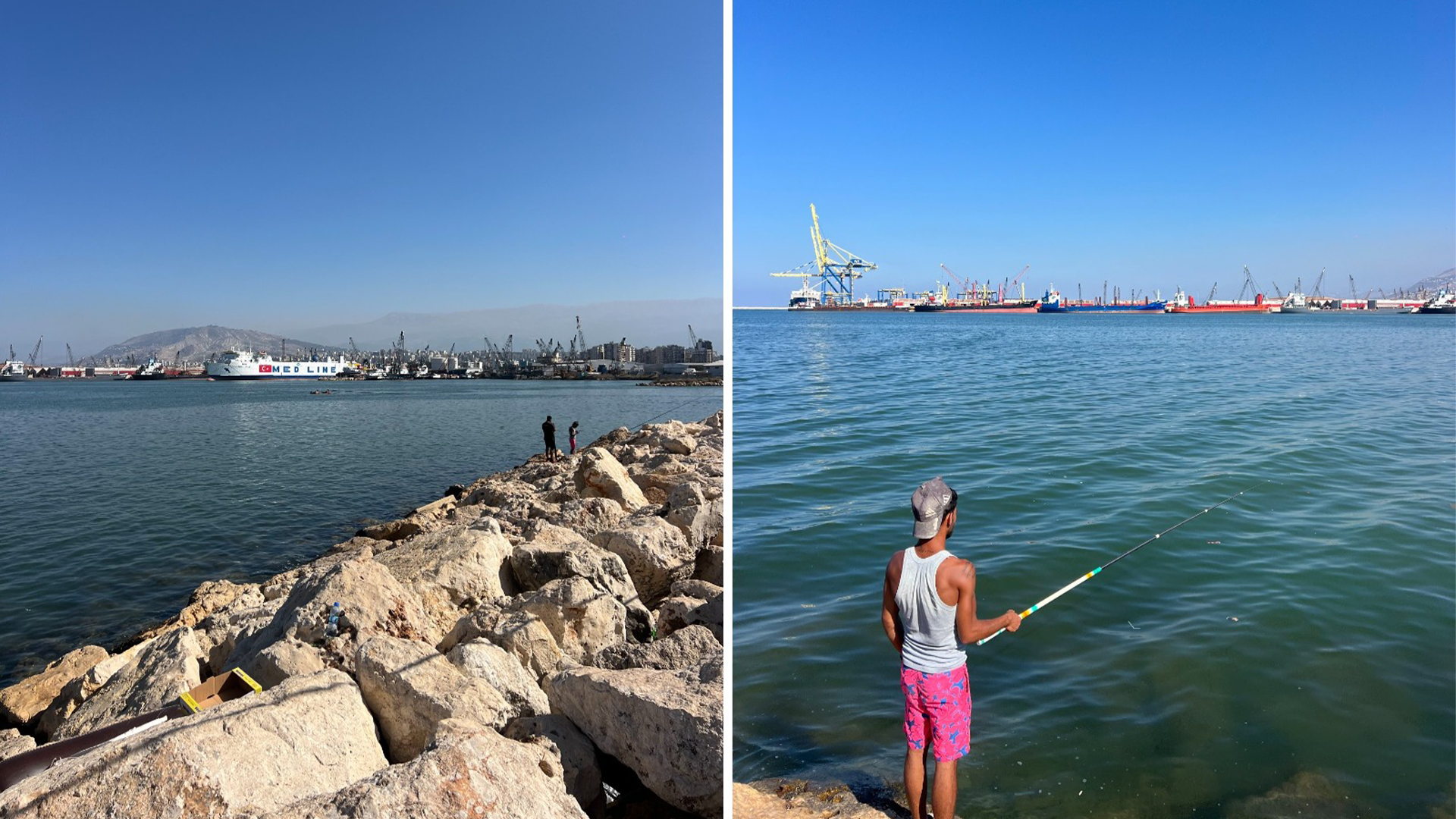
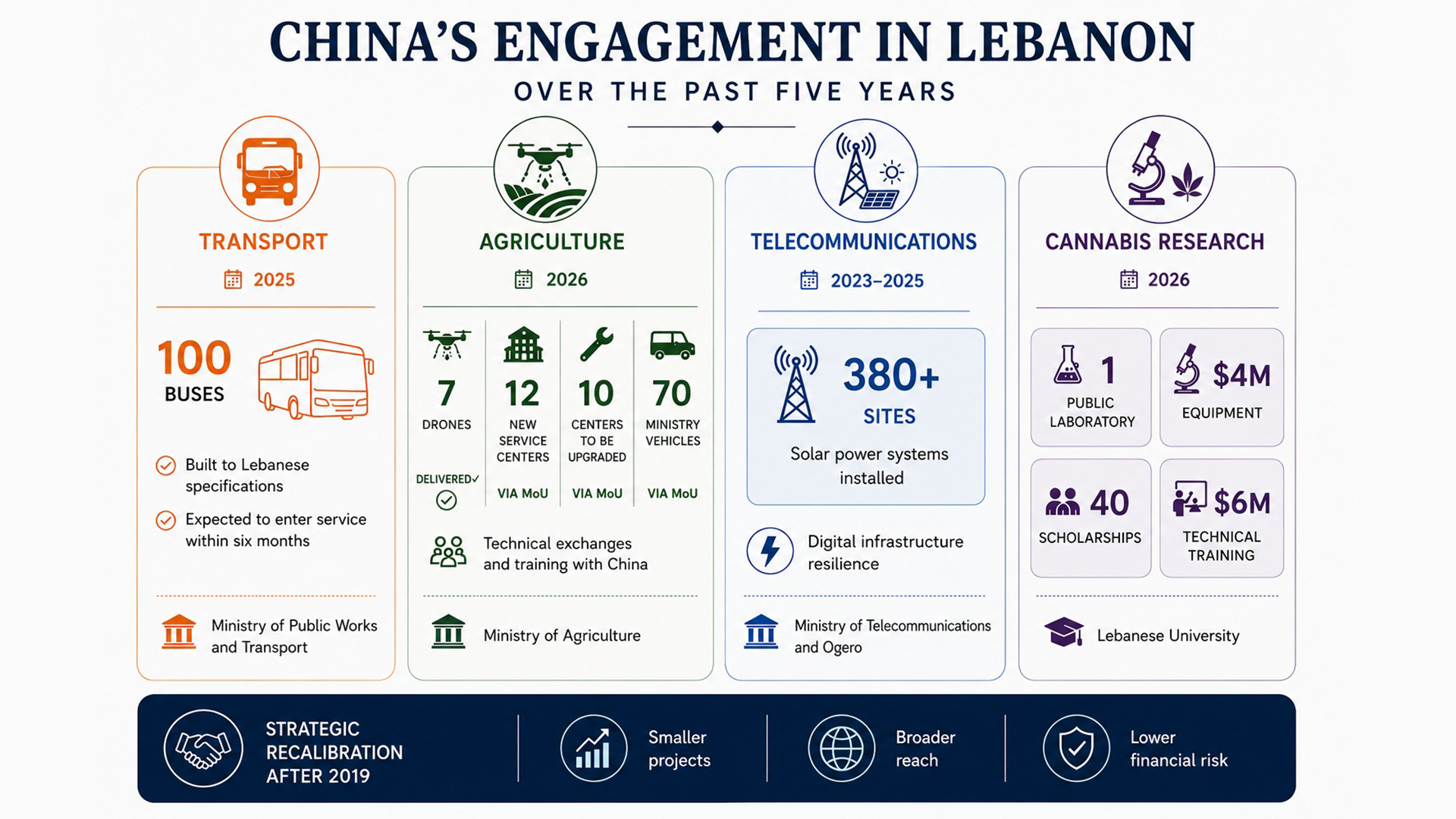
On May 14, 2026, the Port of Tripoli issued a tender that revived one of Lebanon's most consequential transport ambitions. It seeks consultants to update plans for a 35-kilometer railway, extending from Tripoli Port to Abboudieh on the Syrian border, where it would reconnect with Syria's rail network. The tender also calls for an assessment of a potential rail connection to René Mouawad Airport near Lebanon's border with Syria. More than a domestic railway, the project would link Lebanon to the historic Arab Mashreq rail system, an extensive regional transport corridor spanning the eastern Mediterranean, Syria, Jordan, Iraq, and the Arabian Peninsula. Although many sections have remained inactive for decades, the network has regained attention as the government seeks to strengthen regional trade and overland connectivity. The railway’s revival would also restore the transport corridors enabling Lebanon's anticipated role in Syria’s reconstruction. Arab Mashreq railway network, adapted from the May 14, 2026 Port of Tripoli railway tender. China is not explicitly identified in the tender. Yet the corridor has been the focus of documented Chinese engagement in northern Lebanon for more than a decade. Between 2012 and 2019, Chinese companies expanded the Port of Tripoli, while officials called for investment in René Mouawad Airport and northern Lebanon's rail and road network. In 2019, Lebanon’s economic collapse and nationwide anti-government protest movement, known as the Thawra, put many of these large-scale infrastructure ambitions on hold. Chinese engagement did not disappear, however. Instead, it began shifting toward smaller, donation-based initiatives – a transition that began in Lebanon shortly before Beijing articulated it globally by refocusing its Belt and Road Initiative on “small but beautiful” projects in the early 2020s. Large infrastructure proposals gave way to lower-risk partnerships across municipal and national agencies, allowing China to construct a scaffolding of relationships throughout the Lebanese state. Each project positioned China to capitalize on opportunities in transportation, agriculture, and telecommunications as domestic and regional conditions evolved. The first installment of The Beiruter’s investigation examined the public-facing expressions of China’s presence in Lebanon: the conservatory rising above Dbayeh, Chinese-language classrooms, scholarship programs, and cultural exchanges. This second installment looks beneath those cultural initiatives to trace a less visible network of economic engagement extending across Tripoli, Beirut, and into some of Lebanon’s most strategically important sectors. Drawing on railway tenders, a review of every publicly available Council for Development and Reconstruction annual progress report, and interviews with Lebanese government officials, The Beiruter reassembles China’s network and the commercial logic connecting its seemingly disparate projects. Northern Lebanon has long been strategically positioned to connect sea, sky, and land. The Port of Tripoli, René Mouawad Airport, and the Syrian border together form a natural link between the Mediterranean and the wider Levant. Those same transport corridors have repeatedly been identified as critical routes for renewed trade and investment with Syria. Before Lebanon's economic collapse and the 2019 protests halted many of the country's largest infrastructure ambitions, China's engagement was defined by large-scale transport and logistics projects concentrated in northern Lebanon and the corridors leading to Syria. Tripoli was at the center of that strategy. In February 2012, state-owned China Harbour Engineering Company (CHEC) completed the port's second expansion, a $58 million project that added a 600-meter quay, dredged approximately three million cubic meters, and reclaimed 780,000 cubic meters of land. The project increased the port's capacity to accommodate larger container vessels and constituted a broader effort to position Tripoli as a regional commercial hub. Unlike many later proposals, the expansion was financed through the port's own revenues rather than Chinese government funding, with CHEC serving only as the contractor. Chinese engagement in port development only broadened over the following years: Chinese-manufactured container cranes arrived in 2017, while CHEC held discussions with Lebanese officials on a proposed fourth phase of the port's expansion that would extend the original 600-meter quay to 1,050 meters. That same year, the Union of Municipalities of Tripoli joined the Silk Road Chamber of International Commerce, part of efforts to strengthen the city's commercial links with China and position Tripoli within the Belt and Road Initiative. Commercial connectivity soon followed. In October 2018, the China Ocean Shipping Company (COSCO) launched a direct shipping service to Tripoli. By early 2019, the port was receiving weekly container shipments from China, reducing shipping times between China and northern Lebanon. The strategy extended inland as well. In March 2019, around 400 Chinese companies signed a 15-year lease agreement with the Lebanese developer Inter Mall Group to establish China City at Taanayel in Lebanon's Bekaa Valley. Modeled on Dubai's Dragon Mart, one of the world's largest trading hubs for Chinese goods outside China, the 60,000-square-meter development was designed as a regional wholesale center selling Chinese products ranging from electronics and furniture to garments and jewelry. The project was expected to create at least 5,000 jobs, with plans to double its footprint through an additional 60,000 square meters, according to the CDR progress reports. The location was strategic, following the same logic behind Chinese interest in northern Lebanon: proximity to Syria and the overland trade corridors leading into it. Situated roughly 35 kilometers from Damascus, Taanayel lies directly on the Beirut-Damascus highway, one of Lebanon's principal land trade routes into Syria. At the time, Lebanese and regional media reported that the development was conceived as a regional distribution hub for Chinese companies targeting markets in Lebanon, Syria, Iraq, and Jordan, positioning the Bekaa as a gateway for cross-border trade. China’s diplomatic activities aligned with its expanding presence on the ground. During a visit to Tripoli in March 2019, Chinese Ambassador Wang Kejian said Chinese companies were prepared to expand the Port of Tripoli and Rene Mouawad Airport and construct railways, roads, and bridges across northern Lebanon. The Port of Tripoli in October 2025. Photo: The Beiruter. The pattern was consistent: Chinese companies expanded the port, Chinese shipping lines established direct maritime connections, Chinese firms planned a regional wholesale hub on the Beirut-Damascus corridor, and Chinese officials demonstrated interest in the airport, railways, and road network. Should Syrian reconstruction accelerate, turning Lebanon into an indispensable hub for regional trade, its investments in the country would leave Beijing well positioned to benefit from the resulting commercial expansion. A Lebanon energized with economic opportunity never materialized. Instead, Lebanon entered its deepest economic crisis in modern history, and the large-scale infrastructure proposals that dominated China's pre-2019 engagement came to a standstill. The Lebanon that emerged after 2019 offered few opportunities for projects of the scale previously proposed. As economic collapse and political instability heightened investment risk, China’s strategic calibration began to parallel the “small but beautiful” shift in its cultural outreach: large-scale infrastructure ambitions gave way to smaller, more dispersed projects that reduced financial exposure while expanding China’s relationships throughout the Lebanese state. These projects remained concentrated in sectors with significant potential for future commercial growth. “Not every type of project we present is necessarily of interest to the Chinese side,” Assem Fidawi, director of the CDR presidential office, told The Beiruter. In 2025, Lebanon received 100 buses manufactured in China through a Chinese grant following a request submitted by the Council for Development and Reconstruction (CDR) and the Ministry of Public Works and Transport. Built according to specifications requested by the Lebanese government, the buses are expected to enter service within six months, according to Ziad Chaaya, Director General at the Office of Railways and Public Transport, who spoke with The Beiruter. Lebanese technical teams will travel to China beforehand to receive operational and maintenance training. The request was first submitted around three years ago, but stalled amid successive conflicts before recently moving forward. Once discussions resumed, Chinese authorities responded to Lebanon's request “very, very quickly,” according to one consultant involved in the project. One hundred buses is a comparatively modest undertaking beside the ports, airports and railways that then-Chinese Ambassador Wang Kejian said Chinese companies were prepared to help expand across northern Lebanon in 2019. Yet it occupies the same strategic terrain: transportation. That sector, however, was only one entry point through which China expanded its presence within Lebanon’s public institutions. In June 2026, China gave seven agricultural drones to Lebanon's Ministry of Agriculture for pest control, forest monitoring, and crop surveillance. According to Agriculture Minister Nizar Hani, the drones will be operated directly by the ministry in cooperation with the Lebanese Army. “We started with this small project,” Minister Hani told The Beiruter. “We're looking for new innovation and technology to be used in the agricultural sector.” China’s initial donation of seven drones quickly expanded into proposed partnerships across Lebanese agriculture. Hani said a Chinese technical mission recently arrived in Lebanon to design a standardized model for combined agricultural and forest service centers that would be replicated nationwide. Under the proposal, China would support the construction of 12 new centers, rehabilitate 10 existing facilities and equip them with solar power, provide the ministry with 70 vehicles for inspections and crop traceability, and expand technical training and exchange programs between the two countries. Sino-Lebanese collaboration has also reached one of Lebanon's most commercially promising agricultural industries. In May 2026, Zhonghua Lianchuang International Holding Co., Ltd., a Hong Kong-headquartered Chinese company, agreed to finance Lebanon's first public research laboratory dedicated to therapeutic cannabis through a package that includes $4 million in laboratory equipment and $6 million for technical assistance and training. The initiative also provides 20 scholarships for medical students and 20 scholarships for master's and doctoral students specializing in medicinal plants and cannabis. Therapeutic cannabis represents one of the sectors Lebanese policymakers have identified as a potential high-value export industry since Parliament legalized medical cannabis cultivation in 2020, although commercial production has yet to begin. The laboratory was modest beside China’s earlier infrastructure ambitions, but it established an early Chinese foothold in a promising Lebanese industry. Reliable telecommunications underpin virtually every sector of the modern economy – and China has also established a presence there. In September 2023, China's Ministry of Commerce donated $8 million to Lebanon's Ministry of Telecommunications and the state-run telecommunications company Ogero to install off-grid solar power systems at more than 380 Ogero telecommunications sites. The project was completed in 2025. Unlike the transport projects coordinated through the Council for Development and Reconstruction, this initiative was implemented directly with Ogero and the Ministry of Telecommunications. Selected Chinese-backed initiatives over the last five years. Transport. Agriculture. Telecommunications. None matched the scale of the ports, airports, and railways that defined China's initial investments. Yet each expanded Chinese cooperation across Lebanese institutions in sectors that would underpin any future economic recovery, whether driven by domestic growth, regional trade, or reconstruction across the border. China had not abandoned Lebanon's strategic sectors. It had repositioned itself within them. China's growing footprint has not gone unnoticed within the Lebanese institutions directly involved in its projects. Officials interviewed by The Beiruter repeatedly described China's engagement as unique among Lebanon's other international partners. Against the backdrop of intensifying U.S.-China competition, one consultant at the Office of Railways and Public Transport contrasted the two countries' priorities in Lebanon. “Sometimes I feel that the American Embassy is focused almost entirely on intelligence and security,” the official said. For Agriculture Minister Nizar Hani, China's expanding role came down to one thing: speed. "China is just one of the countries that are interested," Hani said. Neither official viewed China's growing engagement as a case for relying on a single international partner. Director General Ziad Chaaya argued that Lebanon stood to gain the most by courting a wide range of foreign investors. "Competition is healthy," Chaaya said. For Lebanon, investment from international partners is critical. After enduring two wars in less than two years, alongside the lingering effects of its 2019 economic collapse, the country requires sustained foreign investment to rebuild its economy. China has presented itself as a willing and consistent partner. When Lebanon's investment environment deteriorated, Beijing did not withdraw – it recalibrated its approach. Through “small but beautiful” projects, China simultaneously limits its financial risk while expanding its reach across the Lebanese state. Seven years later, Lebanon is once again considering how to reconnect with Syria by rail. China’s anticipation of Syrian reconstruction may yet prove prescient: the 2024 collapse of the Assad regime renewed international attention to rebuilding the country. Its established presence gives Beijing an advantage in pursuing economic opportunities through Lebanon as Syria’s new government takes shape. Whether reconstruction in Syria accelerates or Lebanon's domestic economy recovers, China has spent over a decade positioning itself for both.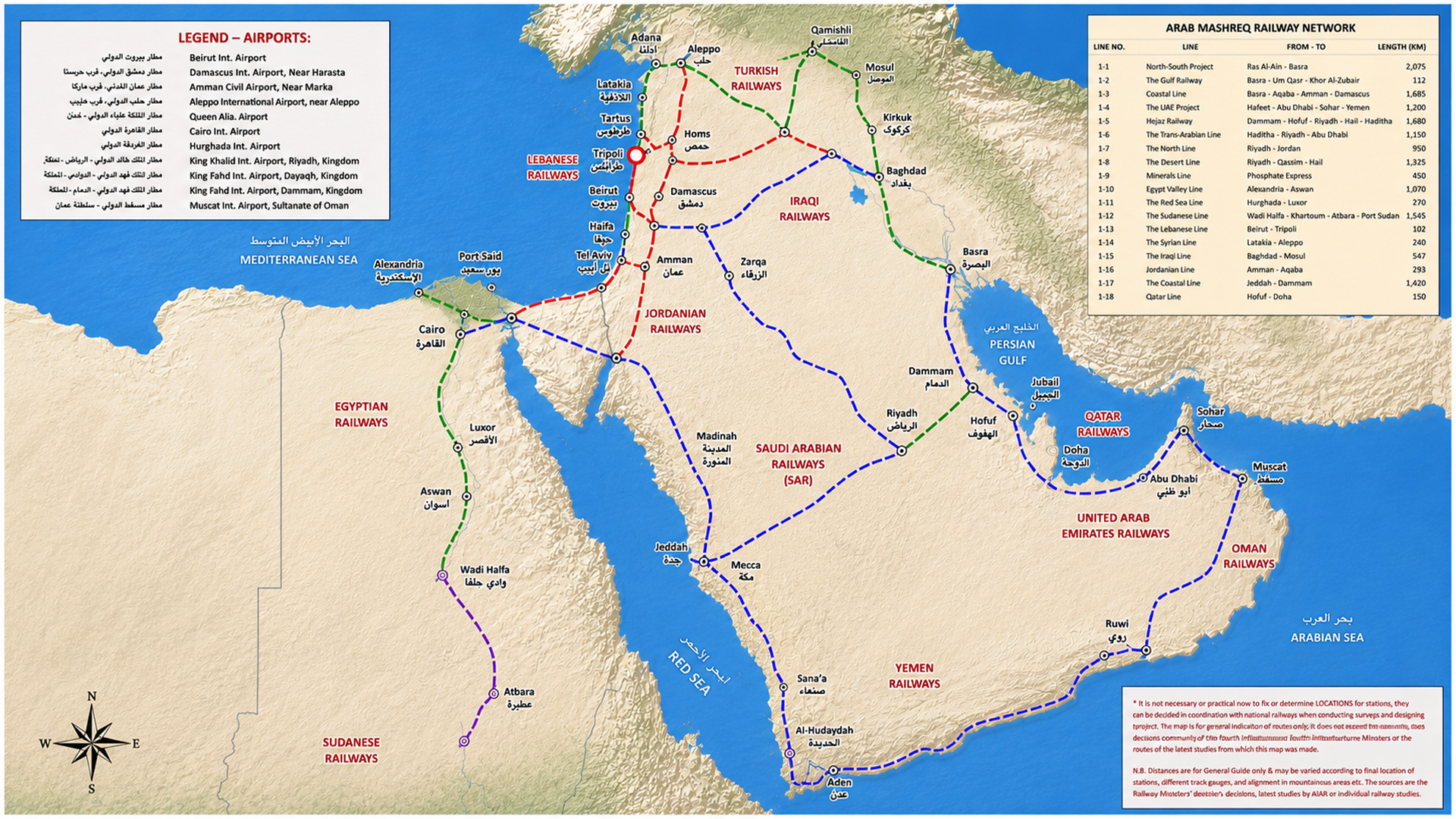
Pre-2019: Northern Lebanon and the Beirut-Damascus corridor
Post 2019: China’s revised approach
Based on my experience, the Chinese are most interested in high-value projects.
A distinct model of engagement
China doesn't just announce projects. They follow up. They keep coming back. That's the difference.
But China took the initiative and moved faster.
If America, Europe, Japan, and China are all competing to invest in Lebanon, Lebanon wins. We don't want dependence on a single country. We want serious competition between partners.
-
-

-
Katharine SorensenReporterSpecializing in global affairs, technology and economics, with a focus on on-the-ground investigative reporting.
-
-
-

-
Soraya JohnsonJunior research/writer
Focusing on political analysis, economic trends, and investigative reporting.
-
