



How Hezbollah’s weapons, once justified as a means to protect southern Lebanon, have become the center of a debate over sovereignty, deterrence, displacement and the devastating cost borne by the communities they were meant to defend.
Devastating outcome of a failed strategy
Devastating outcome of a failed strategy
By Dr. Ramzi Abou Ismail | September 06, 2026

Reading time: 6 min
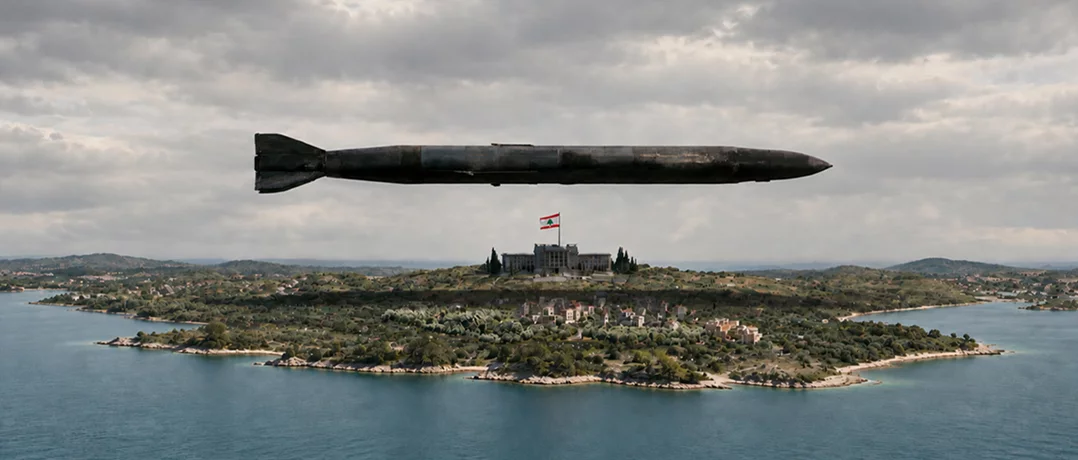
The south was always presented as the reason Hezbollah could not surrender its weapons. Without the weapons, we were told, the land would be occupied, the villages destroyed and their people displaced. Today, Hezbollah still has its weapons. But entire villages have been flattened, hundreds of thousands of Lebanese remain displaced, Israeli forces occupy large parts of the south, and there is no credible prospect of a complete withdrawal anytime soon. The weapon survived. Much of what it was supposed to protect did not.
This is not a minor strategic failure. It is a complete inversion of purpose. Hezbollah’s weapons were once justified as the means through which the south would be protected. The south has now become the price Lebanon is expected to pay so that the weapons can be preserved.
At the height of the latest war, approximately 1.2 million people were displaced. By the end of August, around 350,000 were still unable to return home, including 21,000 living in collective shelters. More than 90,000 housing units were damaged or destroyed in the first three months of the conflict alone. Israeli forces remain deployed kilometers inside Lebanon, occupying territory that includes dozens of villages and enforcing areas where residents are prohibited from returning. More than 4,300 people in Lebanon have been killed since the latest round of hostilities began in March. These are not unfortunate details surrounding the strategy. They are the outcome against which the strategy must be judged.
Israel destroyed the villages. Israel displaced their inhabitants. Israel chose occupation, demolition and collective punishment. Nothing about Hezbollah’s failures reduces Israel’s responsibility for what it has done. Recent investigations using satellite imagery and verified footage found systematic destruction of homes, schools, roads, healthcare facilities, farmland and forests across occupied southern Lebanon. The scale suggests an attempt to make large parts of the south physically unlivable.
But recognizing Israeli responsibility cannot mean suspending judgment of every Lebanese decision that helped bring us here. A leadership is not evaluated only by whether its enemy is cruel. It is evaluated by whether its strategy protects its people from that cruelty.
Hezbollah knew the nature of the enemy it was confronting. It knew the imbalance of power. It knew that Israel would respond to attacks against it by striking far beyond the individuals responsible. Yet Lebanon’s border was once again activated in a regional war that the Lebanese state did not choose and could not control. The result was not deterrence. It was devastation.
Imagine a man who insists on wearing extremely heavy boots because he believes they prevent him from falling. Eventually, the boots become so heavy that he can no longer walk. His friends tell him to remove them and promise to help him find another way to maintain his balance. He refuses. He would rather die, he says, than risk falling. But he is already dying where he stands.
This is where Hezbollah’s argument has arrived. The weapons cannot be surrendered because Israel threatens the south. But the south has been destroyed and occupied while the weapons remain. The arms can no longer prevent Israeli strikes, cannot protect villages, cannot secure the return of displaced residents and cannot compel Israel to withdraw. What, then, is being protected?
The answer is increasingly uncomfortable. The weapons are protecting the political and ideological structure built around the weapons. They preserve Hezbollah’s autonomy, its regional role, its internal veto and the story through which decades of sacrifice have been given meaning. The south, meanwhile, is expected to continue sacrificing itself to preserve that structure. This is no longer a resistance protecting a community. It is a community being used to protect the continuation of a resistance.
The cruelest part is that the people paying the heaviest price are the same people Hezbollah claims uniquely to defend. Families from southern villages have lost their houses, farms, schools, businesses and, in some cases, the graves through which they maintained a connection to their land. Children are growing up inside shelters while watching videos of bulldozers demolishing the places to which they are supposed to return. Around 340 Lebanese schools have been damaged, 30 destroyed, and others remain inaccessible inside occupied areas.
Calling this population “steadfast” does not make the arrangement dignified. Sometimes steadfastness is simply the name leaders give to people when they have decided that those people must continue suffering. There is, of course, a serious objection. Disarming Hezbollah does not guarantee that Israel will suddenly become restrained or withdraw voluntarily. Israel has violated agreements before, continued strikes during ceasefires and demonstrated that its territorial ambitions cannot be dismissed as paranoia. Asking Lebanese citizens to trust Israel would not be a strategy. It would be foolishness.
But this is precisely why disarmament cannot mean unilateral surrender. It must mean a verified sequence: Hezbollah’s weapons transferred to the state, the Lebanese army deployed across the south, Israeli forces withdrawing in parallel, international guarantees enforced and reconstruction funding released according to measurable steps.
The alternative is the loop Lebanon is trapped inside today. Hezbollah says it cannot disarm while Israel occupies Lebanese territory. Israel says it will not withdraw while Hezbollah remains armed. The current framework explicitly allows Israeli troops to remain until Hezbollah is disarmed and the Lebanese army assumes control. Hezbollah has rejected those terms as surrender.
The two positions may appear symmetrical, but the balance of power is not. Israel can maintain an occupation, strike from the air and prevent reconstruction at a cost it currently considers manageable. Hezbollah cannot liberate the occupied territory or protect the population living around it. Preserving this deadlock therefore does not preserve resistance. It preserves the conditions of occupation. The weapons cannot force Israel to leave. But their continued existence provides Israel with the argument it uses to stay.
Political psychology helps explain why such a contradiction can survive. The more a community sacrifices for a cause, the more psychologically difficult it becomes to question the instrument associated with that cause. Admitting that the weapons have failed would not feel like a simple strategic revision. It would threaten the meaning attached to decades of death, destruction and loss. This creates a dangerous form of reasoning: because so much has already been sacrificed, more must be sacrificed to prove that the previous sacrifices were not in vain. But the dead cannot be honored by producing more dead simply to protect the story told about them. Nor can destroyed villages be liberated by ensuring that the conditions responsible for their destruction remain unchanged.
Lebanon has become familiar with something that exists between life and death. People remain biologically alive, but without savings, electricity, security, functioning institutions or the ability to imagine a future. In the south, this condition is even more literal: people have survived, but the places in which their lives existed have disappeared.
There are things worse than dying. One of them is living without living: remaining alive while being denied a home, a livelihood, a political voice and any control over whether another war begins. The south was supposed to justify Hezbollah’s weapons. Today, the south is being asked to disappear so that Hezbollah’s weapons can continue justifying themselves. That is not deterrence. It is a logic that has consumed its own purpose. The weapons survived. The south did not. And Lebanon is still being asked to call this protection.
-
-
-
Dr. Ramzi Abou IsmailWriterPolitical psychologist and commentator on politics, identity, and conflict.
-
