



The Middle East’s wars are not ending. They are being reorganized.
The age of the new Cold War

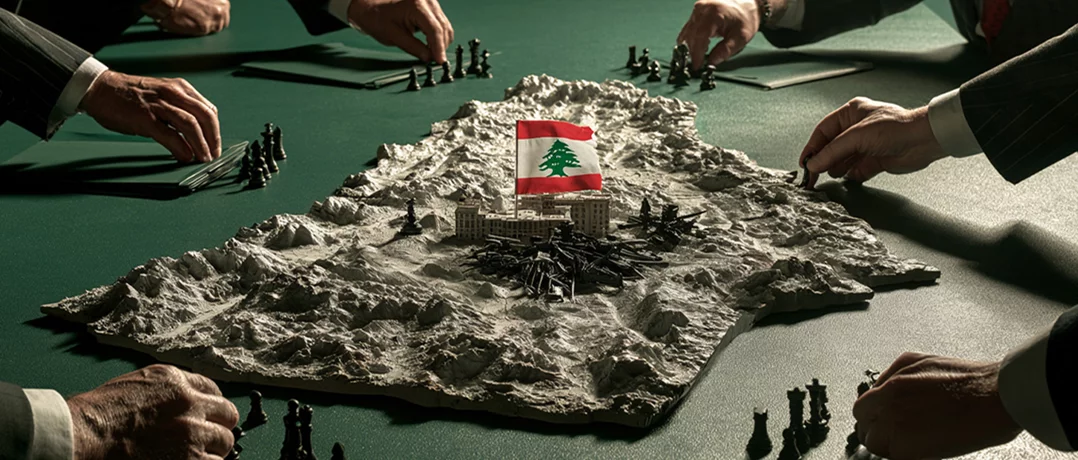
The Middle East is not moving towards peace. It is moving from wars nobody could decisively win into a cold war nobody can afford to lose. Ceasefires are announced, negotiations move between capitals and new defense agreements are signed. Yet none of the region’s central conflicts has been resolved. The United States and Iran remain at war even when their missiles are silent. The Sunni-Shia struggle is changing form. And a confrontation between Israel’s expanding power and major Sunni states unwilling to live beneath it is taking shape.
What we are watching is not reconciliation. It is the construction of rules around unresolved hostility. This is what a cold war looks like before we call it one. Actors stop believing they can eliminate one another at an acceptable cost. They build blocs, preserve deterrents and negotiate buffer zones. Violence becomes managed, displaced and periodically activated.
The first unfinished conflict is the American-Iranian one. The United States has shown it can devastate Iran militarily. Iran has shown it can make the cost of defeat intolerably high. Washington holds overwhelming superiority; Tehran retains the capacity to obstruct. The blockade of Iranian ports, restrictions in Hormuz and demands over sanctions and compensation reveal the structure. America can destroy much of what Iran possesses, but cannot cheaply produce the outcome it wants. Iran cannot win, but it can deny America a clean victory. This is not peace. It is mutual exhaustion without mutual recognition.
The second unfinished conflict is the one usually described as Sunni-Shia. The label was always too simple. The struggle was never purely theological; it concerned states, influence, identity and the right to organize the region. But sectarian boundaries supplied its language, loyalties and armed networks.
The Mecca Joint Defense Agreement between Saudi Arabia, Turkey and Pakistan shows how the conflict is being reorganized. Formally, an attack on one is to be treated as an attack on all. Practically, the agreement lacks publicly defined obligations, an integrated command and a common enemy. Pakistan thinks first about India; Turkey about Syria, Israel and the Kurdish question; Saudi Arabia about Iran, the Houthis and its energy routes. This is therefore not yet a Sunni NATO. Its immediate power is political.
Saudi Arabia contributes money, religious centrality and diplomatic weight. Turkey brings conventional force and a growing defense industry. Pakistan brings manpower, strategic depth and nuclear ambiguity. They do not form one army. They form a question every adversary must ask before acting.
To Iran, the message is that its weakening network will not leave behind isolated Sunni states negotiating separately under pressure. Tehran may instead face a coordinated interstate counterweight. The proxy struggle is being pushed upwards, from militias towards states. That may make it more stable, but not over. The agreement carries another message. Iran is not the only power these states are seeking to balance. Israel is increasingly one of them.
For years, Israel and several Sunni governments found common ground in containing Iran. But cooperation against a shared threat was never consent to permanent Israeli supremacy. Saudi Arabia does not want Iranian influence restored, but neither does it want an order written entirely in Israel. Turkey is even less likely to accept one. Israel sees strategic space opening as Iran weakens; Ankara and Riyadh see a vacuum that must not belong to Israel alone.
A new Israeli-Sunni confrontation has not begun, and it may never take a conventional form. But the strategic competition behind it is visible. Turkey is its obvious center: militarily capable, politically ambitious and willing to challenge Israeli freedom of action in Syria and the Levant. Saudi Arabia is more cautious, but cannot be financially indispensable and strategically secondary at once. Pakistan leaves the bloc’s ultimate deterrent deliberately undefined.
There is also a quieter rivalry inside the Sunni world. The agreement was signed without Egypt and the UAE. Egypt participated in earlier consultations and may still join. Its absence is not opposition, but a choice waiting to be made. Can Cairo enter an architecture centered financially in Riyadh and militarily in Ankara without surrendering its claim to Arab leadership?
The UAE presents a different question. Abu Dhabi has built an independent project through ports, commercial networks and local partners from Yemen to the Horn of Africa. Its competition with Saudi Arabia is real, even when both display unity. This is not yet two camps. It is a struggle over who defines the next Sunni order: a Saudi-Turkish project with Pakistani depth, or an Emirati model of maritime power and flexible partnerships. Egypt may determine whether they converge or harden.
This is precisely why Lebanon matters. Cold wars require borders, guarantees and places where one order is handed to another. Lebanon may become the first transfer point between the declining Iranian proxy system and an emerging interstate balance. Negotiations already connect Israeli withdrawal, Lebanese Army deployment and Hezbollah’s disarmament, with third-country verification under discussion.
But Hezbollah’s weapons are not an inventory problem alone. They belong to a political system, a regional strategy and an identity built around sacrifice and resistance. Disarmament is a political act before it is a technical one. A weapon can be confiscated in a day; its meaning can reproduce conflict for a generation.
A broader settlement could offer a way through. Iran could authorize Hezbollah to relinquish its strategic arsenal within an agreement with Washington. Missiles, drones and sensitive systems could leave Lebanon, returned to Iran where acceptable, dismantled or placed in custody. Ordinary weapons could go to the Lebanese Army and fixed infrastructure be destroyed. Israel would withdraw, end its strikes and accept that enforcement inside Lebanon belongs to the state. Saudi Arabia and international partners would finance reconstruction; Washington would underwrite the arrangement.
Turkey’s role would matter, although maybe not yet as a solitary guarantor on Israel’s border. Israel might not trust Ankara with that role, and a Turkish military presence could create a new conflict while resolving the old one. Turkey could instead join a wider American-backed mechanism guaranteeing reciprocity: Hezbollah does not rearm, and Israel does not turn disarmament into occupation or a license to strike.
Returning every weapon to Iran is neither realistic nor desirable. Israel would object to rebuilding the arsenal it fought to destroy. But the political principle matters. Removing Iran’s strategic investment allows Tehran and Hezbollah to describe a negotiated redeployment rather than surrender to Israel or Hezbollah’s Lebanese opponents. Face-saving is not a moral reward. It is often what makes behavioral change possible.
Lebanon’s objective cannot be to protect Hezbollah’s narrative. It must be to protect the state from civil confrontation while ending the armed exception permanently. All sides would lose something they can no longer sustain. Iran loses its forward position. Hezbollah loses its autonomous arsenal. Israel loses occupation and unilateral freedom of action. Turkey accepts a multilateral role. The Lebanese state assumes the burden sovereignty requires.
None of this ends the larger conflicts. The American-Iranian war will continue through sanctions, threats, nuclear restrictions and the Gulf. The Sunni-Shia struggle will continue through states and spheres of influence. The emerging Israeli-Sunni rivalry will shape Syria, the Eastern Mediterranean and the post-Iranian order. Egypt and the UAE will decide whether to join that architecture, balance it or build another.
The age of the new cold war has already begun. Lebanon will not escape it. But it may become the first place where that cold war is forced to respect a state.
-
-
-
Dr. Ramzi Abou IsmailWriterPolitical psychologist and commentator on politics, identity, and conflict.
-
