



Fifty years ago this week, a Beirut bank wrote itself into the record books.
The Beirut job

We Lebanese love the Guinness World Records. We’ve done the world’s biggest bowl of hummus and tabbouleh, the biggest wine glass; the longest sandwich and, wait for it, the biggest cup of lemonade (who knew that was even a category!!!!).
I’m pretty sure these feel-good, but nonetheless random, feats ever made it into the annual Guinness Book of World Records, which used to be a staple gift for children when I was boy, when the internet, google and AI were the stuff of science fiction and you actually had to open a book to find out anything.
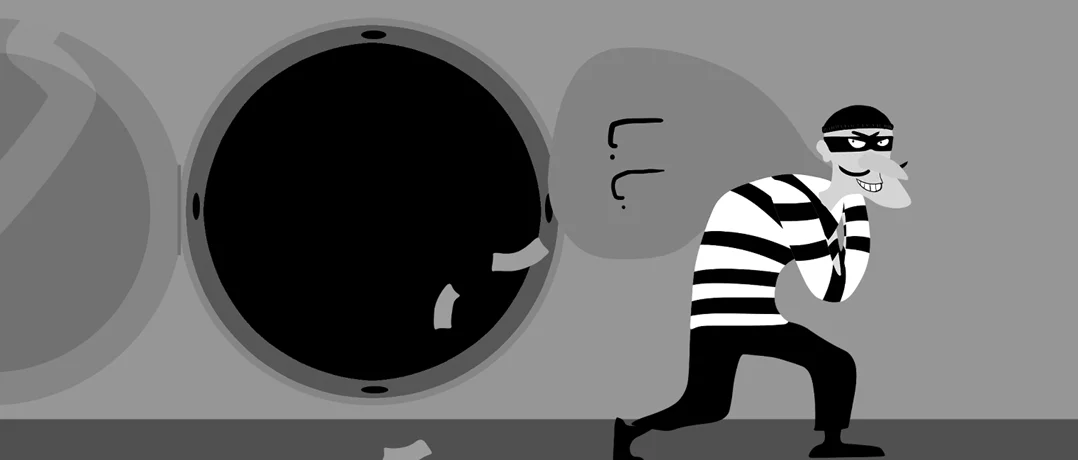
I remember receiving the 1977 edition as a Christmas gift, but I probably missed, or ignored, the entry in the crime section for the biggest ‘robbery of safe deposit boxes’. It happened the previous year on 22 January 1976 in, yes, you guessed it, Beirut, where roughly £50 million ($265 million today) in cash, gold, jewellery, stocks and bonds were stolen by persons unknown from the British Bank of the Middle East in the capital’s financial district.
The British Bank of the Middle East was a solid and respected financial institution. Founded in 1889 as the Imperial Bank of Persia and renamed in 1952, it was later acquired by the Hong Kong and Shanghai Banking Corporation, better known today as HSBC.
The robbers picked a good time to carry out their daring mission. Lebanon had spectacularly fallen apart the previous year; the government was in chaos, the army had split along sectarian lines and the police had long gone home. Beirut, a city that a year earlier, was a holiday playground now resembled Stalingrad. It was split in two and run by rival militias that controlled the various neighbourhoods.
What we do know is that an armed gang exploited these chaotic wartime conditions by breaking into the bank by knocking a hole through a wall in a next door church and then drilling away for hours until they made it into the bank. Once inside they opened the vaults and escaped with the goods.
“Instead of using cunning and skill, the robbers used brute force, blasting through a wall the bank shared with a Catholic church,” is how Time magazine described it at the time. “With the help of a bunch of Corsican locksmiths, the group then cracked the bank’s vault and plundered its contents”
No one has been publicly identified, charged, or arrested but in such a vacuum, especially in the city where the conspiracy theory could have been invented, rumours began to circulate. Top of the list of suspects was the PLO who had made West Beirut its powerbase. Yasser Arafat’s organisation was riding high in the ‘Arab Street’ popularity stakes as the front line in the battle against Israel. The party wasn’t short of money. It was heavily funded by Gulf Arab donors, oil money and their own local ‘taxation’ system in Lebanon but that doesn’t mean a bank job was off the table.
Also suspected were members of the Special Air Service, or SAS, the elite British special forces unit that was rumoured to have been sent from an army base in Cyprus to break into the bank to retrieve state-sensitive documents and then decided on a bit of 'freelance' work at the same time. Mossad and the KGB – this was after all the Cold War – were also spoken about in hushed tones. It would certainly make a great movie.
Fifty years on, the case is still unsolved and the money and valuables are still missing. At the time, the news was quickly superseded by local, more pressing events. Let’s face it, no Lebanese bank wanted it known they were so vulnerable.
The fate of the main actors is well known. The PLO was forced out of Lebanon in the summer of 1982 after an Israeli invasion that saw the IDF reach Beirut. The SAS is still regarded as one of the professional and ruthless special forces in the world. Back in 1976 the unit was cloaked in relative secrecy, but today, thanks to Netflix, its reputation has reached a global audience.
The British Bank of the Middle East remained in Lebanon but moved its Beirut offices to the Hamra end of Rue Abdel Aziz. In 1999, it was formally rebranded to HSBC and in 2016, maybe getting a whiff of what was to come three years later, shut down its Lebanon operations.
-
-
-
Michael KaramJournalist/Author
-
