



Tom Barrack’s criticism of Israel’s actions in Syria exposes a possible divide in Washington over whether Turkey or Israel should shape the next regional order.
The envoy who said too much

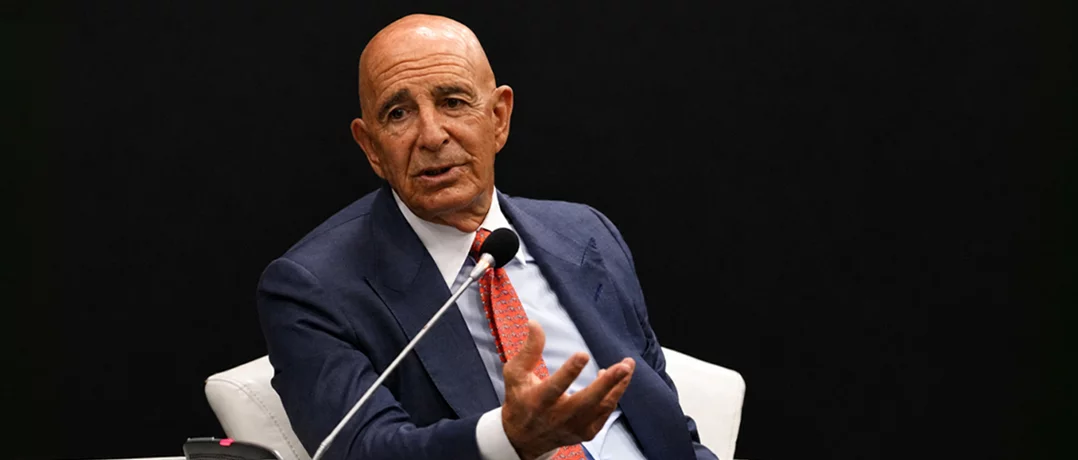
Tom Barrack may have said too much. But the problem is not merely that an American envoy contradicted official policy or offended an ally. His remarks exposed a more consequential possibility: the United States may be attempting to carry two increasingly incompatible Middle East strategies at the same time.
It was argued that the next regional round would be shaped by the emerging competition between Israel and Turkey. Israel seeks to preserve military freedom of action and prevent a new regional power from replacing Iran along its northern frontier. Turkey wants a stable Syria anchored to Ankara and refuses to accept that Iranian influence should simply be replaced by uncontested Israeli dominance. The winner would gain more than influence over Syria and Lebanon. It could become Washington’s principal strategic partner in shaping the region.
However, that competition appeared inside Washington itself. When Israel struck the Abu al-Duhur airbase in northern Syria, it said Syria was approaching a breach of prior understandings by allowing a Turkish military presence. Turkey and Syria denied that a permanent deployment was planned. Tom Barrack, US ambassador to Turkey and special envoy for Syria and Iraq, went significantly further. He called the strike an “unnecessary escalation”, said American intelligence had not confirmed the Turkish movement alleged by Israel, and suggested that Israel might have been “baiting” Turkey into a confrontation. He presented this only as one possible theory, but connected it to the approaching Israeli election.
Barrack also said Israel had not warned Washington before the strike. Israel disputed his account, saying it had shared intelligence with relevant American authorities. What followed was an unusually public disagreement not only over policy, but over the facts on which military action had been taken.
Compare Barrack’s interpretation with that of Mike Huckabee, the US ambassador to Israel. Huckabee said Israel had seen Turkey moving further south and interpreted this as a potential threat. He emphasized that the strike had caused neither casualties nor significant destruction and argued that an Israeli-Turkish confrontation was not close
Barrack saw a reckless and potentially political provocation. Huckabee saw a limited preventive operation that should not be exaggerated. These are not yet two formally declared American policies. But they are two very different readings of the regional order.
This may partly be institutional. Barrack’s political world is Ankara, Damascus and the reconstruction of post-Assad Syria. Huckabee’s is Israel and its security doctrine. Diplomats do not simply observe the countries in which they serve. They gradually learn to understand how those countries perceive threats, sometimes to the point of carrying those perceptions back into their own government.
Barrack’s interpretation is consistently closer to Ankara’s reading of Syria than Israel’s. His relationship with the Israeli establishment now appears strained enough to raise questions about his credibility as an intermediary. Yet it would be too easy to dismiss him as an envoy captured by his posting.
Washington did not disown him. Barrack corrected his statement that Israel “still occupies” the Golan Heights in violation of United Nations resolutions. That formulation directly contradicted Trump’s 2019 recognition of Israeli sovereignty over the territory. Barrack quickly clarified that he had been describing its historically contested status, not changing American policy.
But he did not withdraw his criticism of the strike or his doubts about Israel’s intelligence assessment. More importantly, Richard Grenell, Trump’s special envoy for special missions, publicly defended him. Grenell said Barrack was not “a freelancer”, speaks regularly with Trump and was doing “exactly what he’s asked to do”. The distinction is revealing. Barrack was corrected when he contradicted an explicit Trump decision. He was defended when he challenged Israel’s conduct in Syria.
This suggests that the United States may contain two strategic instincts. One treats Israeli military primacy as the foundation of regional order and accepts preventive action against developing threats. The other sees Turkey as indispensable to NATO, Syria’s reconstruction and the containment of Iran, and therefore considers uncontrolled Israeli action a threat to a wider American settlement.
These are not necessarily organized wings with clear membership. They may represent a deliberate division of labor. Barrack articulates Turkish and Syrian concerns; Huckabee reflects Israeli security thinking; Trump remains above both, preserving his ability to arbitrate. But another possibility is more troubling: Washington has not decided which regional order it prefers.
Trump has not publicly explained his position on Barrack’s latest statements. We know that he previously told Netanyahu to be “reasonable” in dealing with Turkey. He has also criticized Israeli conduct in Lebanon and called for a “softer touch”. At the same time, his administration has maintained its foundational commitment to Israel and preserved the Golan decision Barrack was forced to reaffirm.
Trump may believe he can hold all of this together personally. His relationship with Erdoğan gives him leverage in Ankara. His relationship with Netanyahu allows him to restrain Israel without formally abandoning it. Barrack’s access provides a channel into Turkey and Syria, while Huckabee reassures Israel. That may prevent war while Trump remains in office. It does not necessarily amount to a durable American strategy.
If Washington cannot choose between Turkey, its NATO ally, and Israel, its closest regional security partner, it may eventually decide not to choose at all. It may refine deconfliction mechanisms, contain the most dangerous incidents and otherwise allow the competition to unfold.
But sitting out would not be neutral. It would encourage both actors to establish facts on the ground while keeping their actions below the threshold that forces American intervention. Israel would continue defining and enforcing its security zones. Turkey would deepen its military and political position in Syria. Syria and Lebanon would become the geography through which the rivalry is managed.
The most dangerous moment may therefore arrive after Trump’s departure. If restraint depends on one president’s personal relationships rather than an institutional American doctrine, his successor will inherit unanswered questions. What Turkish military presence in Syria would Washington tolerate? Which Israeli red lines would it enforce? What happens if an Israeli strike kills Turkish personnel? Would Washington support Israel, defer to its NATO obligations, or attempt to remain outside the conflict?
Lebanon would not escape this ambiguity. Hezbollah’s weakening is creating a regional space that others will try to shape. Israel does not want Iranian infrastructure replaced by Turkish influence. Turkey does not want Iran’s retreat to produce permanent Israeli dominance across Syria and Lebanon. The Lebanese weapons question is therefore becoming part of a larger contest over who inherits the geography left behind by Iran.
The next war may not begin because Washington chooses Turkey or Israel. It may begin because both spend years believing that Washington will ultimately choose them, only to discover, at the moment of confrontation, that America has chosen to sit it out.
Tom Barrack may have said too much. But what he exposed was not merely his own uncertainty. It was the possibility that the United States has not yet decided what the next Middle East is supposed to be.
-
-
-
Dr. Ramzi Abou IsmailWriterPolitical psychologist and commentator on politics, identity, and conflict.
-
