



The latest surge in Chinese exports comes from a country with far greater technological capabilities than during the first China shock, changing the stakes from competition over markets to dependence on the supply chains it increasingly dominates.
The second China shock is different this time
The second China shock is different this time
By Katharine Sorensen | August 30, 2026

Reading time: 8 mins
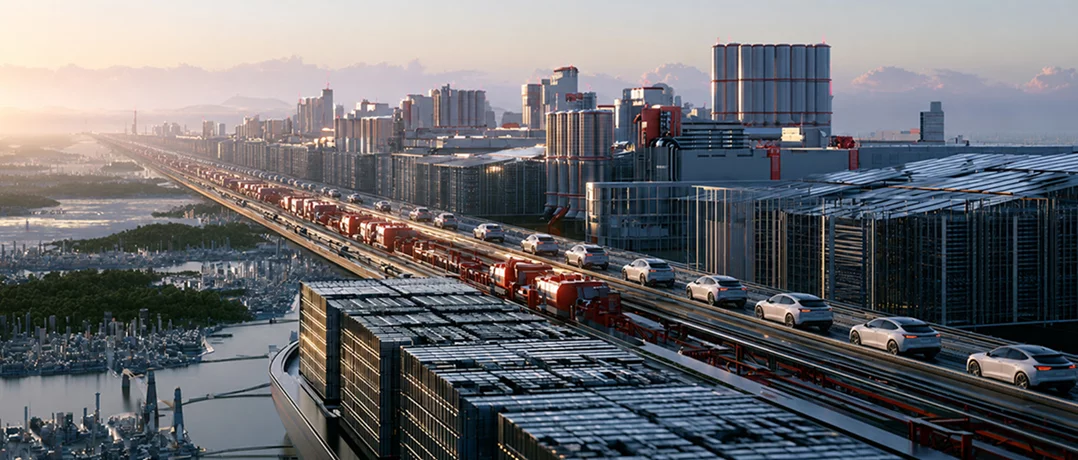
China’s manufacturing machine is entering a new phase, and its reach is becoming harder for the rest of the world to absorb. China exported a record 7.1 million vehicles in 2025, up 21% from the previous year, according to the China Association of Automobile Manufacturers. Its trade surplus, meanwhile, approached a record $1.2 trillion, even as exports to the United States fell roughly 20% under higher tariffs. Yet the economy producing this abundance has struggled to generate comparable momentum at home. The International Monetary Fund estimates that net exports contributed 1.6 percentage points of China’s 5% growth last year as imports stagnated, while a prolonged property downturn and subdued consumer confidence continued to weigh on domestic demand. That apparent contradiction helps explain what Brad Setser, a senior fellow at the Council on Foreign Relations and former U.S. Treasury official, describes as China Shock 2.0, a new surge in Chinese manufacturing exports propelled in part by the weakness of the economy producing them. “Economic success often grows out of a strong domestic economy, but in China’s case, export success is, to some degree, a product of very real weakness at home,” he said. The first China shock followed China’s integration into global trade. The second is emerging from a far wealthier and more technologically capable China, where years of state-directed investment built advanced industrial capacity even as domestic demand weakened. Across several critical supply chains, China has also become difficult to replace. When China joined the World Trade Organization in 2001, the country was a fraction of the economic power it is today. Its accession accelerated an integration already underway through special economic zones, foreign investment and manufacturing supply chains stretching across Asia. It also carried an expectation that success inside the global trading system would gradually push the Chinese economy closer to the models of other major trading powers. “The assumption was that, as China grew, institutional convergence would necessarily follow, particularly in the economic sphere, although there was optimism that political convergence would follow as well,” Setser said. WTO membership did not require China to dismantle many of the institutions that distinguished its economy. State banks and state-owned enterprises remained powerful, while foreign companies seeking access to China’s growing market often established local production and joint ventures. Those arrangements gave China access to foreign capital, manufacturing expertise and technology. Foreign automakers including Volkswagen, General Motors and Toyota built joint ventures inside China as Chinese companies moved deeper into global supply chains. “China found ways to tap into global demand while preserving its own institutional structure across the economy,” Setser said. Under Xi Jinping, that model became more explicitly oriented toward technological self-sufficiency. Industrial policy long predated his leadership, but Xi intensified efforts to reduce dependence on foreign technology and build Chinese capabilities in strategic industries. Made in China 2025 crystallized that ambition, identifying 10 priorities including robotics, aerospace, advanced rail equipment and new-energy vehicles. Beijing could pursue those ambitions through institutions that gave the state unusual influence over capital. The Communist Party exercises influence over major state enterprises and banks, while local governments have directed capital toward favored industries. Private firms have greater autonomy, but the party retains extensive economic power. “The party is like an alumni network on steroids that decides who controls key nodes of politics, but also key nodes of the economy, in a way that has no real analog in multiparty democracies,” Setser said. When real estate began contracting in 2021, one of the principal destinations for Chinese savings, credit and investment collapsed without an equivalent expansion in household consumption. Falling home sales and developer defaults ushered in what the IMF has described as China’s deepest property correction in recent history. Despite Beijing’s efforts to stabilize the economy, household savings remained above pre-pandemic levels and consumer confidence subdued. The imbalance became visible as production outran demand in some of China’s most advanced industries. China produced 16 million electric cars in 2025, according to the International Energy Agency (IEA), roughly 20% more than its domestic market demanded. EV exports doubled to more than 2.5 million vehicles and rose another 120% in the first half of 2026. The legacy of the investment boom is also visible in industries more directly tied to property and construction. Years of rapid building increased demand for excavators and encouraged manufacturers to expand production. A slowdown in apartment construction reduces that market but does not eliminate the factories built to serve it, leaving manufacturers to seek customers overseas. China’s latest export surge therefore cannot be traced to either industrial policy or the property downturn alone. The property downturn weakened domestic demand after years of investment had already made Chinese manufacturers considerably more competitive internationally. “The ability to move so quickly and strongly into foreign markets depended on much more than just the continuation of import-substitution policies,” Setser said. Domestic weakness should not be confused with industrial weakness. The United Nations Industrial Development Organization (UNIDO) estimates that manufacturing production grew 6.8% in China in 2025, compared with 1% in the United States and 1.5% in Europe. Chinese companies have improved their technology and lowered production costs even as weak consumption and the property downturn have weighed on the economy around them. China shock 2.0 therefore comes from a China that has become more formidable at producing many of the goods the world wants even as its own economy has become less capable of absorbing what its factories can produce. The export surge carries both realities abroad. The first China shock was largely understood through import competition and the jobs exposed to it. Today, other countries must consider not only their ability to compete with Chinese production but the consequences of losing access to it. The concentration is particularly stark in clean-energy supply chains. China accounted for 70% of global electric-car production and more than 80% of battery-cell production in 2025, according to the IEA. Its share was higher still in the materials used to manufacture those batteries, reaching roughly 85% for cathode active material and more than 90% for anode active material. Dependence, however, is not automatically a vulnerability. Reliance on China for ordinary consumer products carries different consequences from dependence on a critical mineral or component whose absence could halt an entire production line. “The notion that you should have an autonomous defense supply chain is an old one and a real one,” Setser said. “The question is: How far beyond the capacity to make your own weapons do you go?” The answer was easier when globalization rested on the expectation that commercial interdependence would itself discourage governments from interrupting trade. Recent experience has weakened that premise. The United States has restricted China's access to advanced semiconductor technology. Beijing has imposed export controls on critical minerals. Russia's use of energy supplies after its invasion of Ukraine offered another demonstration of how economic connections can become instruments of state power. “We are trying to figure out the boundaries of a less interdependent world,” Setser said. Those boundaries need not amount to economic self-sufficiency. A more selective approach would preserve interdependence where disruption can be absorbed or mutual dependence restrains coercion, while developing alternatives for goods whose loss could carry consequences far beyond their monetary value. Defense technologies, life-saving medicines and small but indispensable industrial inputs fall readily into the latter category. So do cutting-edge industries where losing the capacity to manufacture one generation of technology can make competing in the next considerably harder. The second China shock therefore confronts other economies with a different calculation. China is not simply a source of lower-cost manufactured goods, but a technological competitor, an enormous consumer market and, in some industries, an indispensable supplier. For other economies, the challenge is no longer confined to protecting domestic industries from Chinese competition. They must decide which Chinese capabilities they can afford not to reproduce, which dependencies require an alternative, and where interdependence remains valuable enough to preserve.Many people view domestic weakness and this successful export machine as a paradox.
The convergence that never came
That expectation was very much a product of the hubris of the post-Cold War world.
It proved that rapid economic growth could coexist with many of the institutions inherited from decades of Chinese Communist Party governance and only partial integration.
When the property boom ended
The second China shock required a confluence of long-standing industrial policy, technological catch-up and a macroeconomic shock that pushed Chinese companies toward foreign markets.
When interdependence becomes leverage
The old assumption was that countries would not, because of the gains of integration, seek to use interdependence as a tool of strategic and political leverage.
-
-

-
Katharine SorensenReporterSpecializing in global affairs, technology and economics, with a focus on on-the-ground investigative reporting.
-
