



Why more Lebanese are choosing therapy
Why more Lebanese are choosing therapy

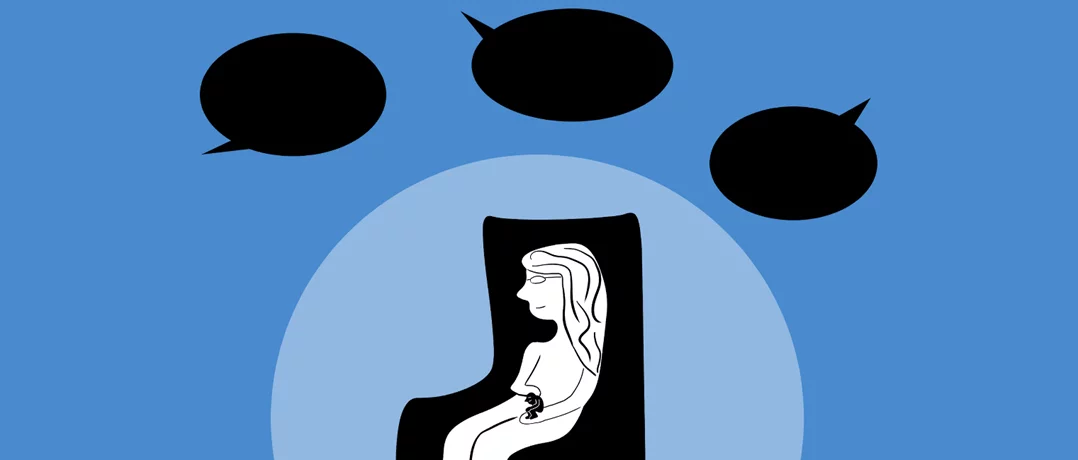
For years, seeking the support of a mental health professional in Lebanon was often surrounded by silence and stigma. The simple admission of “going to a psychologist” could carry the weight of social judgment, with many viewing it as an indication that something was inherently wrong. Today, however, that perception is undergoing a profound transformation.
A growing number of Lebanese, particularly among younger generations, are breaking the silence around mental health, openly seeking therapy, and reshaping the way society understands emotional well-being.
To explore the forces behind this cultural shift, The Beiruter spoke with Dr. Roger Karam, psychiatrist and cognitive behavioral therapist, to examine what is driving this gradual but significant change in attitudes toward mental health in Lebanon.
Two forms of struggle
Dr. Karam begins by highlighting a distinction that is often overlooked. Not all psychological struggles stem from the same source. Some mental health conditions, he explained, are rooted in biological dysfunctions within the brain, including disorders such as schizophrenia, bipolar disorder, and certain forms of depression. In these cases, medication plays a central role in treatment by addressing underlying chemical imbalances, such as disruptions in dopamine systems. “These require medication because the brain is not functioning properly,” he explained. “There is no other way to treat these conditions.”
Beyond these clinical disorders lies another category of psychological distress, one that reflects the challenges many people encounter in their everyday lives. Dr. Karam compares the brain to a computer shaped by years of “programming”, a combination of personality traits, learned behaviors, experiences, and coping mechanisms. “Sometimes this programming is not smooth or leads to negative results,” he said.
When these patterns begin to interfere with a person’s ability to navigate life, achieve goals, or maintain emotional balance, therapy becomes a crucial tool for change. Unlike medication, which targets biological factors, psychotherapy works by helping individuals recognize, understand, and reshape the patterns of thought and behavior that may be holding them back.
From superstition to science
For much of history, Dr. Karam explained, conditions affecting the brain were poorly understood and often grouped under a single, deeply stigmatizing label. “They mixed everything together,” he said. “Anything affecting the brain was considered madness, even though what people call madness might only refer to one or two illnesses.”
Because the brain was long viewed as an impenetrable mystery, “a closed box they could not enter,” as Dr. Karam described it, psychiatry developed separately from other branches of medicine, with scientific understanding and treatment methods progressing at a much slower pace.
Today, that perception has fundamentally changed. “Now, illnesses and problems are classified, and treatments are classified,” he said. “We are dealing with these issues scientifically and medically.” Returning to his computer analogy, Dr. Karam described the brain as “the most important computer we have.” Just as people seek to repair a device when it malfunctions, he argues, they should also recognize the importance of addressing difficulties within the mind rather than viewing them through the lens of stigma or shame.
A generational and digital shift
Young people today have far greater access to information, and social media has become an unexpected gateway to mental health literacy. "Awareness is largely coming from social media because this did not exist before," he noted. Someone struggling with obsessive-compulsive behaviors, for instance, might once have been told by a religious figure that their affliction reflected "a lack of faith." Now, that same person is more likely to search online first, and find out that effective treatment exists.
The weight of crisis
Lebanon's overlapping crises have left visible marks on the population's mental health, particularly within communities directly affected by recent conflict. Dr. Karam described seeing people he "was not used to seeing before", individuals once considered pillars of their communities, now seeking medication after losing their homes and their sense of the future.
But even as demand for care rises, cost remains the central obstacle. "No one charges less than $80 or $100 per session," he explains, an amount well out of reach for many families given the country's economic conditions. He contrasts this with countries like France, where insurance subsidizes a set number of therapy sessions. "The main obstacle today is not that people are unconvinced," he said. "They want it, but they simply cannot afford it." Encouragingly, some NGOs now offer free treatment, and Dr. Karam noted that when people are referred to these programs, they go immediately.
Cities, villages, and religious voices
Geography and culture still shape attitudes. Dr. Karam observed that rural communities often hold more rigid beliefs, sometimes framing psychological struggles as spiritual failings. Urban residents, particularly in Beirut, tend to view mental health through a more educated lens. Notably, he added, many of his rural-origin patients only sought treatment after spending time living in the city.
Dr. Karam believes that the responsibility for improving mental health awareness in Lebanon lies with "schools, media, families, religious leaders, and the state.” He suggests brain health should be taught in classrooms just as thoroughly as any other biology lesson, since, as he puts it, the brain is simply "an organ like any other."
He is careful to emphasize that religious leaders can be part of the solution. Because so many people turn to them first, Dr. Karam believes it's essential that religious figures "raise awareness about these issues" rather than unintentionally create obstacles to care.
A society in transition
What emerges from this conversation is a portrait of Lebanon in the middle of a poignant transformation. The stigma has not completely disappeared, and financial barriers remain steep, but the direction of change is unmistakable. As more Lebanese challenge old misconceptions and seek professional support, therapy is moving from a subject of secrecy to one of self-awareness, healing, and personal growth. The conversation around mental health is now about creating a society where asking for help is seen not as a failure, rather a sign of understanding oneself and taking responsibility for one’s well-being.
-
-

-
Jenna GeageaReporter/Writer
-
